
The Middle East: 592–603 CE Cultural …
Years: 592 - 603
The Middle East: 592–603 CE
Cultural Shifts and Decline of Ancient Cities
Abandonment of Kish
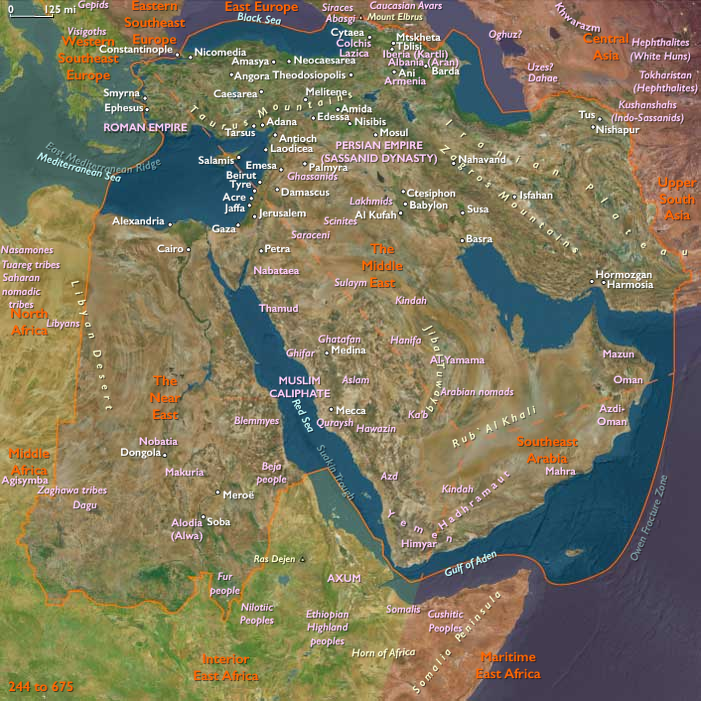
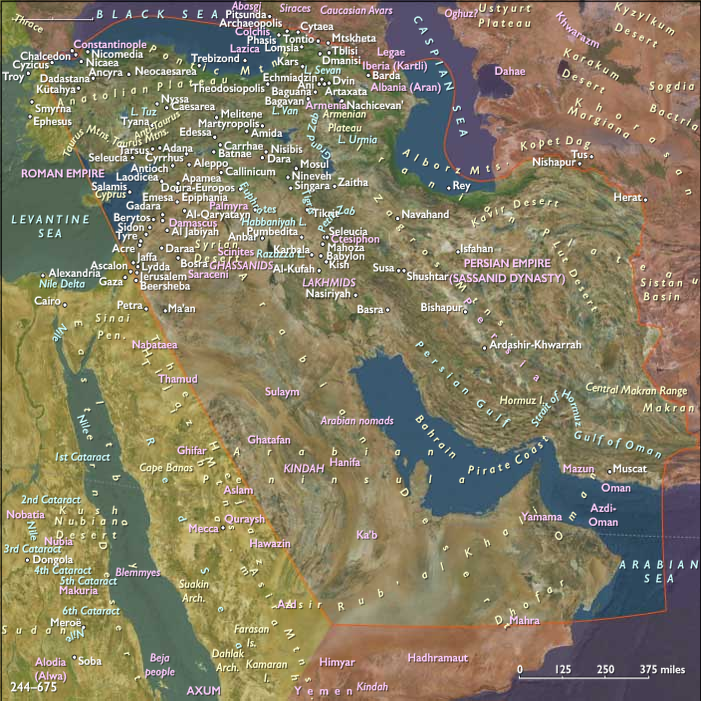
The ancient city of Kish, continuously occupied for nearly four thousand years, is permanently abandoned during the late Sassanian period. This abandonment symbolizes broader shifts occurring in urban centers across the region, reflecting both internal pressures and external threats as the Sassanian Empire struggles to maintain control over its vast territories.
The Origins and Spread of Polo
The era sees the cultural prominence of polo, whose origins, though debated, are strongly associated with Persia. Originally a training exercise for elite cavalry units, polo emerges as a favored sport among the Iranian nobility. Historical records from the sixth century CE notably mention King Khosrau II Parviz and his courtiers engaging in polo matches, with women, including the queen and her ladies, also participating. The game’s name derives from the Persian word "pulu," referring to willow roots used for making polo balls, underscoring its deep cultural roots in Persian society.
This period thus marks both significant cultural continuity and profound urban transformation in the Middle East, capturing a moment of cultural vibrancy amid broader regional change.
People
Groups
Commodoties
Subjects
Regions
Subregions
Years: 592 - 603
People
Groups
Commodoties
Subjects
Regions
Subregions