
The Middle East: 561–550 BCE Colonization …
Years: 561BCE - 550BCE
The Middle East: 561–550 BCE
Colonization and Expansion in Anatolia
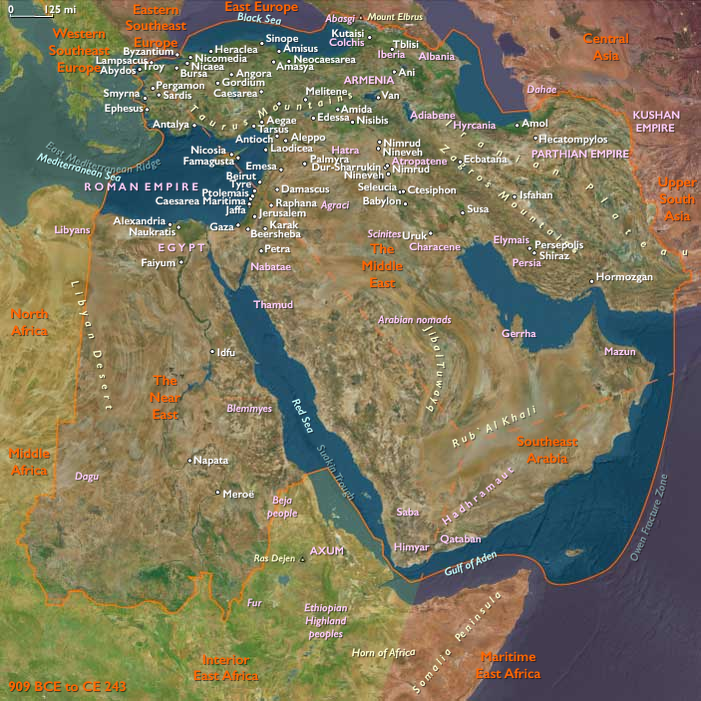
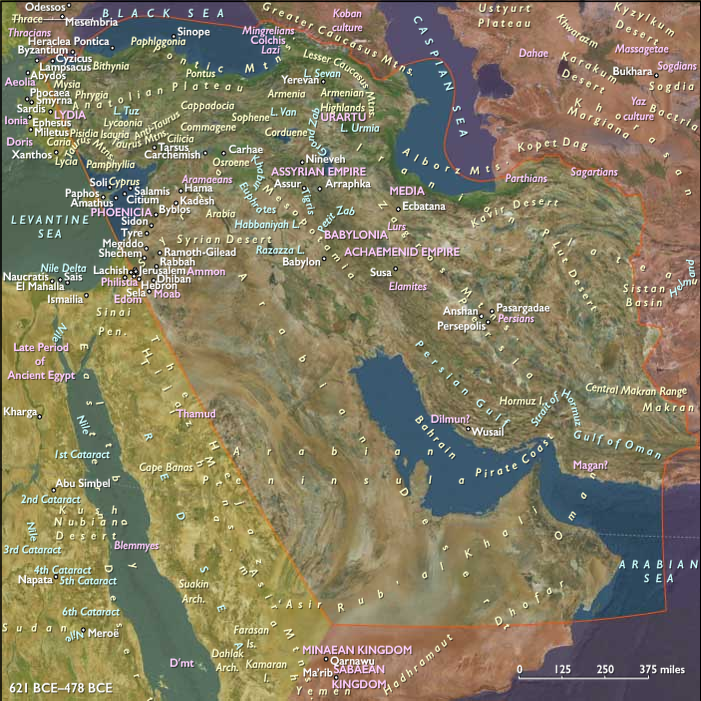
Around 560–558 BCE, Megarian colonists establish Heraclea Pontica (modern Ereğli) on the Black Sea coast, named after the legendary Greek hero Heracles. The colony quickly expands its influence, subjugating the indigenous Mariandynians, who become helot-like serfs with the protection of not being sold into foreign slavery. Benefiting from fertile lands and abundant fisheries, Heraclea Pontica grows prosperous, extending its territorial control eastward along the coast to Cytorus (near modern Cide).
Rise of Cyrus the Great
In 559 BCE, Cyrus, son of Cambyses, becomes ruler of the Persian district of Anshan under Median overlordship. Cyrus, reportedly a descendant of Median king Astyages through his mother, initially rules as a subordinate prince. The expansive Median Empire, under Astyages, encompasses vast territories from Anatolia to the Iranian plateau.
Dissatisfaction with Astyages’ rule motivates a revolt in 553 BCE, led by Cyrus with crucial support from the Median general Harpagus. Following several inconclusive battles, a pivotal mutiny within the Median forces facilitates Cyrus’ entry into the Median capital Ecbatana in 549 BCE. Astyages is captured, but spared, and Cyrus transfers the royal treasury to his capital at Susa. This victory effectively dismantles the Median Empire, marking the ascendance of Cyrus and the rise of the Achaemenid Persian Empire.
Developments in Babylon and Hebrew Literature
Babylon experiences internal shifts during this era. King Nabonidus, largely preoccupied with antiquarian and religious interests, becomes increasingly unpopular with the Babylonian priesthood. In response, Nabonidus elevates his son, Belshazzar, to the role of co-regent around 550 BCE. Meanwhile, in Judahite communities living in exile in Babylon, substantial religious and literary developments occur. Around 550 BCE, priestly sources contribute significantly to the final compilation of the Torah. Concurrently, key biblical texts, including the Book of Joshua and the Books of Kings, undergo editing and expansion.
Thus, this era witnesses transformative geopolitical shifts with the rise of Cyrus, significant colonial expansions in Anatolia, and crucial religious and literary developments among the exiled Judahite communities in Babylon, profoundly influencing the future political and cultural landscape of the Middle East.
People
Groups
- Medes
- Persian people
- Megara, City-State of
- Mariandyni
- Greeks, Classical
- Anshan, Kingdom of
- Neo-Babylonian, or Chaldean, Empire
- Medes, Kingdom of the
- Judahites
Topics
Subjects
Regions
Subregions
Related Events
Showing 10 events out of 65854 total
Years: 561BCE - 550BCE
People
Groups
- Medes
- Persian people
- Megara, City-State of
- Mariandyni
- Greeks, Classical
- Anshan, Kingdom of
- Neo-Babylonian, or Chaldean, Empire
- Medes, Kingdom of the
- Judahites
Topics
Subjects
Regions
Subregions