
The Middle East: 568–579 CE Renewed …
Years: 568 - 579
The Middle East: 568–579 CE
Renewed Conflict and Territorial Struggles
Byzantine–Sassanian War of 572–591
In the period 568 to 579 CE, the Eastern Roman Empire (often termed the Byzantine Empire) and the Sassanian Empire of Persia enter a prolonged and intense conflict, commonly referred to by modern historians as the Byzantine–Sassanian War (572–591). This conflict arises primarily due to rebellions in Persian-controlled territories within the Caucasus, where local powers favor alignment with Constantinople. Although these revolts significantly spark the war, broader strategic and territorial disputes also contribute substantially to its outbreak.
Geographic Extent and Impact
The fighting predominantly takes place across the southern Caucasus region and Mesopotamia, areas that become focal points for control and influence. However, the war's scope soon expands further, affecting territories in eastern Anatolia, Syria, and even extending into northern Iran. The extensive military campaigns of both empires reflect their ambitions to secure strategic regions, which are vital for economic and defensive purposes.
This ongoing conflict significantly influences the political landscape of the Middle East, further destabilizing the region and perpetuating the rivalry between two of the most powerful empires of the time. The era thus stands as a critical period marked by military engagements, shifting alliances, and lasting implications for the future territorial divisions and cultural developments of the region.
Groups
Topics
Subjects
Regions
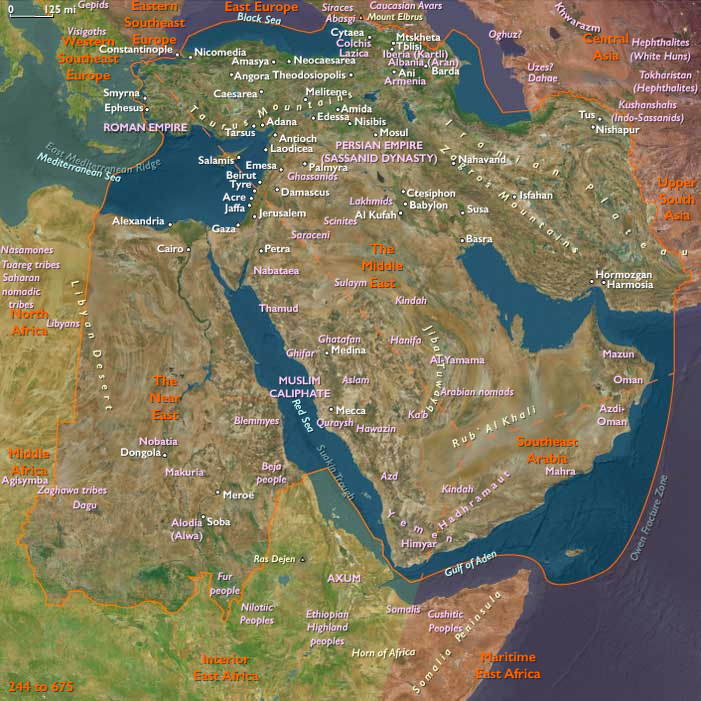
Subregions
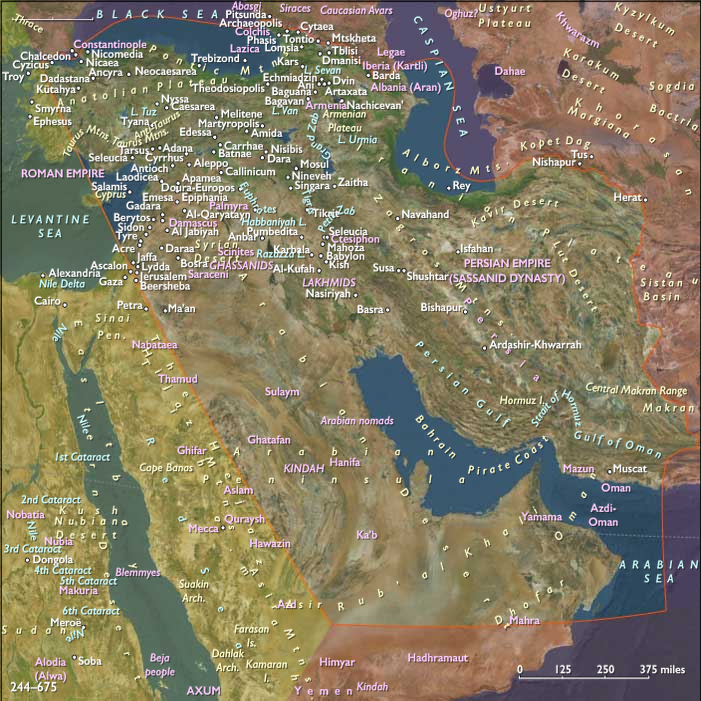
Related Events
Showing 1 events out of 1 total
Years: 568 - 579
Groups
Topics
Subjects
Regions
Subregions