
The Middle East (5373–5230 BCE): Ubaid Culture …
Years: 5373BCE - 5230BCE
The Middle East (5373–5230 BCE): Ubaid Culture and Pottery Innovation
Emergence of the Ubaid 1 (Eridu) Culture
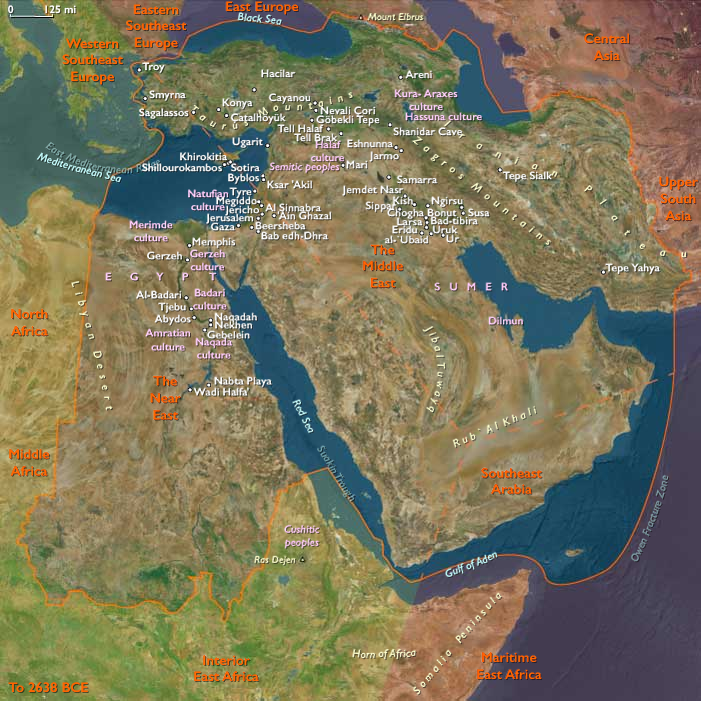
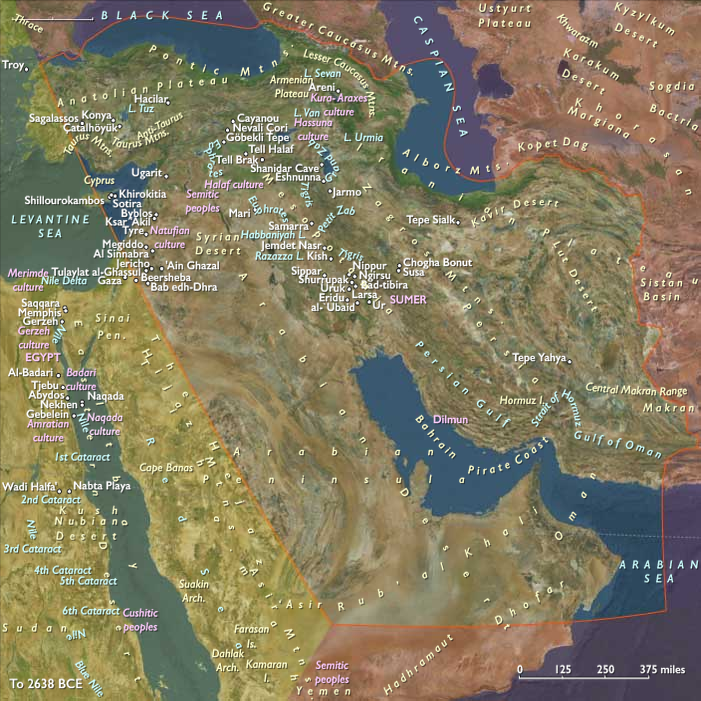
Between 5373 and 5230 BCE, the Ubaid 1 period, also known as the Eridu phase (5300–4700 BCE), emerged prominently in the extreme south of present-day Iraq, along the then-shores of the Persian Gulf. This period maintained clear cultural links to the northern Samarra culture and marked the establishment of the first permanent settlements south of the five-inch rainfall isohyet.
Agricultural Innovations in Arid Conditions
The inhabitants of the Ubaid 1 phase pioneered the cultivation of grain crops under extreme arid conditions, demonstrating remarkable agricultural adaptation and innovation. Their success in growing grains despite challenging environmental conditions significantly contributed to the sustainable growth of these early settlements.
Advances in Pottery Manufacture
By 5300 BCE, Mesopotamian communities had begun utilizing clay containing the metallic element aluminum to produce high-quality pottery. This advancement in pottery manufacturing not only enhanced the durability and functionality of ceramic vessels but also played a critical role in the daily lives and trade networks of the Ubaid people.
Cultural Continuity and Expansion
The Ubaid 1 culture set the stage for broader cultural continuity and expansion across southern Mesopotamia. This phase laid foundational elements for subsequent urban and economic developments, directly influencing the growth and complexity of later Mesopotamian civilizations.
This period highlights significant progress in adapting agriculture to challenging environmental conditions and achieving advancements in ceramic technology, crucially shaping the trajectory of early urban development in the ancient Middle East.
Topics
Commodoties
Subjects
- Architecture
- Painting and Drawing
- Environment
- Decorative arts
- Faith
- Government
- Custom and Law
- Technology
- Metallurgy
Regions
Subregions
Years: 5373BCE - 5230BCE
Topics
Commodoties
Subjects
- Architecture
- Painting and Drawing
- Environment
- Decorative arts
- Faith
- Government
- Custom and Law
- Technology
- Metallurgy
Regions
Subregions