
The Middle East (5229–5086 BCE): Continued Development …
Years: 5229BCE - 5086BCE
The Middle East (5229–5086 BCE): Continued Development and Cultural Expansion
Strengthening of Ubaid Culture
Between 5229 and 5086 BCE, the Ubaid culture continued to strengthen and expand throughout southern Mesopotamia. Settlements became increasingly well-established and organized, reflecting improved social cohesion and community planning. These developments contributed significantly to the consolidation of cultural traditions and practices.
Expansion of Agricultural Techniques
During this period, agricultural techniques became more refined and sophisticated, further enabling communities to thrive despite the region’s harsh environmental conditions. Enhanced irrigation methods supported larger-scale farming, allowing the expansion of grain production and improved yields, crucial for sustaining growing populations.
Pottery and Technological Refinements
Pottery manufacture continued to evolve, with artisans producing increasingly refined and functional ceramic vessels. These pottery items, crafted from clays rich in aluminum, not only served daily domestic needs but also became important trade commodities, facilitating broader economic interactions and cultural exchanges.
Societal Complexity and Urbanization
Communities during this era demonstrated greater societal complexity and increasing urbanization. Improved infrastructure, including more organized dwellings and communal structures, reflected advancements in urban planning and social stratification. These developments set the groundwork for subsequent complex urban societies and city-states.
This age highlights continued cultural consolidation, agricultural advancements, technological refinement, and growing social complexity, establishing crucial foundations for future civilizations in the ancient Middle East.
Topics
Commodoties
Subjects
- Architecture
- Painting and Drawing
- Environment
- Decorative arts
- Faith
- Government
- Custom and Law
- Technology
- Metallurgy
Regions
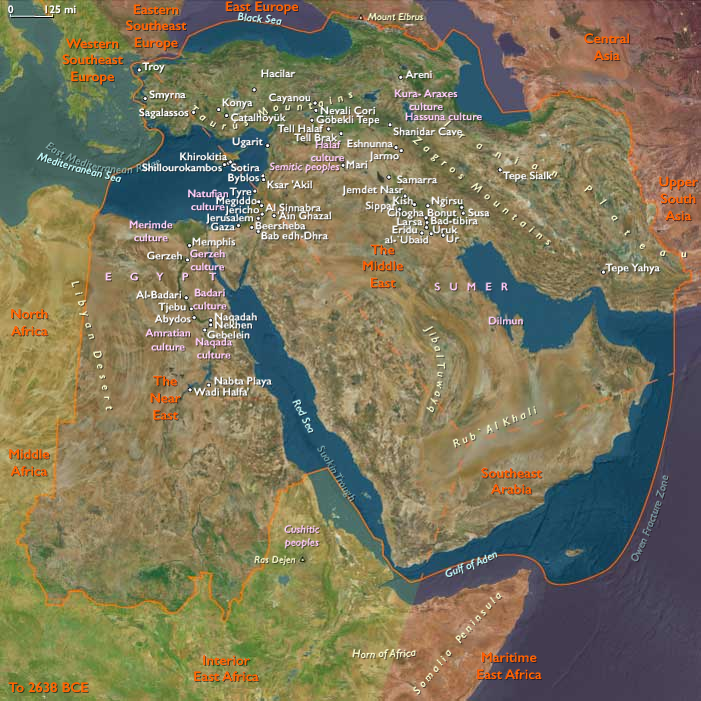
Subregions
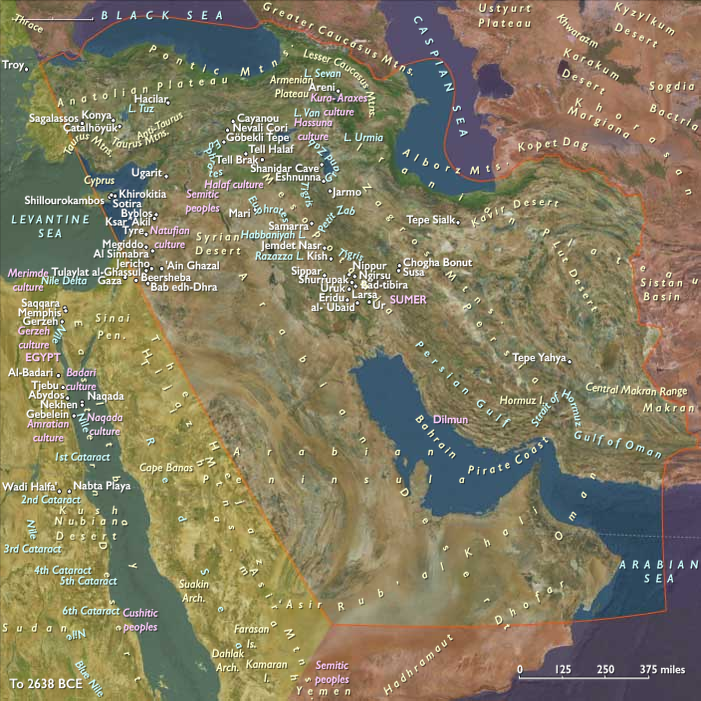
Years: 5229BCE - 5086BCE
Topics
Commodoties
Subjects
- Architecture
- Painting and Drawing
- Environment
- Decorative arts
- Faith
- Government
- Custom and Law
- Technology
- Metallurgy
Regions
Subregions