
The Middle East: 544–555 CE Strengthening …
Years: 544 - 555
The Middle East: 544–555 CE
Strengthening States and Tribal Conflicts
Khosrau I: Consolidation of the Sassanid State
In the era from 544 to 555 CE, Persian ruler Khosrau I continues the legacy of his father, solidifying the authority of the Sassanid Empire following the suppression of the Mazdakite upheaval. His decisive actions ensure the dominance of orthodox Zoroastrianism—known as the Mazdean Church—across Persia. For his pivotal role in defeating Mazdakism and restoring stability, Khosrau earns the unique honorific title of Anosharvan, meaning "with the immortal soul," highlighting his contribution to strengthening both the state and its religious institutions.
Arab Tribal Warfare
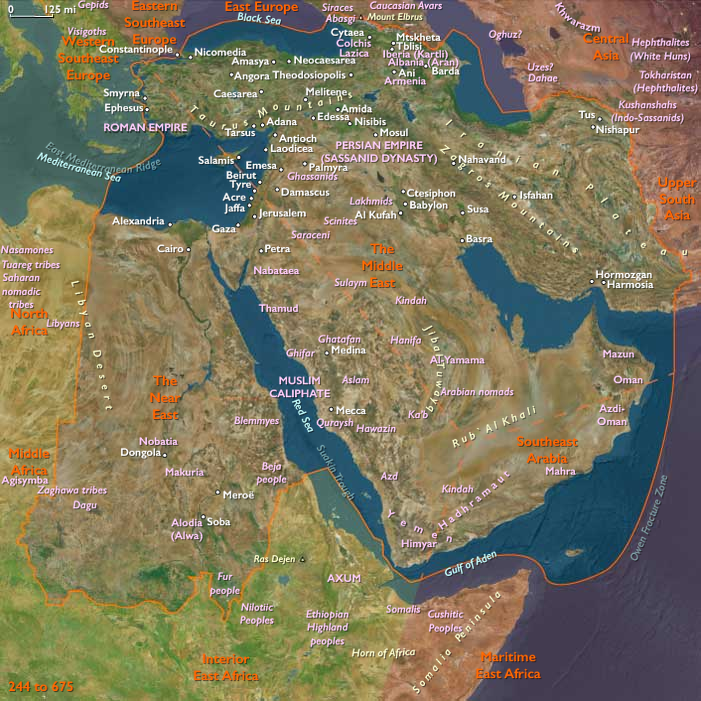
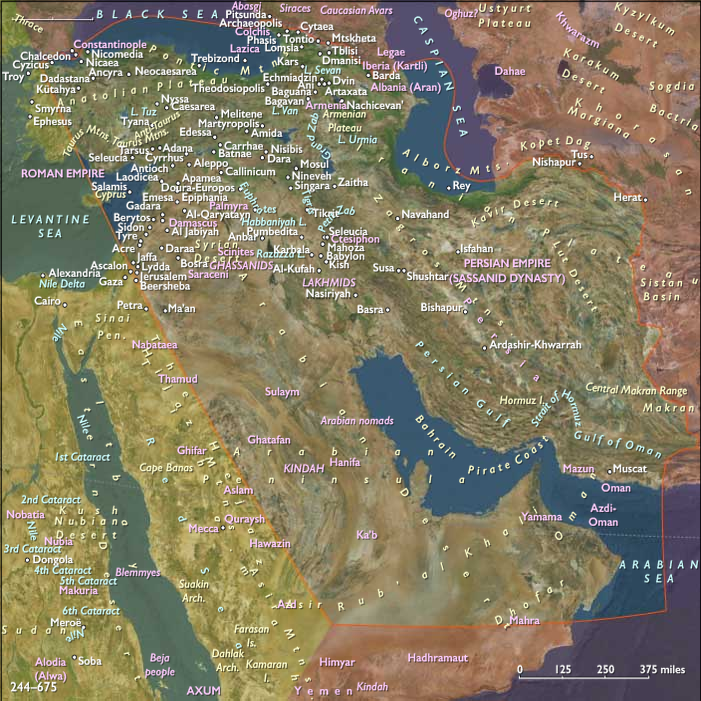
During the same period, the Lakhmid kingdom, a client state of the Sassanid Persians based in southern Iraq, initiates vigorous military campaigns against Roman-controlled Syria and their rival client state, the Ghassanids. Despite their sustained efforts, the Lakhmids ultimately fail to achieve significant victories, and Roman Syria remains resilient under Ghassanid protection. These tribal conflicts illustrate the ongoing geopolitical rivalry between Persian and Roman spheres of influence, further complicating regional stability in the Middle East.
Thus, the years from 544 to 555 CE see both internal consolidation in Persia and continued friction among Arab vassal states, maintaining the delicate balance of power and setting the stage for further tensions in the region.
People
Groups
- Arab people
- Zoroastrians
- Persian Empire, Sassanid, or Sasanid
- Lakhmid kingdom of al-Hira
- Syria Prima (Roman province)
- Syria Secunda (Roman province)
- Mazdakites
- Ghassan, Kingdom of
- Roman Empire, Eastern: Justinian dynasty
Topics
Commodoties
Subjects
Regions
Subregions
Years: 544 - 555
People
Groups
- Arab people
- Zoroastrians
- Persian Empire, Sassanid, or Sasanid
- Lakhmid kingdom of al-Hira
- Syria Prima (Roman province)
- Syria Secunda (Roman province)
- Mazdakites
- Ghassan, Kingdom of
- Roman Empire, Eastern: Justinian dynasty
Topics
Commodoties
Subjects
Regions
Subregions