
The Middle East: 52–63 CE The …
Years: 52 - 63
The Middle East: 52–63 CE
The Roman-Parthian Struggle for Armenia
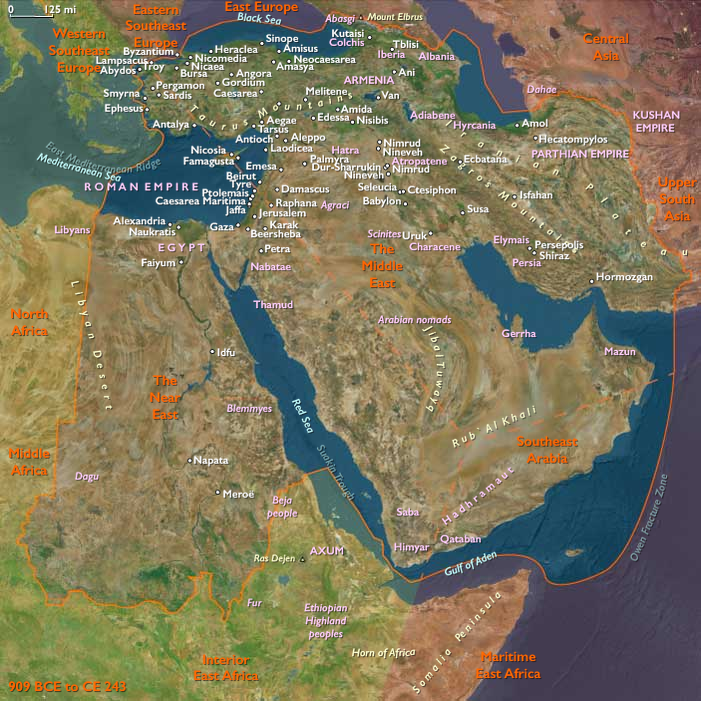
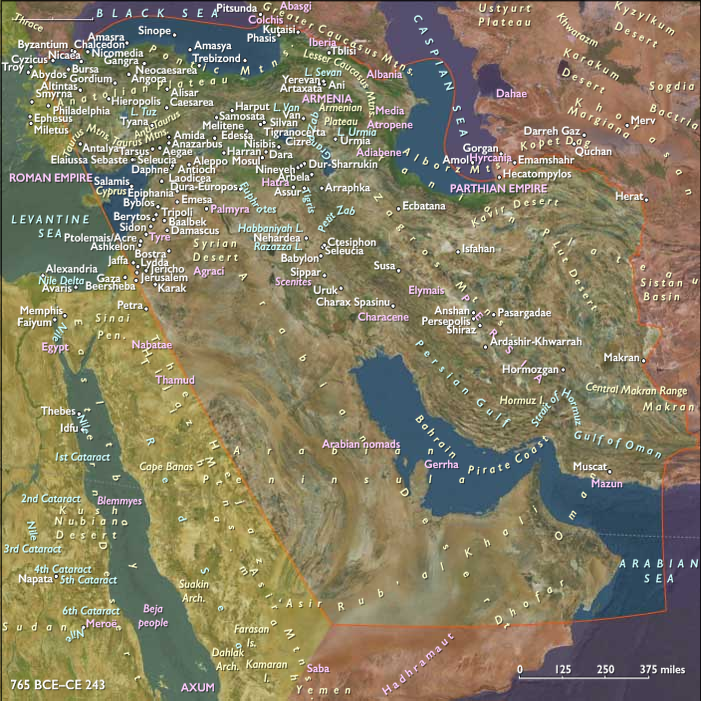
During this era, the longstanding rivalry between Rome and Parthia over influence in Armenia escalates into open conflict. Although Armenia had remained a Roman client kingdom since the reign of Emperor Augustus, in 52/53 CE the Parthian king Vologases I capitalizes on Roman distraction and successfully installs his brother, Tiridates, on the Armenian throne, challenging Roman regional hegemony.
The timing coincides with the accession of Emperor Nero in 54 CE, who, eager to assert his imperial authority, initiates a vigorous military response. Under the command of the accomplished Roman general Gnaeus Domitius Corbulo, Rome swiftly defeats Armenian forces loyal to Tiridates. Corbulo's successful campaigns culminate in placing the pro-Roman candidate, Tigranes VI, upon the Armenian throne. Believing their mission accomplished, Roman forces withdraw, leaving behind a seemingly stable client state.
However, internal Parthian disturbances that had initially distracted Vologases are soon resolved, enabling him to redirect his full attention back to Armenia. Renewed conflict ensues, and after a protracted period of inconclusive skirmishes, the Parthians decisively defeat Roman forces at the Battle of Rhandeia in 62 CE.
In the wake of this significant defeat, Rome and Parthia agree to a diplomatic compromise: henceforth, Armenia's king must be a Parthian prince from the Arsacid dynasty, subject to formal approval by the Roman emperor. This arrangement, while acknowledging Parthian influence, preserves Roman prestige and diplomatic involvement in the region.
This conflict marks the first direct Roman-Parthian military confrontation since the disastrous campaign of Crassus in 53 BCE and Mark Antony’s ill-fated invasions nearly a century earlier. It inaugurates a prolonged series of struggles between the two empires for dominance over strategically critical Armenia.
People
Groups
Topics
Subjects
Regions
Subregions
Related Events
Showing 10 events out of 61744 total
Years: 52 - 63
People
Groups
Topics
Subjects
Regions
Subregions