
The Middle East: 513–502 BCE Imperial …
Years: 513BCE - 502BCE
The Middle East: 513–502 BCE
Imperial Expansion and Stabilization Under Darius
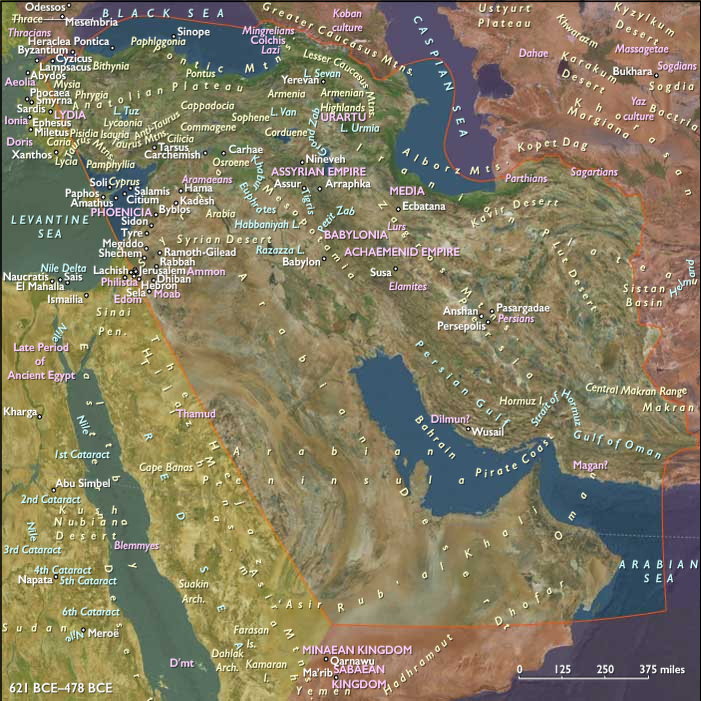
From 513 to 502 BCE, Darius I continues to fortify and expand the Achaemenid Persian Empire, consolidating the significant administrative and infrastructural reforms he previously implemented. In 513 BCE, Darius embarks on an ambitious military expedition across the Bosporus into Europe, aiming to extend Persian control into the Balkans and potentially as far as the Greek mainland. His armies successfully subjugate Thrace and Macedon, integrating these territories into the Persian imperial framework and thereby securing strategic control of vital trade routes between Europe and Asia.
Darius’s incursions into Europe mark the westernmost extension of Persian influence, creating new satrapies and demanding tribute from Greek city-states, significantly altering the geopolitical balance of the region. Concurrently, he strengthens Persia’s internal coherence through infrastructural advancements, notably enhancing the Royal Road, facilitating efficient communication and administration across vast distances from the Aegean coast to Susa and Persepolis.
Diplomatic endeavors during this period bolster Persian dominance. Darius maintains amicable relations with many Ionian cities, securing their allegiance and integrating them economically and culturally into the empire. However, tensions persist beneath this surface stability, setting the stage for future conflicts.
In terms of culture and administration, Darius’s reign sees further encouragement of Zoroastrianism as a unifying ideological force. Monumental architecture flourishes at Persepolis, where extensive construction continues, reflecting both the power and sophistication of Achaemenid art and governance. These endeavors not only symbolize Persian imperial power but also serve practical functions in managing the empire’s vast territories and diverse populations.
By the end of this era, Darius has effectively stabilized the Persian Empire’s expansive territories, creating a period of relative peace and prosperity internally, though the seeds of future conflict, particularly with the Greek world, are firmly planted.
People
Groups
Topics
Subjects
Regions
Subregions
Years: 513BCE - 502BCE
People
Groups
Topics
Subjects
Regions
Subregions