
The Middle East (5085–4942 BCE): Early Habitation …
Years: 5085BCE - 4942BCE
The Middle East (5085–4942 BCE): Early Habitation and Emerging Cities
Early Habitation of Qatar Peninsula
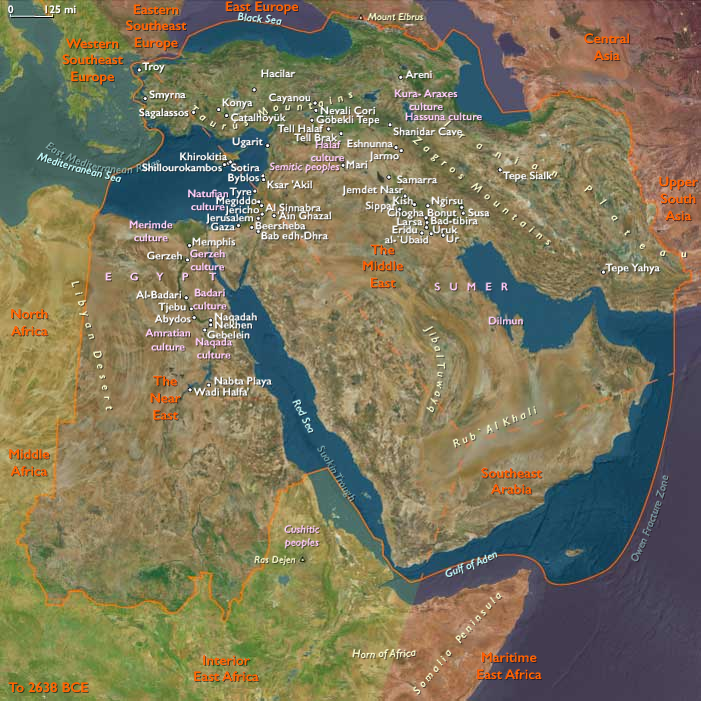
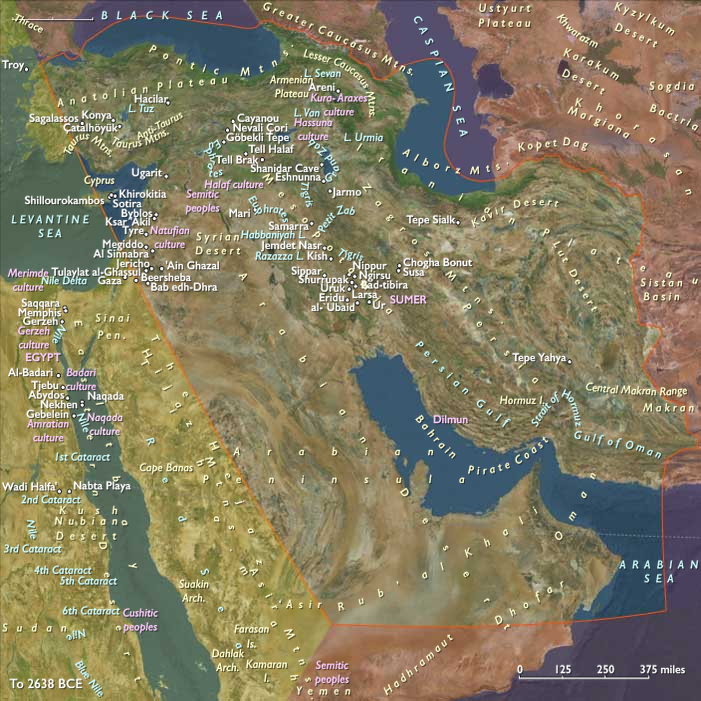
Between 5085 and 4942 BCE, human habitation continued on the barren Qatar Peninsula, roughly rectangular and extending approximately 160 kilometers (100 miles) from north to south and 80 kilometers (50 miles) east to west. Archaeological findings suggest human presence in this region dates back as far as 50,000 BCE, with Stone Age coastal encampments, settlements, and flint-working sites. Notably, pottery artifacts from the Mesopotamian Al Ubaid culture(circa 5000 BCE), rock carvings, and burial mounds of uncertain age highlight the peninsula's early interactions with broader regional cultures.
Foundation of Byblos (Gebal)
Around 5000 BCE, the nucleus of what would become the ancient city of Byblos (Greek) or Gebal (Phoenician) emerged on the Mediterranean coast of present-day Lebanon, approximately 42 kilometers (26 miles) north of Beirut. Historically revered as one of the world's oldest cities, Byblos is notably referenced by Philo of Byblos (quoting Sanchuniathon, as recorded by Eusebius) as a city founded by the mythical Cronus.
Archaeological Evidence and Early Communities
Archaeological discoveries in Byblos include remnants of prehistoric huts with floors of crushed limestone, primitive weapons, and burial jars. These artifacts are evidence of Neolithic and subsequent Chalcolithic communities engaged in fishing and coastal living along the eastern Mediterranean shoreline.
Cultural Connections and Trade Networks
Both Qatar Peninsula and Byblos illustrate early cultural connections and trade networks linking Mesopotamia, northern Arabia, and the Mediterranean. These interactions underscore the growing complexity and interconnectedness of communities during this era, facilitating cultural exchanges and economic integration across the region.
This period emphasizes early settlement patterns, emerging urban centers, and expanding cultural interactions, laying essential groundwork for further urban development and regional integration in the ancient Middle East.
Topics
Commodoties
Subjects
- Architecture
- Painting and Drawing
- Environment
- Decorative arts
- Faith
- Government
- Custom and Law
- Technology
- Metallurgy
Regions
Subregions
Years: 5085BCE - 4942BCE
Topics
Commodoties
Subjects
- Architecture
- Painting and Drawing
- Environment
- Decorative arts
- Faith
- Government
- Custom and Law
- Technology
- Metallurgy
Regions
Subregions