
The Middle East: 501–490 BCE Cultural …
Years: 501BCE - 490BCE
The Middle East: 501–490 BCE
Cultural Shifts and Prelude to Conflict
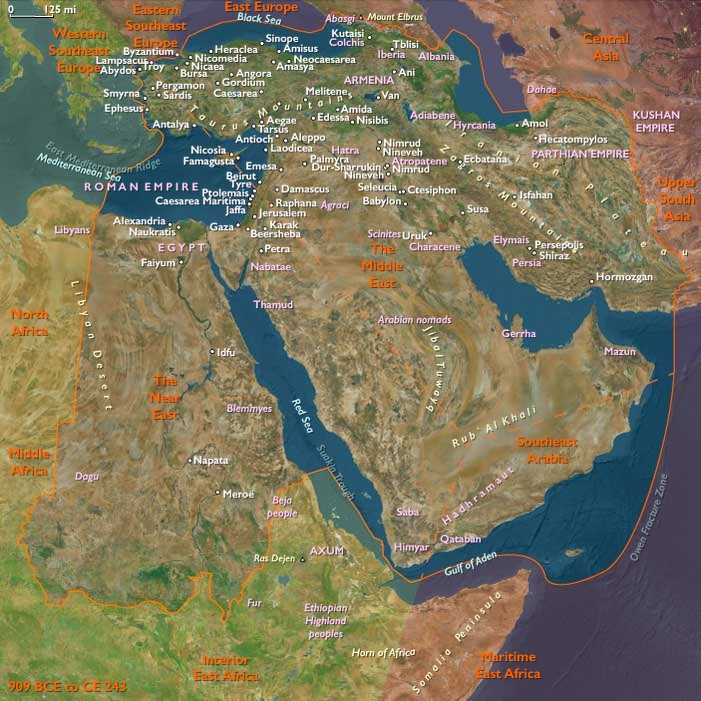
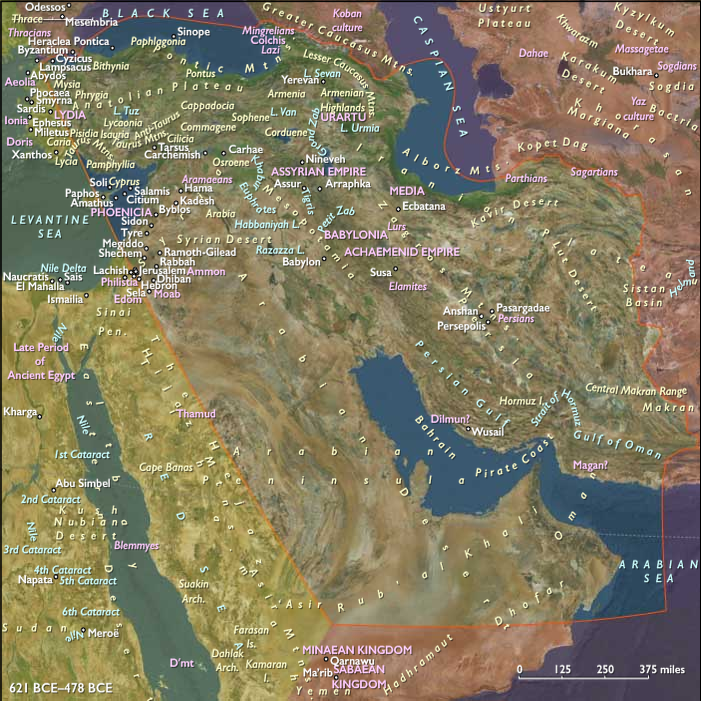
Around 500 BCE, significant urban development occurs along the Arabian coast, exemplified by the thriving town at Wusail, located near modern-day Doha. Greek historian Herodotus, writing shortly after this period, notes that the seafaring Canaanites were considered original inhabitants of the region now known as Qatar. This area's strategic location, recognized by subsequent Greek scholars, enhances its importance in regional trade networks.
Under Achaemenid Persian rule, Mesopotamian regions such as Assyria and Babylonia experience a period of flourishing prosperity, becoming vital sources of manpower and economic resources for the Persian Empire. Mesopotamian Aramaic remains the lingua franca, continuing its historical role in facilitating communication and administration across the vast imperial territories.
Despite these developments, Mesopotamian civilization begins to show early signs of decline around 500 BCE, indicating shifts in regional importance as new centers of power and culture rise elsewhere within the Persian realm.
After becoming aware of Persia’s unexpected defeat at the Battle of Marathon in 490 BCE, Darius initiates plans for another campaign against the Greek city-states, resolving to lead the imperial forces personally. The outcome at Marathon profoundly affects the Persian-Greek relationship, laying the groundwork for future large-scale confrontations that will significantly influence the subsequent history of the region.
People
Groups
- Athens, City-State of
- Greece, classical
- Sparta, Kingdom of
- Greeks, Classical
- Zoroastrians
- Achaemenid Empire
Topics
Subjects
Regions
Subregions
Related Events
Showing 10 events out of 65695 total
Years: 501BCE - 490BCE
People
Groups
- Athens, City-State of
- Greece, classical
- Sparta, Kingdom of
- Greeks, Classical
- Zoroastrians
- Achaemenid Empire
Topics
Subjects
Regions
Subregions