
The Middle East: 484–495 CE The …
Years: 484 - 495
The Middle East: 484–495 CE
The Isaurian War and Eastern Roman Conflict
The period from 484 to 495 CE is dominated by significant military conflict within the Eastern Roman Empire, particularly the Isaurian War, which begins in 492 CE. This war is fought between the forces of the Eastern Roman Empire and the rebellious inhabitants of Isauria, a mountainous and isolated region in southern Asia Minor.
Background of the Conflict
Isauria, historically a rugged and remote district, has frequently resisted central authority, fostering a strong tradition of local autonomy and martial independence. The Isaurians had previously been influential within the Eastern Roman Empire, even providing emperors such as Zeno (r. 474–491 CE). However, after Zeno's death, the political climate shifts dramatically, resulting in tensions and eventual conflict as the empire seeks to curtail Isaurian influence.
Course and Impact of the War
The war is characterized by intense guerrilla-style fighting, reflecting both the difficult terrain and the fierce resistance of the Isaurians. Despite the harsh conditions, Eastern Roman forces gradually suppress the rebellion through persistent military campaigns. The conflict significantly drains imperial resources and attention but ultimately reasserts central authority over this challenging region.
Broader Imperial Implications
The suppression of the Isaurian rebellion symbolizes the Eastern Roman Empire’s efforts to maintain internal stability and central control in the face of peripheral challenges. The conclusion of the war consolidates imperial authority, strengthens the empire's military capabilities, and reduces the influence of regional power bases, thereby contributing to a period of relative internal stability.
Thus, the era from 484 to 495 CE highlights the complexities of imperial governance and military strategy in the Eastern Roman Empire, illustrating both the fragility of central authority and the empire's capacity for maintaining cohesion through determined and sustained efforts.
People
Groups
Topics
Subjects
Regions
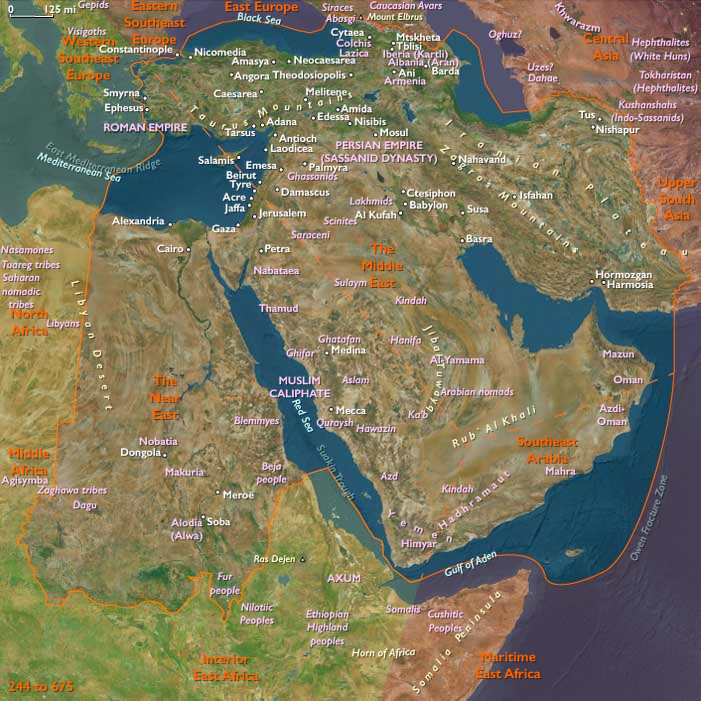
Subregions
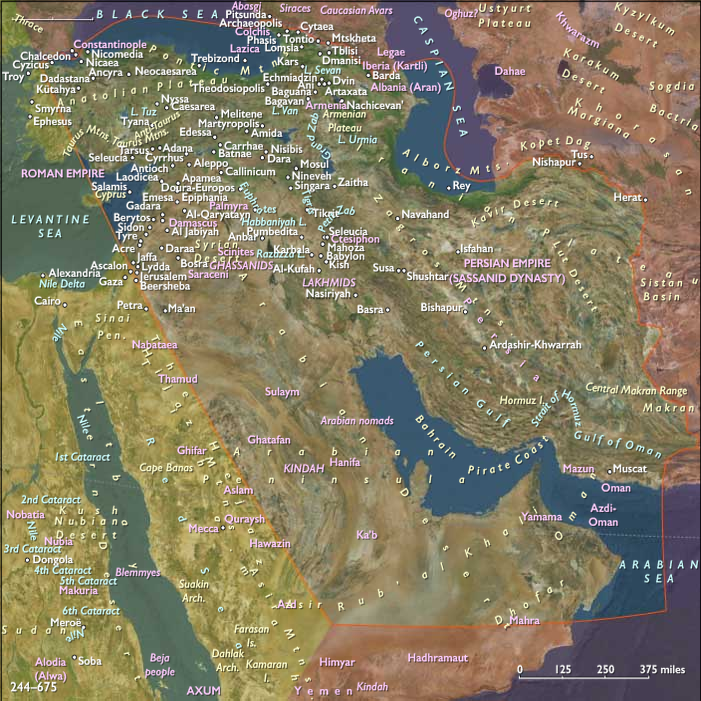
Years: 484 - 495
People
Groups
Topics
Subjects
Regions
Subregions