
The Middle East: 33–22 BCE Parthian …
Years: 33BCE - 22BCE
The Middle East: 33–22 BCE
Parthian Civil War and Roman Diplomacy
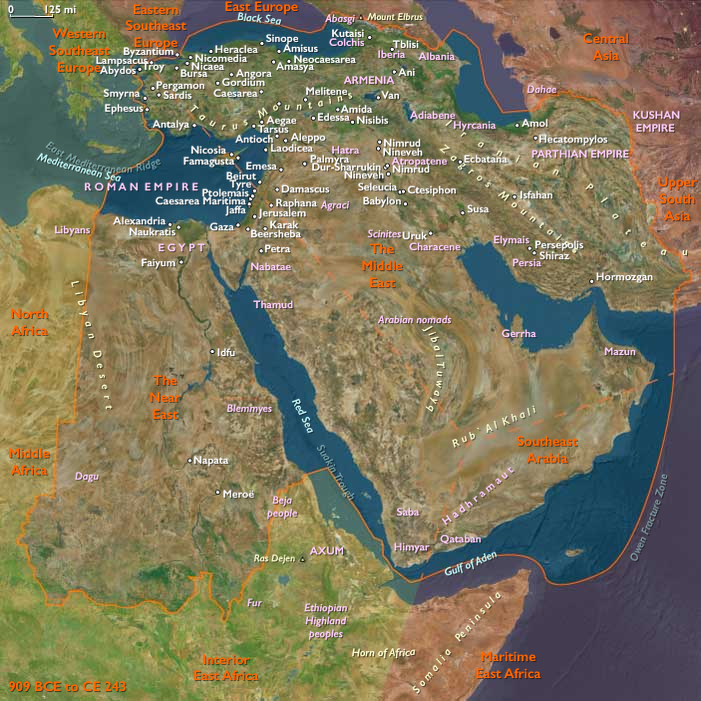
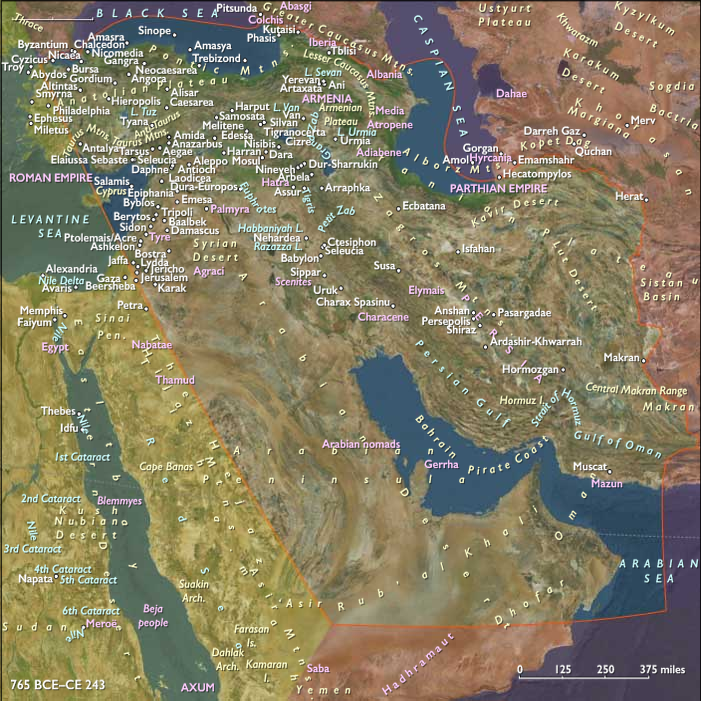
In 32 BCE, the Parthian Empire descends into civil war as Tiridates rebels against the rule of Phraates IV, who had previously alienated the nobility through harsh persecutions. Tiridates initially seizes power with considerable support from the Parthian elite, driving Phraates from the throne. However, Phraates soon returns with the backing of Scythian allies, regaining control and forcing Tiridates to flee.
Seeking refuge, Tiridates travels to Roman-held Syria, appealing to the Roman ruler Augustus for assistance. Augustus, unwilling to directly intervene against Parthia at this juncture, allows Tiridates safe haven but withholds active support. Undeterred, Tiridates launches another invasion into Parthian territory around 26 BCE, briefly minting coins under the royal title "Arsaces Philoromaios"—emphasizing his pro-Roman stance with symbolic imagery of Tyche, the goddess of fortune, offering him victory.
Despite this symbolic proclamation of legitimacy, Tiridates is swiftly expelled once more by Phraates. In an attempt to strengthen his political position, Tiridates captures one of Phraates' sons and delivers him to Augustus in Spain, intending to leverage the prince as a bargaining chip. Augustus returns the boy to his father, a gesture of diplomatic goodwill aimed at preserving peace. However, Augustus pointedly refuses to surrender Tiridates himself, further complicating Roman-Parthian relations.
Thus, this era underscores the intricate balance of power in the Middle East, with Rome cautiously navigating internal Parthian conflicts to extend its diplomatic influence without committing to direct military confrontation.
People
Groups
Topics
Commodoties
Subjects
Regions
Subregions
Years: 33BCE - 22BCE
People
Groups
Topics
Commodoties
Subjects
Regions
Subregions