
The Middle East (4221–4078 BCE): Rise of …
Years: 4221BCE - 4078BCE
The Middle East (4221–4078 BCE): Rise of Urban Life and the Establishment of Susa
Beginnings of Urbanization and Agriculture
Between 4221 and 4078 BCE, sedentary agriculture became increasingly sophisticated in Mesopotamia, providing a solid foundation for the emergence of urban life and early civilization. During this period, communities also mastered advanced techniques such as the engraving of hard stones, reflecting significant technological progress.
Foundation and Growth of Susa
Around 4200 BCE, one of the oldest settlements in the region—and indeed the world—Susa, began to take shape. Initially, it comprised two distinct settlements identified by archaeologists as the Acropolis (approximately seven hectares) and Apadana (approximately 6.3 hectares). These settlements eventually merged to form Susa proper, spanning roughly eighteen hectares. The Apadana settlement featured impressive fortifications, including walls of rammed earth up to six meters thick.
The establishment of Susa coincided with the abandonment of surrounding villages, possibly representing a strategic initiative to reconstruct the nearby previously destroyed settlement at Chogha Mish. Archaeological evidence indicates a continuous human presence in the vicinity of Susa dating back as far as 7000 BCE, with a painted-pottery culture evident around 5000 BCE.
Chalcolithic Culture and Artifacts at Hacilar
Concurrent with developments in Mesopotamia, the residents of Hacilar during the Early Chalcolithic epoch were notably active in producing elaborately patterned red-on-buff painted pottery. These communities also crafted numerous clay female figurines, depicted either individually or accompanied by animals and children. These artifacts reflect a rich cultural and symbolic life during this formative era.
Broader Impacts and Developments
This period underscores significant advancements in urban planning, fortification techniques, craftsmanship, and artistic expression. The rise of urban centers such as Susa marked a pivotal shift towards increasingly complex social structures and more integrated regional cultures, setting the stage for future civilizations in the ancient Middle East.
Groups
Topics
Commodoties
Subjects
- Architecture
- Painting and Drawing
- Environment
- Decorative arts
- Faith
- Government
- Custom and Law
- Technology
- Metallurgy
Regions
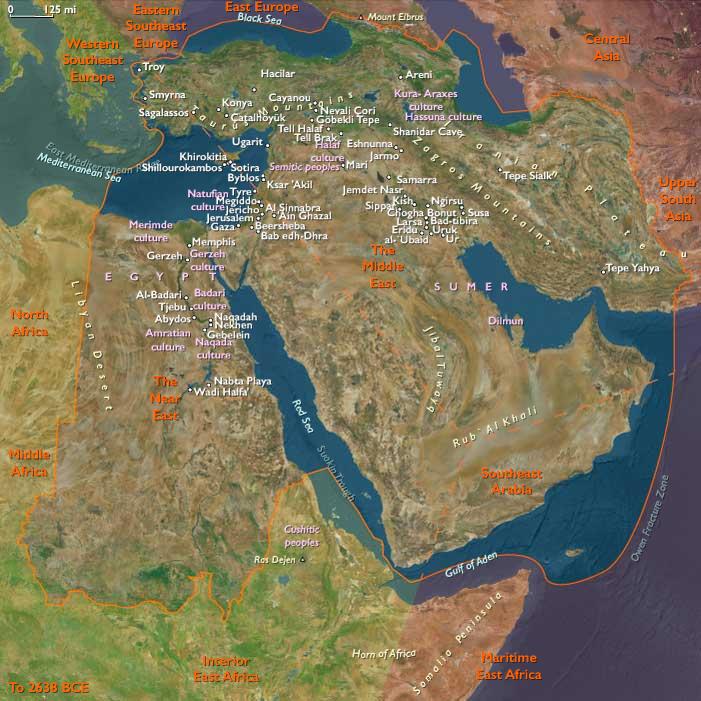
Subregions
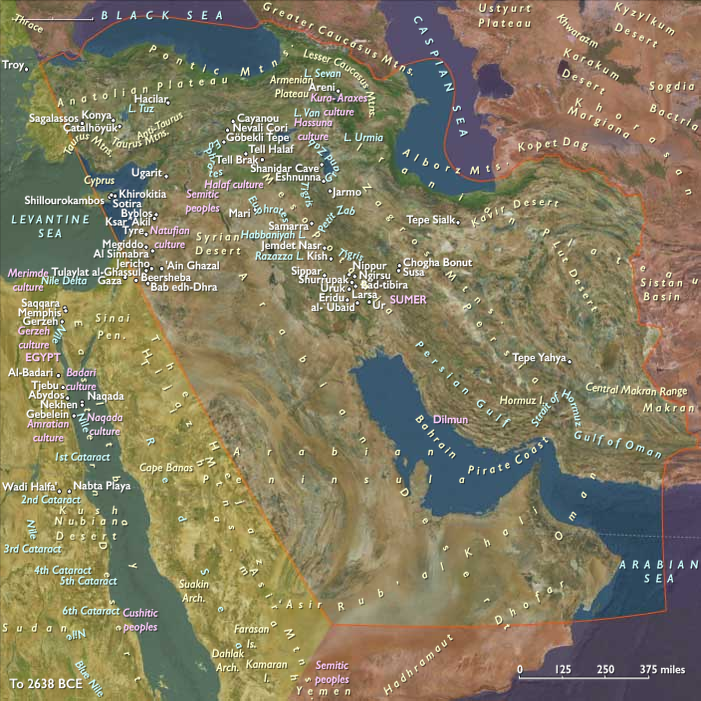
Related Events
Showing 10 events out of 68840 total
Years: 4221BCE - 4078BCE
Groups
Topics
Commodoties
Subjects
- Architecture
- Painting and Drawing
- Environment
- Decorative arts
- Faith
- Government
- Custom and Law
- Technology
- Metallurgy
Regions
Subregions