
The Middle East: 424–435 CE Armenia: …
Years: 424 - 435
The Middle East: 424–435 CE
Armenia: Cultural Flourishing Amid Political Change
Between 424 and 435 CE, Armenia undergoes significant political and cultural transformations. Following Armenia’s earlier division in 387 CE into Roman Armenia and Persarmenia, the region continues to experience divergent trajectories under Roman and Persian influences. Roman Armenia, roughly one-fifth of the original territory, is quickly integrated into the Roman (Byzantine) Empire, contributing significantly to its military and political leadership.
Persarmenia remains under nominal Arsacid rule until 428 CE, when King Artashes IV is deposed at the behest of the powerful Armenian noble class, known as the nakharars, and replaced by a Persian governor (marzpan). This change effectively ends Armenia’s political sovereignty. However, the loss of political independence spurs a cultural renaissance that profoundly shapes Armenian identity.
Rise of Armenian National Identity
Central to this cultural resurgence is the development of the Armenian alphabet and the flourishing of national Christian literature, achievements largely attributed to the monk Mesrop Mashtots and his collaborators. These advancements fortify a distinct Armenian cultural and religious identity, fostering unity and resilience despite political subjugation.
The earlier conversion of Armenia to Christianity under King Tiridates III and Saint Gregory the Illuminator (circa 314 CE) continues to exert a profound influence, firmly entrenching Christianity as a cornerstone of national identity. The Armenian Church, led by the patriarchate, assumes a pivotal role in preserving national cohesion and culture in the absence of political autonomy.
Roman–Sassanian Rivalries
Simultaneously, persistent tensions between the Roman (Byzantine) and Sassanian Empires continue along the contested borders of Armenia and Mesopotamia. Although large-scale conflict is relatively restrained during this period, frequent border skirmishes and diplomatic disputes underline the volatile and strategically critical nature of this frontier.
Continued Urban Prosperity and Religious Institutions
In Roman-controlled Syria, cities such as Damascus, Palmyra, and Busra ash Sham remain vibrant centers of commerce, culture, and learning. The period sees ongoing economic stability supported by robust trade networks and infrastructure, further solidifying these urban centers as hubs of regional influence.
Meanwhile, the consolidation of Zoroastrian orthodoxy continues within the Sassanian Empire, reinforcing cultural identity and social cohesion under Persian rule. The Zoroastrian priesthood remains influential, contributing significantly to the governance and societal structure of Persian-controlled territories.
Thus, the era 424 to 435 CE in the Middle East marks an epoch of critical political realignment, profound cultural renaissance in Armenia, and ongoing geopolitical tension, setting the stage for subsequent historical developments in the region.
Groups
- Zoroastrians
- Jews
- Mesopotamia (Roman province)
- Armenia, Kingdom of
- Persian Empire, Sassanid, or Sasanid
- Christians, Armenian Apostolic Orthodox
- Christianity, Nicene
- Roman Empire: Theodosian dynasty (Constantinople)
- Armenia, (East Roman [Byzantine] vassal) Principality of
- Armenia, or Persarmenia, (Persian vassal) Marzabanate of
Subjects
Regions
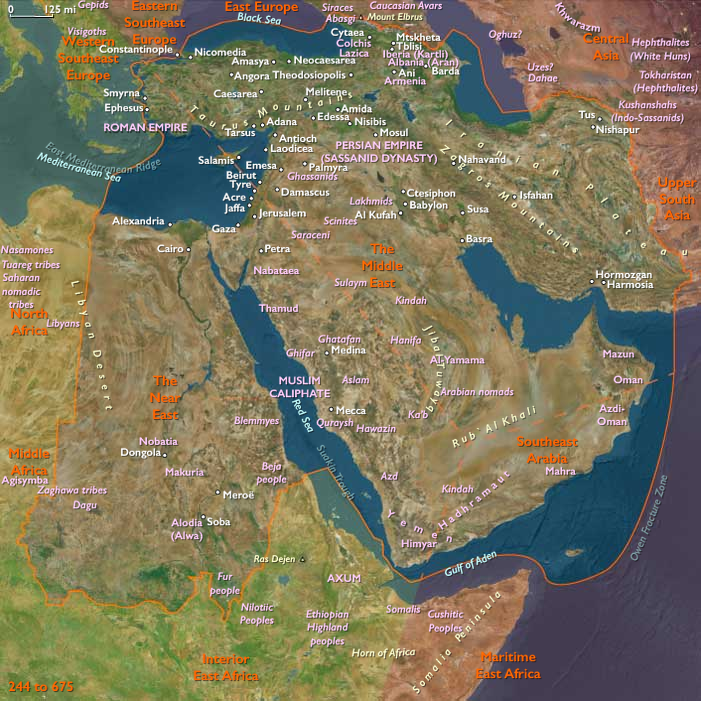
Subregions
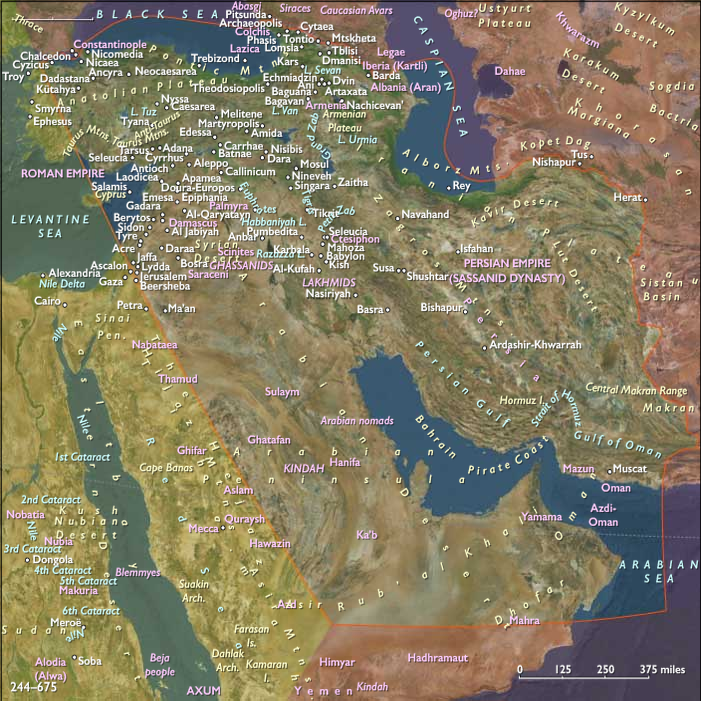
Related Events
Showing 10 events out of 13 total
Years: 424 - 435
Groups
- Zoroastrians
- Jews
- Mesopotamia (Roman province)
- Armenia, Kingdom of
- Persian Empire, Sassanid, or Sasanid
- Christians, Armenian Apostolic Orthodox
- Christianity, Nicene
- Roman Empire: Theodosian dynasty (Constantinople)
- Armenia, (East Roman [Byzantine] vassal) Principality of
- Armenia, or Persarmenia, (Persian vassal) Marzabanate of
Subjects
Regions
Subregions