The Middle East: 412–423 CE Cultural …
Years: 412 - 423
The Middle East: 412–423 CE
Cultural and Religious Flourishing
Between 412 and 423 CE, the Middle East experiences vibrant cultural and religious development despite ongoing geopolitical tensions. In particular, the Jewish communities of Babylonia and Palestine significantly enrich their religious and cultural life. This period witnesses the compilation and embellishment of the Jewish Hagadah texts, which complement the ethical and theological discourses of the Talmud with lively anecdotes, legends, and illustrative stories. These texts become central to Jewish religious study, providing moral instruction and fostering cultural cohesion across dispersed Jewish communities.
Continued Roman–Sassanian Tensions
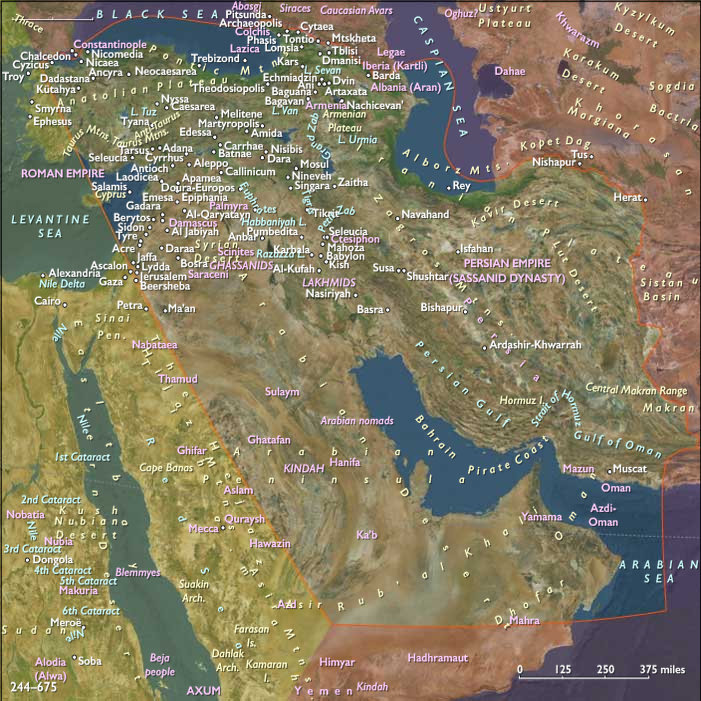
Although no major wars erupt during this era, friction between the Roman (Byzantine) and Sassanid Empirespersists, particularly along their shared border regions in Armenia and Mesopotamia. Frequent small-scale clashes and mutual provocations maintain a climate of tension, highlighting the strategic importance and ongoing volatility of these contested areas.
Religious Institutions and Authority
Within Roman-held territories, the institutional influence of Christianity continues to expand, driven by prominent bishops and theologians who further consolidate doctrinal authority and ecclesiastical power. Churches and monasteries serve as critical centers of education, manuscript preservation, and community support, strengthening Christian cultural identity across the region.
Zoroastrian Consolidation
In the Sassanian Empire, the integration of Zoroastrian orthodoxy within Persian governance structures advances significantly. The state-supported priesthood deepens its role in societal regulation and governance, reinforcing traditional Iranian identity and maintaining cultural unity throughout Persian-controlled territories.
Economic Stability and Urban Vitality
Cities such as Damascus, Palmyra, and Busra ash Sham under Roman rule continue their economic and cultural flourishing. Robust trade routes and strong infrastructure support ongoing prosperity, enabling these urban centers to sustain their significance as vibrant commercial and cultural hubs.
Thus, the years 412 to 423 CE mark an era of significant religious, cultural, and economic dynamism, even as geopolitical tensions between the major regional powers persist, shaping the future trajectory of the Middle East.
Related Events
Showing 10 events out of 59129 total
Years: 412 - 423
Groups
- Zoroastrians
- Jews
- Mesopotamia (Roman province)
- Armenia, Kingdom of
- Persian Empire, Sassanid, or Sasanid
- Christianity, Nicene
- Roman Empire: Theodosian dynasty (Constantinople)
- Armenia, (East Roman [Byzantine] vassal) Principality of
Subjects
Regions
Subregions