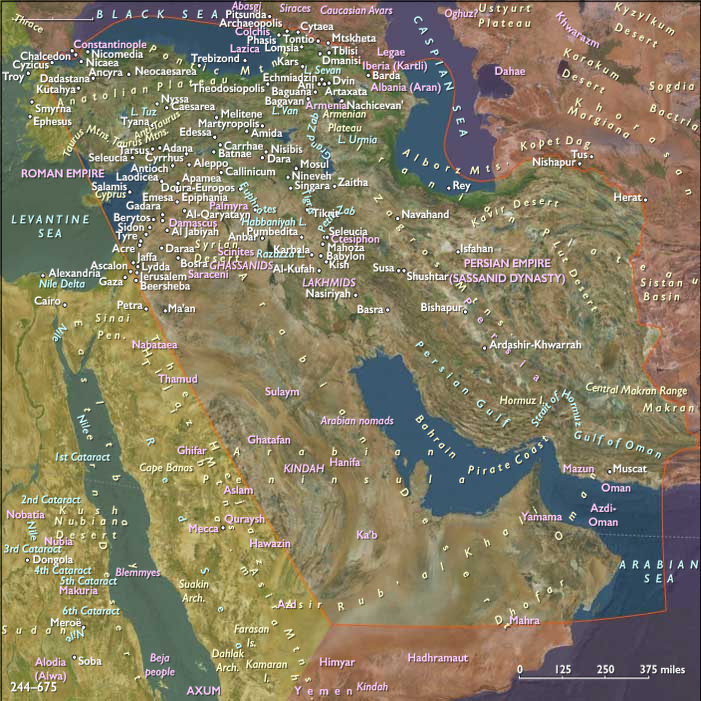
The Middle East: 400–411 CE Renewed …
Years: 400 - 411
The Middle East: 400–411 CE
Renewed Tensions and Religious Dynamics
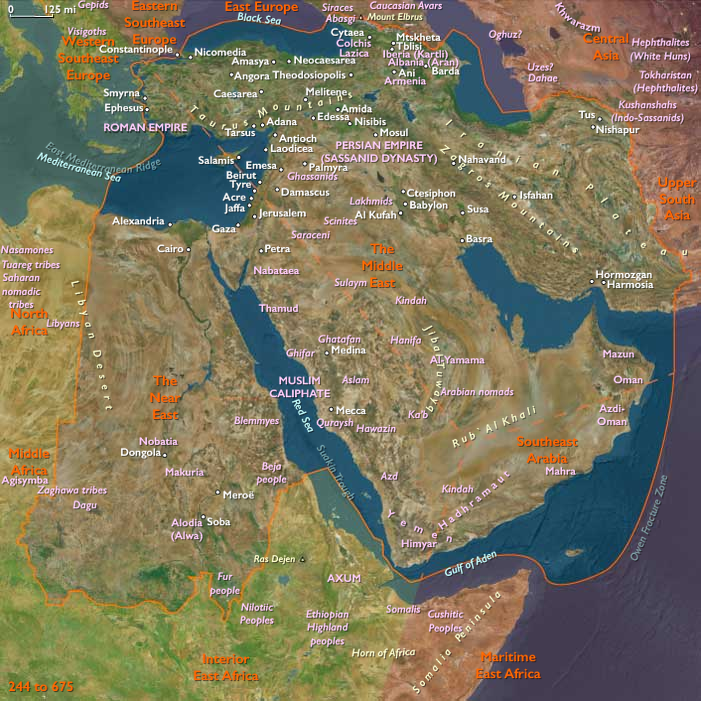
The period from 400 to 411 CE sees the fragile stability achieved by the earlier Peace of Acilisene begin to erode, leading to renewed tensions between the Roman (Byzantine) and Sassanid Empires. Although no full-scale war erupts immediately, mutual suspicion and border skirmishes become increasingly frequent, especially along the contested territories of Armenia and Mesopotamia.
Armenia as a Flashpoint
The divided Armenia continues to be a significant point of friction. Roman control in the west remains relatively stable, supported by strong cultural and religious ties to Christianity, which deepen Armenia's alignment with Byzantium. Conversely, Sassanian-controlled eastern Armenia endures intensified Persian cultural and religious influence, emphasizing Zoroastrian orthodoxy and Persian administrative methods. The cultural and religious divergence between these two regions deepens, highlighting Armenia's role as a persistent geopolitical flashpoint.
Christianity's Institutional Growth
Christianity continues its robust institutional development in the Roman territories, shaping regional identities and governance structures. The influence of prominent religious figures, particularly bishops and theologians, expands considerably, consolidating Christian doctrinal authority. Churches and monasteries flourish, becoming not only centers of worship but also vital hubs for education, manuscript preservation, and social services.
Zoroastrian Orthodoxy and Persian Governance
In the Sassanian Empire, the Zoroastrian priesthood's influence grows further under state sponsorship, playing an integral role in governance and social regulation. Religious authorities closely align with the imperial administration to ensure social conformity and stability, reinforcing Persian identity throughout the empire. This period witnesses an increased emphasis on reinforcing traditional Iranian culture and Zoroastrian practices across Persian-held territories.
Economic Continuity and Urban Development
Greater Syria, despite geopolitical uncertainties, maintains considerable economic prosperity under Roman administration. Major cities such as Damascus, Palmyra, and Busra ash Sham continue to thrive, benefiting from established trade routes and robust infrastructure. These cities reinforce their roles as vibrant commercial and cultural centers, fostering continued urban growth and economic stability in the region.
Thus, the era from 400 to 411 CE is characterized by a precarious balance between escalating geopolitical tensions and vigorous religious and economic developments, setting the stage for significant future transformations in the Middle East.
Related Events
Showing 10 events out of 12 total
Years: 400 - 411
Groups
- Zoroastrians
- Armenia, Kingdom of
- Persian Empire, Sassanid, or Sasanid
- Christianity, Nicene
- Roman Empire: Theodosian dynasty (Constantinople)
- Armenia, (East Roman [Byzantine] vassal) Principality of
Subjects
Regions
Subregions