
The Middle East (3646–3502 BCE): Expansion of …
Years: 3645BCE - 3502BCE
The Middle East (3646–3502 BCE): Expansion of Urban Centers and Technological Progress
Growth of Urban Settlements
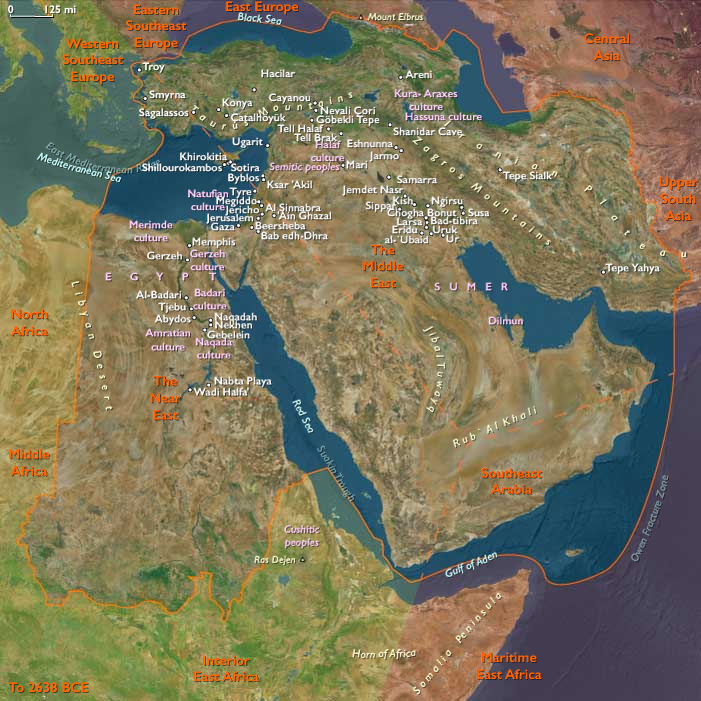
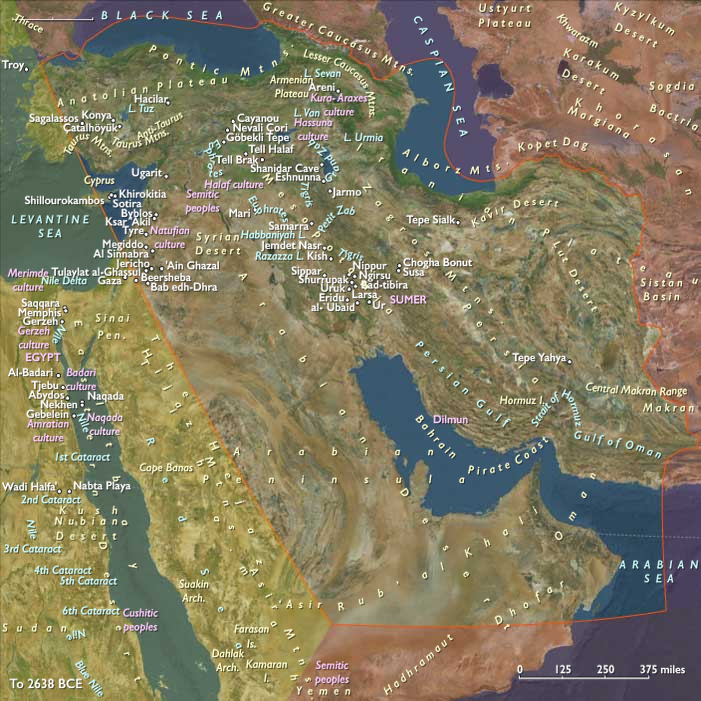
Between 3646 and 3502 BCE, urban centers throughout Mesopotamia and the broader Middle East experienced significant expansion and development. Settlements such as Susa, Uruk, and Tell Brak continued to evolve, demonstrating increasingly complex urban planning and community organization. These cities expanded their influence, becoming central nodes within emerging trade and administrative networks.
Urban Planning and Infrastructure
This period saw significant advancements in urban infrastructure, including the construction of larger monumental buildings, expanded city walls, and more sophisticated public works such as roads and drainage systems. Such infrastructure supported growing urban populations and facilitated more efficient administration, trade, and social interaction.
Administrative and Writing Systems
Building upon earlier developments, the administrative systems within these urban centers became increasingly sophisticated. Cylinder seals, tokens, bullae, and early tablets continued to serve as vital administrative tools, supporting the growth of bureaucracy and record-keeping. The progressive complexity of these writing systems marked a critical step toward the formalization of writing and accounting practices that would underpin future civilizations.
Technological and Economic Advances
Metallurgical technology continued to advance, with the production and distribution of bronze artifacts becoming more widespread. This era witnessed further refinement of metallurgical techniques, improving the quality and utility of metal tools and weapons, and contributing significantly to agricultural efficiency, craftsmanship, and warfare capabilities.
Cultural Interactions and Exchange
Regional trade networks became increasingly interconnected, facilitating the exchange of goods, ideas, and technologies between urban centers. This integration helped spread innovations such as metallurgy, pottery styles, and architectural techniques throughout the region, enhancing cultural cohesion and economic prosperity.
This age represents a vital period of urban growth, technological innovation, and administrative sophistication, significantly shaping the societal complexity and cultural development of the ancient Middle East.
Groups
- Ubaid culture
- Eridu, City-state of
- Sumer
- Nippur, city-state of
- Susa, City-state of
- Ur, city-state of
- Uruk, city-state of
Topics
Commodoties
- Weapons
- Hides and feathers
- Glass
- Domestic animals
- Grains and produce
- Ceramics
- Strategic metals
- Beer, wine, and spirits
Subjects
- Commerce
- Architecture
- Painting and Drawing
- Environment
- Decorative arts
- Faith
- Government
- Custom and Law
- Technology
- Metallurgy
Regions
Subregions
Related Events
Showing 10 events out of 68780 total
Years: 3645BCE - 3502BCE
Groups
- Ubaid culture
- Eridu, City-state of
- Sumer
- Nippur, city-state of
- Susa, City-state of
- Ur, city-state of
- Uruk, city-state of
Topics
Commodoties
- Weapons
- Hides and feathers
- Glass
- Domestic animals
- Grains and produce
- Ceramics
- Strategic metals
- Beer, wine, and spirits
Subjects
- Commerce
- Architecture
- Painting and Drawing
- Environment
- Decorative arts
- Faith
- Government
- Custom and Law
- Technology
- Metallurgy
Regions
Subregions