
The Middle East: 357–346 BCE Revolts …
Years: 357BCE - 346BCE
The Middle East: 357–346 BCE
Revolts and Imperial Reorganization under Artaxerxes III
This era sees Artaxerxes III Ochus ascend the Persian throne in 358 BCE, marking the start of a vigorous, often ruthless, reign intended to halt the steady erosion of Persian authority. Confronted immediately by widespread revolts and satrapal insubordination across the empire, Artaxerxes III acts decisively, determined to restore central control.
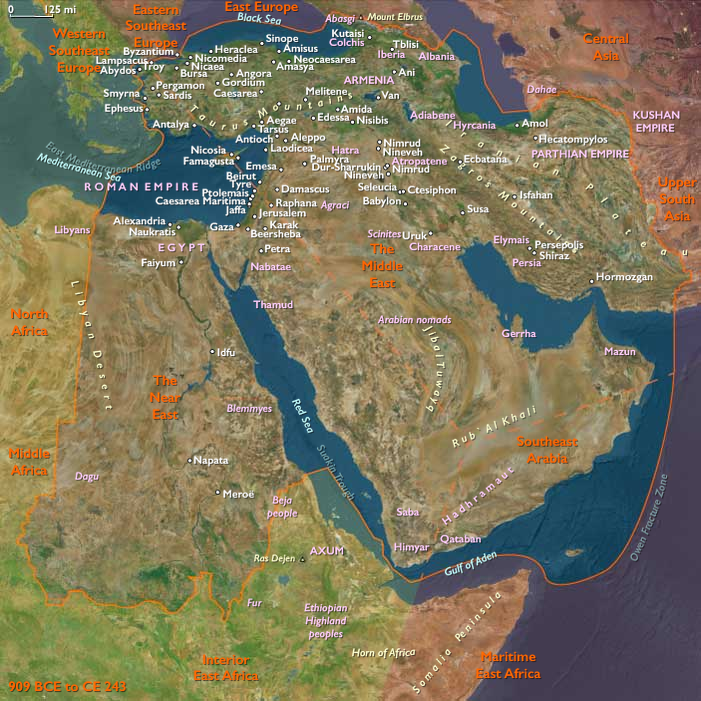
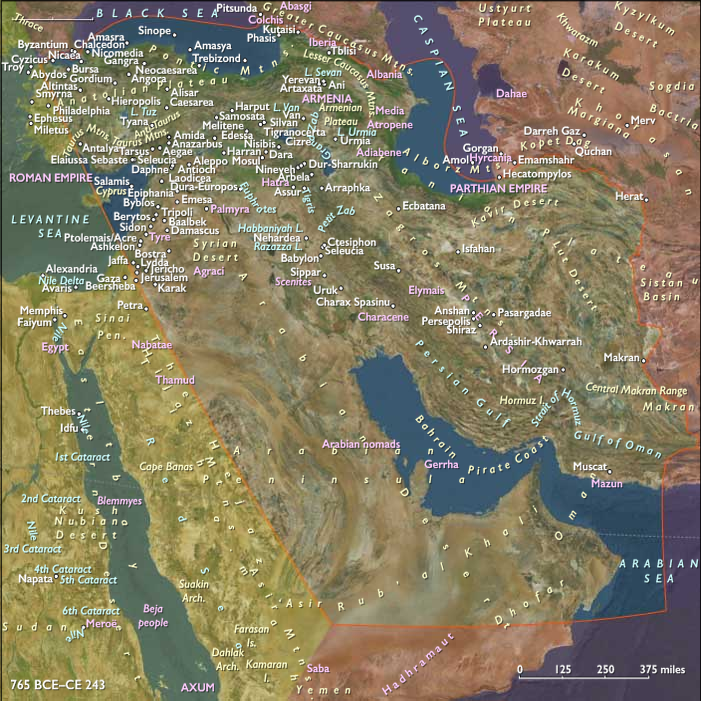
In 356 BCE, Artabazus, the satrap of Hellespontine Phrygia, leads a significant rebellion, attracting support from Greek mercenaries and cities disaffected by Persian rule. Artaxerxes III systematically suppresses this revolt by 353 BCE, reinforcing Persian dominance in Anatolia. Concurrently, he also moves aggressively to reestablish control over rebellious regions in Phoenicia and Cyprus, tightening his grip on these vital coastal territories through a combination of diplomacy, force, and harsh punitive actions.
Notably, the Phoenician city-states, such as Sidon and Tyre, temporarily regain prominence, leveraging their maritime strength to challenge Persian authority. Artaxerxes, however, ultimately quells their resistance with severe reprisals, reasserting imperial dominance. His consolidation of authority in the Levant and Anatolia re-stabilizes the Persian Empire, albeit through methods marked by exceptional severity.
Artaxerxes III’s assertive policies during this period temporarily restore Persian prestige and centralized power, setting the stage for renewed confrontation with resurgent powers in Greece and Egypt in subsequent decades.
People
Groups
- Tyre, Kingdom of (Phoenicia)
- Greece, classical
- Cyprus, Classical
- Achaemenid, or First Persian, Empire
Topics
Subjects
Regions
Subregions
Related Events
Showing 10 events out of 179 total
Years: 357BCE - 346BCE
People
Groups
- Tyre, Kingdom of (Phoenicia)
- Greece, classical
- Cyprus, Classical
- Achaemenid, or First Persian, Empire
Topics
Subjects
Regions
Subregions