
The Middle East: 376–387 CE Imperial …
Years: 376 - 387
The Middle East: 376–387 CE
Imperial Struggles and Renewed Roman–Sassanid Tensions
The period 376 to 387 CE witnesses renewed geopolitical tensions and strategic realignments in the Middle East, marking another chapter in the enduring rivalry between the Roman Empire and the Sassanid Persians. While previously established diplomatic accords between Emperor Valens and King Shapur II had provided a temporary respite, the late fourth century again sees escalating friction as both powers seek to extend influence and consolidate control over contested territories, notably Armenia and Mesopotamia.
The death of Shapur II in 379 CE, after a long and vigorous reign, leads to a brief period of internal instability within the Persian Empire. His successors, Ardashir II (379–383 CE) and Shapur III (383–388 CE), face internal challenges, including court intrigues and regional rebellions, limiting Persia’s immediate ability to capitalize on Roman distractions elsewhere.
On the Roman side, the disastrous defeat at Adrianople in 378 CE, in which Emperor Valens is killed, diverts Roman military resources to the northern frontier to counter Gothic incursions. This crisis compels Emperor Theodosius I (379–395 CE) to seek diplomatic solutions rather than prolonged warfare with Persia. Armenia, the perennial focal point of rivalry, is once again partitioned in 387 CE through the diplomatic initiative known as the Peace of Acilisene, with Rome and Persia agreeing to divide the kingdom along a negotiated boundary. The western portion of Armenia falls under Roman influence, while Persia secures the larger, strategically significant eastern region.
Culturally, this era remains a vibrant period of religious and intellectual consolidation in the Middle East. Christianity further solidifies its presence within the Roman sphere, strengthening its ecclesiastical institutions and establishing theological foundations that significantly influence both eastern and western Christendom. Meanwhile, Persia maintains its tradition of religious pluralism, with Zoroastrianism flourishing alongside Jewish and emerging Christian communities.
The Peace of Acilisene thus represents a pivotal diplomatic achievement, temporarily stabilizing the eastern frontier. However, the division of Armenia underscores a persistent geopolitical rivalry that will continue to shape regional dynamics for centuries to come.
People
Groups
- Jews
- Goths (East Germanic tribe)
- Mesopotamia (Roman province)
- Armenia, Kingdom of
- Persian Empire, Sassanid, or Sasanid
- Christianity, Nicene
- Roman Empire: Valentinian dynasty (Rome)
- Roman Empire: Theodosian dynasty (Constantinople)
- Armenia, (East Roman [Byzantine] vassal) Principality of
Topics
Subjects
Regions
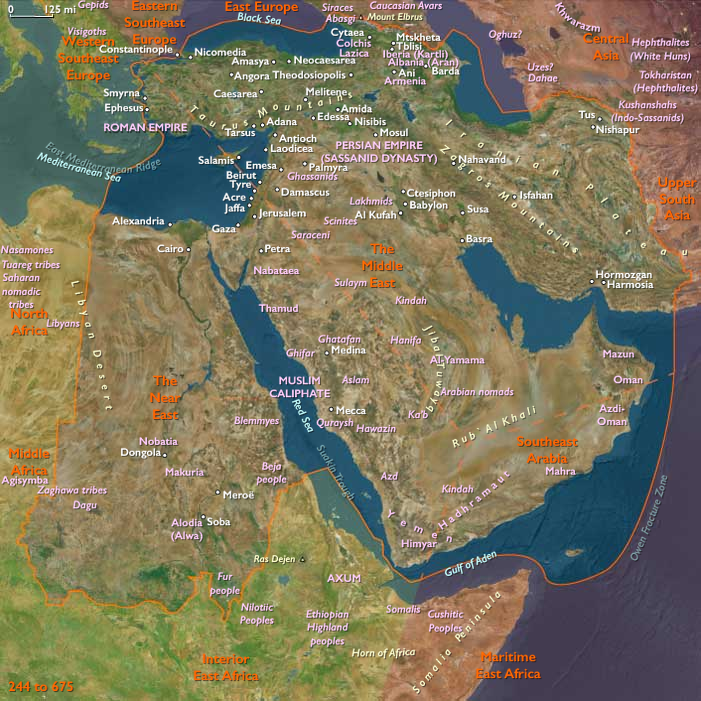
Subregions
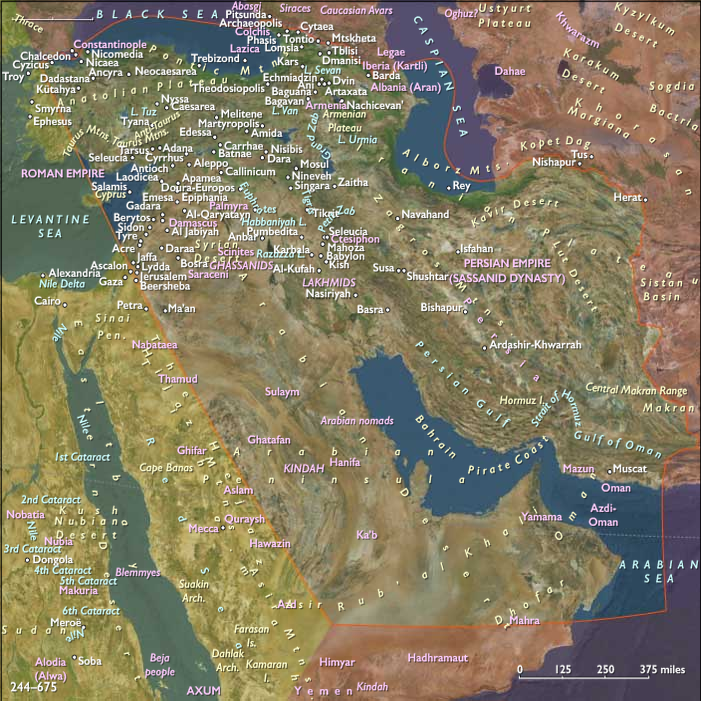
Related Events
Showing 10 events out of 59617 total
Years: 376 - 387
People
Groups
- Jews
- Goths (East Germanic tribe)
- Mesopotamia (Roman province)
- Armenia, Kingdom of
- Persian Empire, Sassanid, or Sasanid
- Christianity, Nicene
- Roman Empire: Valentinian dynasty (Rome)
- Roman Empire: Theodosian dynasty (Constantinople)
- Armenia, (East Roman [Byzantine] vassal) Principality of
Topics
Subjects
Regions
Subregions