
The Middle East: 364–375 CE Shifts …
Years: 364 - 375
The Middle East: 364–375 CE
Shifts in Roman-Persian Relations and Regional Stabilization
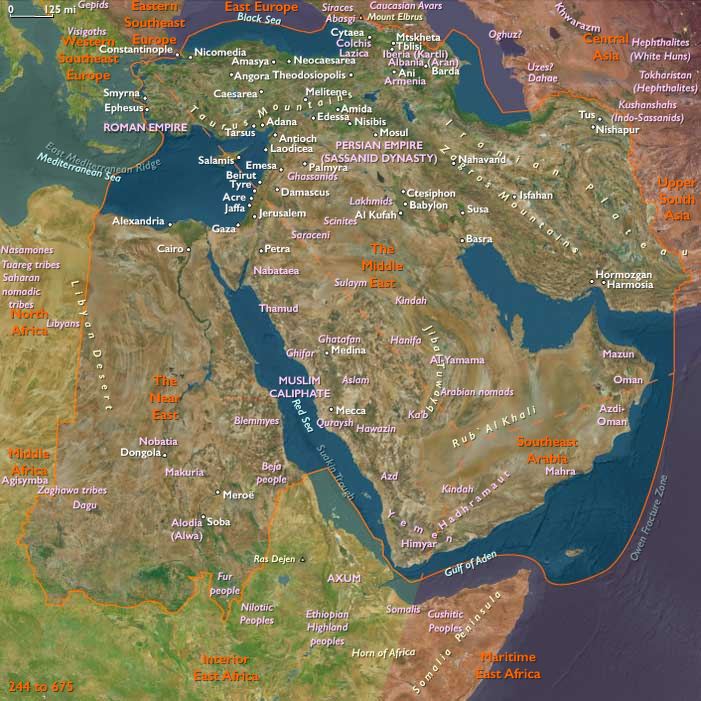
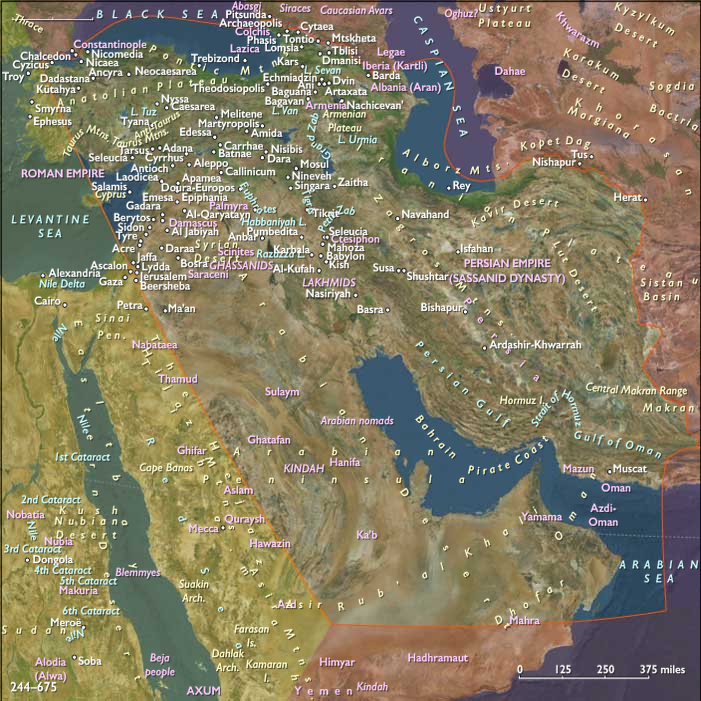
The period from 364 to 375 CE in the Middle East follows the traumatic Roman defeats suffered under Emperor Julian, ushering in an era of cautious stabilization and diplomatic recalibration. Emperor Valens (364–378), inheriting a diminished eastern frontier, prioritizes securing the Roman border against renewed Sassanid Persian aggression under King Shapur II.
In 371 CE, Valens and Shapur conclude a critical peace treaty, ending the prolonged conflicts and establishing a diplomatic equilibrium. Under this treaty, the previously ceded city of Nisibis remains firmly under Persian control, solidifying Persian dominance in northern Mesopotamia. The frontier is fortified, and relations normalize, permitting a period of relative peace and economic recovery along the borderlands.
Simultaneously, this interval allows Valens to shift his attention northward, toward pressing threats posed by Gothic and other barbarian incursions into the Balkans. The stabilization of the Persian frontier proves crucial, enabling Rome to reposition military resources to more threatened frontiers.
Culturally, this era continues to witness the flourishing of Christian institutions across the Roman-controlled Middle East. Increasingly consolidated in major urban centers, the Church becomes deeply integrated into Roman administrative and social structures. Concurrently, the Persian-controlled territories, including Babylonia, remain centers of intellectual and religious diversity, particularly noted for the ongoing compilation and scholarly refinement of the Babylonian Talmud.
Thus, the era 364–375 CE represents a brief but critical period of diplomatic realignment and stabilization between the Roman and Sassanid empires, setting the stage for further geopolitical developments and ensuring cultural and religious evolution throughout the region.
People
Groups
- Jews
- Goths (East Germanic tribe)
- Mesopotamia (Roman province)
- Persian Empire, Sassanid, or Sasanid
- Christianity, Nicene
- Roman Empire: Constantinian dynasty (Constantinople)
Subjects
Regions
Subregions
Years: 364 - 375
People
Groups
- Jews
- Goths (East Germanic tribe)
- Mesopotamia (Roman province)
- Persian Empire, Sassanid, or Sasanid
- Christianity, Nicene
- Roman Empire: Constantinian dynasty (Constantinople)
Subjects
Regions
Subregions