
The Middle East (3213–3070 BCE): Cuneiform Script …
Years: 3213BCE - 3070BCE
The Middle East (3213–3070 BCE): Cuneiform Script and Urban Peak at Uruk
Development and Spread of Cuneiform Writing
By 3200 BCE, the development of cuneiform script marked a significant advancement in Sumerian society, transforming administrative, economic, and cultural practices. This innovative writing system rapidly spread beyond Mesopotamia, influencing cultures such as the Egyptians to the west and the Elamites in southwestern Iran, highlighting a critical phase in the early history of written communication.
Theocratic Governance and Social Organization
During the Uruk period, Sumerian cities likely operated under a theocratic form of governance, typically headed by a priest-king known as an ensi. These leaders were assisted by councils of elders comprising both men and women, suggesting a relatively inclusive governance structure. Scholars propose that the later Sumerian pantheon may have been modeled after these political and social arrangements, reflecting the societal values and organizational principles of the time.
Absence of Institutionalized Violence
Notably, archaeological evidence indicates minimal institutionalized violence or standing armies during this era, with few towns showing evidence of defensive walls. This lack of militarization suggests that the period was characterized more by peaceful urban development and communal stability rather than by military aggression.
Uruk’s Urban Apex
Uruk reached unprecedented levels of urbanization during this time, becoming the most populous city in the world, surpassing fifty thousand inhabitants for the first time. Its growth was underpinned by advanced agricultural techniques, efficient administration, and robust trade networks, firmly establishing Uruk as a preeminent center of civilization in ancient Mesopotamia.
Continuing Technological Advancements
Technological advancements continued to flourish, particularly in metallurgy, where improved bronze manufacturing enhanced economic productivity and craftsmanship, further strengthening urban economies and facilitating regional trade.
This era highlights critical advancements in writing, governance, urbanization, and technology, underscoring a significant moment in the cultural and societal evolution of the ancient Middle East.
Groups
- Ubaid culture
- Eridu, City-state of
- Sumer
- Nippur, city-state of
- Susa, City-state of
- Ur, city-state of
- Uruk, city-state of
Topics
- Younger Peron Transgression during the Neolithic Subpluvial
- Subboreal Period during the Neolithic Subpluvial
Commodoties
- Weapons
- Hides and feathers
- Glass
- Domestic animals
- Grains and produce
- Ceramics
- Strategic metals
- Beer, wine, and spirits
Subjects
- Commerce
- Architecture
- Painting and Drawing
- Environment
- Decorative arts
- Faith
- Government
- Custom and Law
- Technology
- Metallurgy
Regions
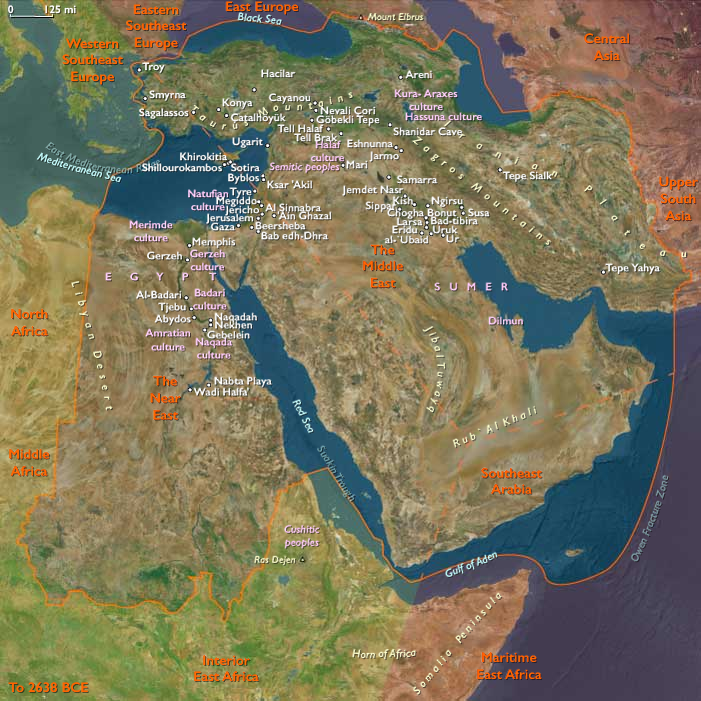
Subregions
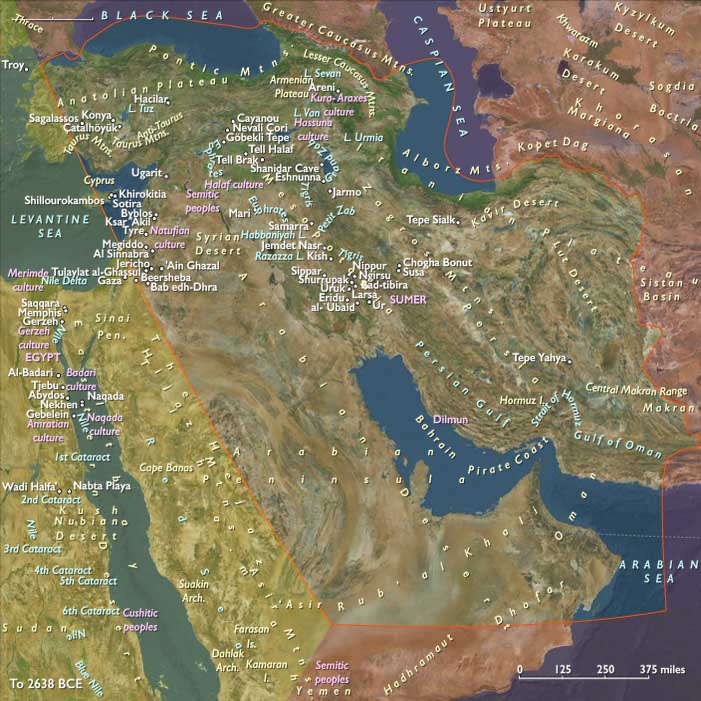
Years: 3213BCE - 3070BCE
Groups
- Ubaid culture
- Eridu, City-state of
- Sumer
- Nippur, city-state of
- Susa, City-state of
- Ur, city-state of
- Uruk, city-state of
Topics
- Younger Peron Transgression during the Neolithic Subpluvial
- Subboreal Period during the Neolithic Subpluvial
Commodoties
- Weapons
- Hides and feathers
- Glass
- Domestic animals
- Grains and produce
- Ceramics
- Strategic metals
- Beer, wine, and spirits
Subjects
- Commerce
- Architecture
- Painting and Drawing
- Environment
- Decorative arts
- Faith
- Government
- Custom and Law
- Technology
- Metallurgy
Regions
Subregions