
The Middle East (3069–2926 BCE): Urban Expansion, …
Years: 3069BCE - 2926BCE
The Middle East (3069–2926 BCE): Urban Expansion, Technological Advances, and Cultural Interaction
Early Settlement at Konya and Tepe Yahya
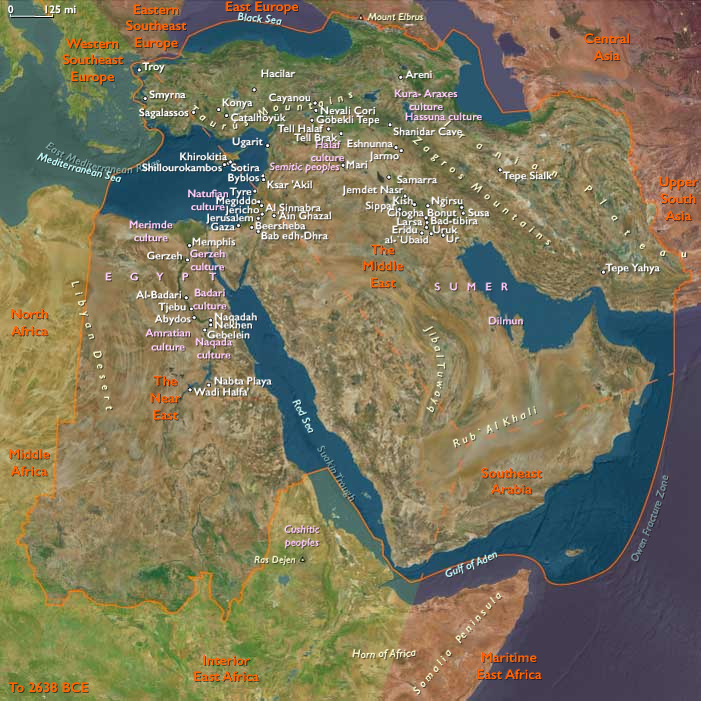
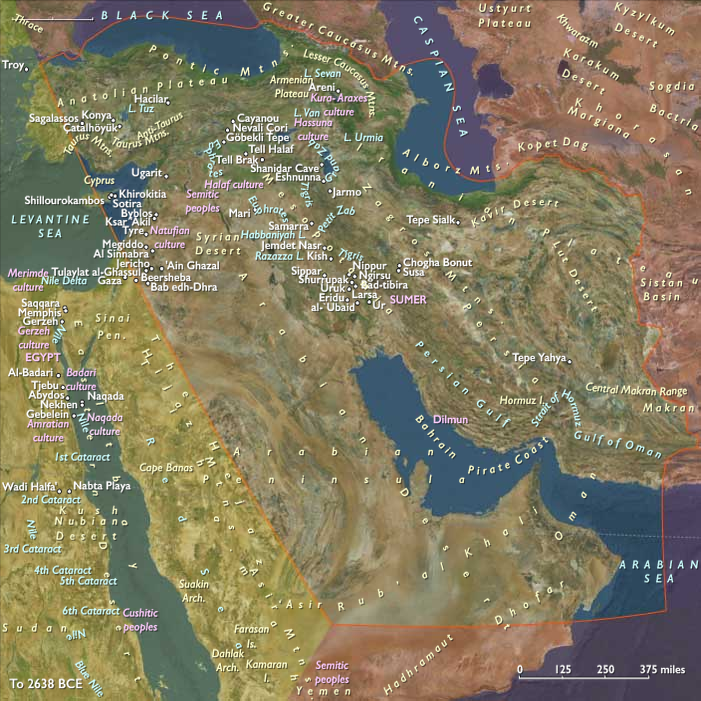
Between 3069 and 2926 BCE, the area around modern Konya (ancient Iconium), situated on a plateau at approximately 1,027 meters above sea level, experienced its first settlement. Concurrently, the site of Tepe Yahya in Iran, inhabited intermittently since 4500 BCE, flourished significantly from 3100 to 2900 BCE as a critical hub for commerce and overland trade. Notably, Tepe Yahya became renowned for exporting chlorite, used primarily in textile processing.
Byblos and Canaanite Civilization
Around 3000 BCE, Byblos (biblical Gebal), which had roots dating back to Neolithic times, transformed into a dynamic seaport and trade center. Evidence from this era includes well-built, uniform housing, marking the rise of urban life and early stages of Canaanite civilization. Byblos developed prosperous trading relationships, notably with Egypt, exporting products such as cedar, olive oil, and wine, while importing luxury items from the Nile Valley.
Phoenician Cities and Maritime Trade
The region now identified as Lebanon, first appearing prominently in historical records around 3000 BCE, featured coastal cities inhabited by the Canaanites—later known as Phoenicians due to their famed purple dye. Each city-state, such as Tyre, Sidon, Byblos (Gubla), and Beirut (Berytus), emerged as specialized and independent centers of maritime trade, religion, and commerce.
Greater Syria: Early Historical Context
The broader geographical region historically known as "Greater Syria" encompassed modern-day Syria, Lebanon, Jordan, and Israel. Ancient Egyptian records from the fourth millennium BCE mention expeditions to the region, particularly for valuable timber resources from the Ammanus and Lebanon mountain ranges, illustrating early economic and cultural interactions.
Innovations in Metallurgy and Transportation
Sumerians of this period advanced significantly in metallurgy, refining techniques to smelt copper and produce bronze alloys, initially using arsenic bronze and later developing tin bronze, first evident around 3000 BCE at Susa. Simultaneously, the earliest known animal-drawn wheeled vehicles appeared, revolutionizing transport and replacing earlier sledges. Clay tablets from Uruk (circa 3200–3100 BCE) depict these early wheeled carts, underscoring this critical technological advancement.
Proto-Elamite Script and Urban Developments
Proto-Elamite culture in southwestern Iran, contemporary with Sumer, transitioned from pictographic to hieroglyphic script around 3000 BCE. Despite remaining undeciphered, this writing represents an important early communication system, showing possible connections to contemporary Mesopotamian scripts.
Religious Architecture and Urban Complexity in Uruk
In Uruk, the White Temple dedicated to the god Anu, constructed around 3000 BCE, became a striking symbol of political and religious authority. Built atop an elevated, artificial mound, it featured bright gypsum plaster surfaces intended to dominate the surrounding plain visually. Uruk's social and economic structures evolved significantly, aided by substantial agricultural surpluses and expanding trade networks, fostering specialization of labor, extensive pottery production, and early tablet writing.
Cultural and Societal Changes
By this period, Mesopotamian society showed clear class stratification, reflecting greater complexity in governance, religion, and economic life. City-states, each centered around temples dedicated to local deities, demonstrated diverse social roles, particularly influencing the status of women. Notably, the early use of the "shekel" emerged as both currency and a weight measurement, reflecting advanced economic systems.
Jemdet Nasr Period and Sumerian Urbanization
The Jemdet Nasr period (3100–2900 BCE) marked a transitional era characterized by continued urban development in south-central Iraq, with cities like Kish gaining prominence. Sumerian clay tablets from this time, notably those from Jemdet Nasr, represent the oldest clearly Sumerian texts, featuring stylus-written wedge-shaped cuneiform script, a significant evolution from pictographic predecessors.
Cultural Flourishing at Tepe Sialk and Loristan
Tepe Sialk near modern Kashan, Iran, demonstrated early urban structures dating to the early third millennium BCE. Similarly, in Loristan, distinctive and finely crafted painted pottery, some remarkably thin, began to emerge around 3000 BCE, reflecting vibrant regional cultures interconnected by trade and artistic exchange.
This age encapsulates transformative developments in urban life, cultural sophistication, technological innovation, and economic expansion, solidifying crucial foundations for the complex societies that characterized the ancient Middle East.
Groups
- Eridu, City-state of
- Sumer
- Nippur, city-state of
- Susa, City-state of
- Ur, city-state of
- Uruk, city-state of
- Kish, City-state of
- Jemdet Nasr period
Topics
- Younger Peron Transgression during the Neolithic Subpluvial
- Subboreal Period during the Neolithic Subpluvial
Commodoties
- Weapons
- Hides and feathers
- Glass
- Domestic animals
- Grains and produce
- Ceramics
- Strategic metals
- Beer, wine, and spirits
Subjects
- Commerce
- Architecture
- Painting and Drawing
- Environment
- Decorative arts
- Faith
- Government
- Custom and Law
- Technology
- Metallurgy
Regions
Subregions
Years: 3069BCE - 2926BCE
Groups
- Eridu, City-state of
- Sumer
- Nippur, city-state of
- Susa, City-state of
- Ur, city-state of
- Uruk, city-state of
- Kish, City-state of
- Jemdet Nasr period
Topics
- Younger Peron Transgression during the Neolithic Subpluvial
- Subboreal Period during the Neolithic Subpluvial
Commodoties
- Weapons
- Hides and feathers
- Glass
- Domestic animals
- Grains and produce
- Ceramics
- Strategic metals
- Beer, wine, and spirits
Subjects
- Commerce
- Architecture
- Painting and Drawing
- Environment
- Decorative arts
- Faith
- Government
- Custom and Law
- Technology
- Metallurgy
Regions
Subregions