
The Middle East: 297–286 BCE Consolidation …
Years: 297BCE - 286BCE
The Middle East: 297–286 BCE
Consolidation of Seleucid Power and Regional Stability
Seleucus I Nicator and the Expansion of the Seleucid Empire
From 297 to 286 BCE, the Seleucid Empire, under the rule of Seleucus I Nicator (312–281 BCE), solidifies its control and expands significantly across the Near East. Seleucus, having secured a decisive victory in the earlier Babylonian War, further establishes his dominance by reinforcing his authority over Mesopotamia, Syria, and territories stretching eastward to Bactria and the borders of India. He skillfully manages the delicate balance of power among the diverse cultures and satrapies, laying robust administrative foundations.
Establishment and Growth of Antioch
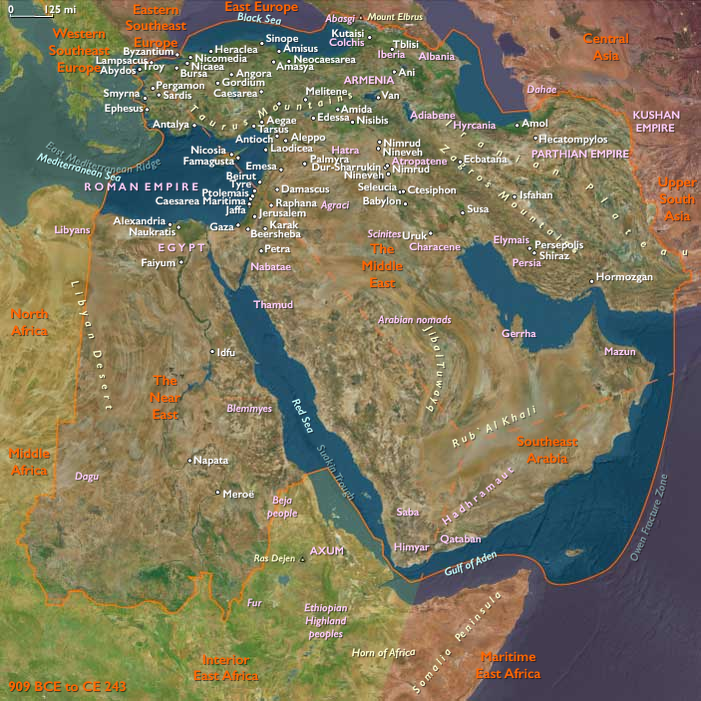
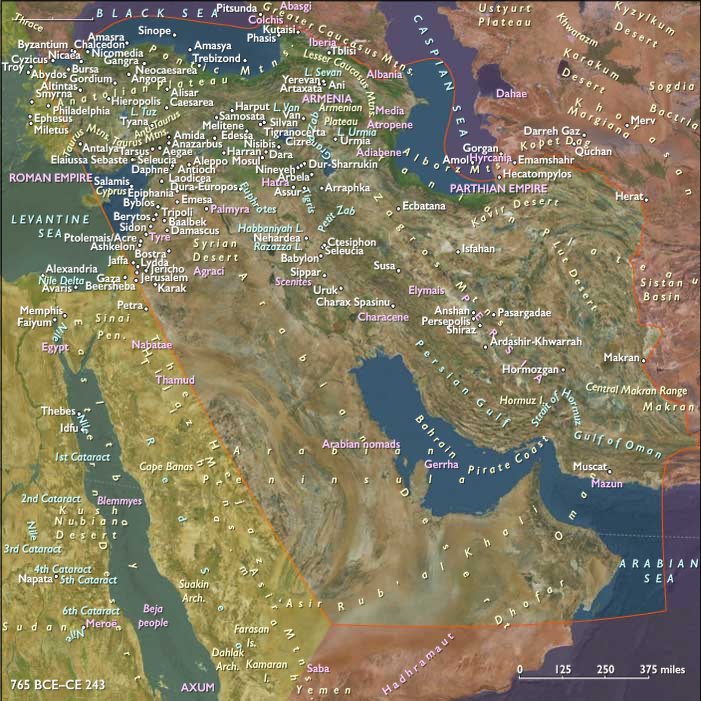
In 300 BCE, Seleucus founds the strategically positioned city of Antioch on the Orontes River in Syria. Antioch rapidly emerges as a major urban, commercial, and cultural center, rivaling Alexandria and becoming a cornerstone of Hellenistic civilization. It serves as a vital administrative capital, ensuring effective governance across Seleucid territories in the Levant and western Mesopotamia.
Diplomatic and Military Consolidation
Seleucus skillfully negotiates treaties and diplomatic marriages, securing alliances and internal stability across his domains. His careful diplomacy is coupled with decisive military campaigns aimed at quelling rebellions and securing frontiers. Military reforms further enhance the Seleucid forces, blending Macedonian military traditions with local levies and employing war elephants, a notable innovation adopted from his earlier campaigns in India.
Cultural Integration and Patronage
Under Seleucus’s rule, the empire actively promotes Hellenistic culture alongside local traditions, fostering a cosmopolitan environment that attracts scholars, artists, and merchants. Seleucid patronage supports temples, gymnasiums, libraries, and cultural institutions, significantly enriching the intellectual and artistic landscape. Cities like Antioch and Seleucia-on-the-Tigris flourish, becoming vibrant hubs of Hellenistic cultural synthesis.
Stability and Economic Prosperity
This era is marked by relative peace and economic growth within the Seleucid realm. Infrastructure projects, including extensive road networks, marketplaces, and irrigation systems, greatly stimulate trade and agricultural productivity. The flow of goods between the Mediterranean and Central Asia intensifies, consolidating Seleucid control and prosperity across a vast region.
Thus, the years 297–286 BCE see the Seleucid Empire mature into a powerful and stable Hellenistic state, profoundly influencing the political, cultural, and economic landscape of the Middle East for generations.
People
Groups
Topics
Subjects
Regions
Subregions
Related Events
Showing 10 events out of 64111 total
Years: 297BCE - 286BCE
People
Groups
Topics
Subjects
Regions
Subregions