
The Middle East: 292–303 CE Roman …
Years: 292 - 303
The Middle East: 292–303 CE
Roman Dominance and Armenia’s Christian Transformation
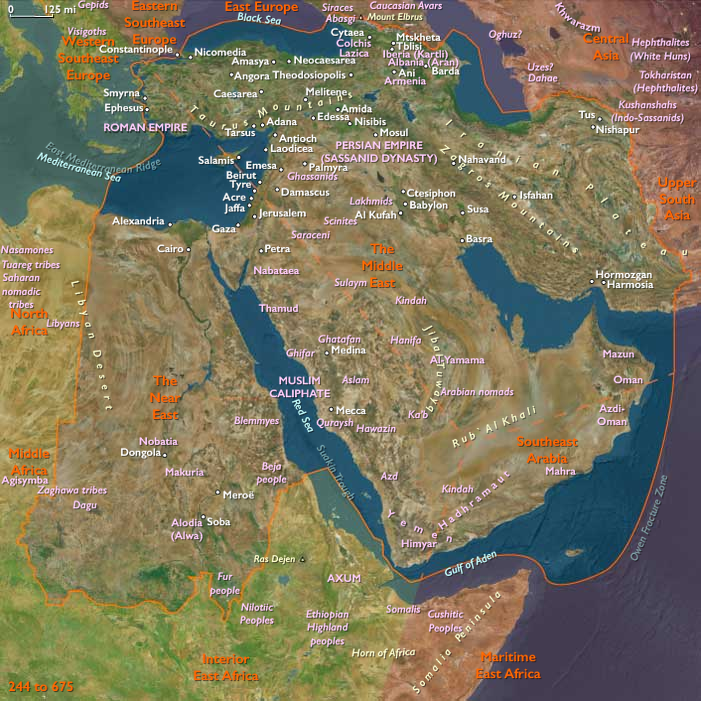
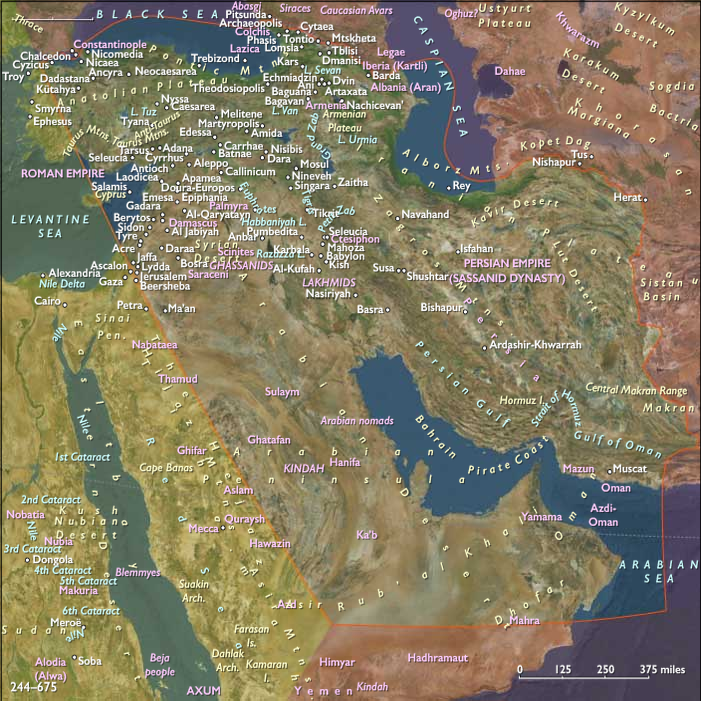
After a brief period of peace early in Emperor Diocletian's reign, hostilities reignite between the Roman Empire and the Sassanid Persians. Around 296 or 297 CE, the Persians invade Armenia, decisively defeating Roman forces outside Carrhae. This initial success, however, is short-lived. In 298 CE, Roman general Galerius dramatically reverses Persian fortunes at the Battle of Satala, where he utterly crushes the Persian army. Galerius not only captures the Persian royal treasury but also the royal harem, severely humiliating the Persian king.
This victory leads to the Peace of Nisibis, a treaty distinctly favorable to Rome. The settlement grants the Romans extensive territories between the Tigris and the Greater Zab rivers, along with definitive control over Armenia, thus restoring Roman authority over critical border regions. It marks the most decisive Roman triumph against Persian forces in decades, conclusively ending disputes over contested territories.
This era also witnesses profound cultural and religious change within Armenia. In 301 CE, the Armenian king, Tiridates III, owing his throne and power largely to Roman support, adopts Christianity as the state religion. This landmark event positions Armenia as the first Christian nation in history, significantly reshaping its cultural and political landscape and establishing a crucial precedent for Christianity’s role in statecraft throughout the Middle East.
Thus, the period from 292 to 303 CE is defined by significant Roman military success, the stabilization of Rome's eastern frontiers, and a historic shift in Armenia’s religious identity, laying critical foundations for subsequent developments in regional politics and religious culture.
People
Groups
- Armenia, Kingdom of
- Persian Empire, Sassanid, or Sasanid
- Roman Empire (Rome): Non-dynastic
- Christians, Armenian Apostolic Orthodox
Topics
Subjects
Regions
Subregions
Years: 292 - 303
People
Groups
- Armenia, Kingdom of
- Persian Empire, Sassanid, or Sasanid
- Roman Empire (Rome): Non-dynastic
- Christians, Armenian Apostolic Orthodox
Topics
Subjects
Regions
Subregions