
Middle East (6,093 – 4,366 BCE) …
Years: 6093BCE - 4366BCE
Middle East (6,093 – 4,366 BCE) Middle Holocene — Neolithic Hearths, Herds & Fields
Geographic and Environmental Context
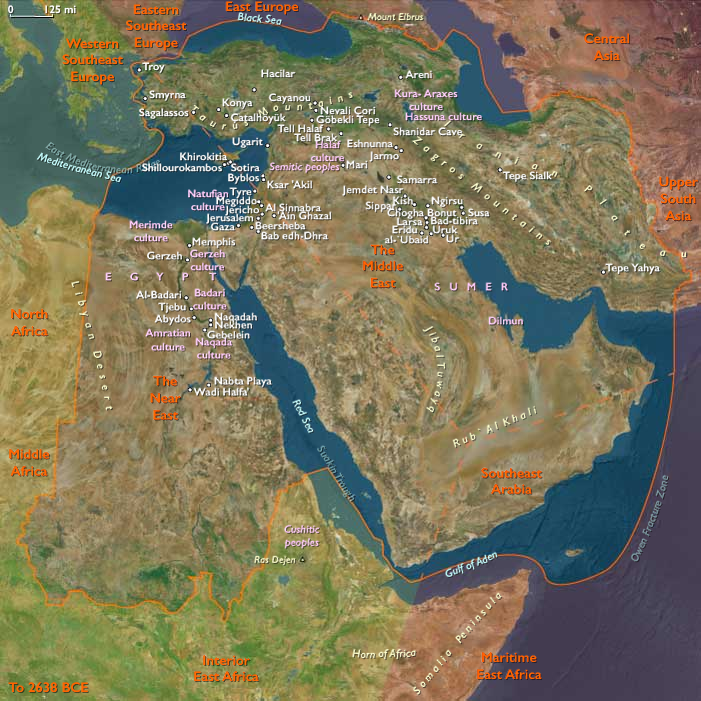
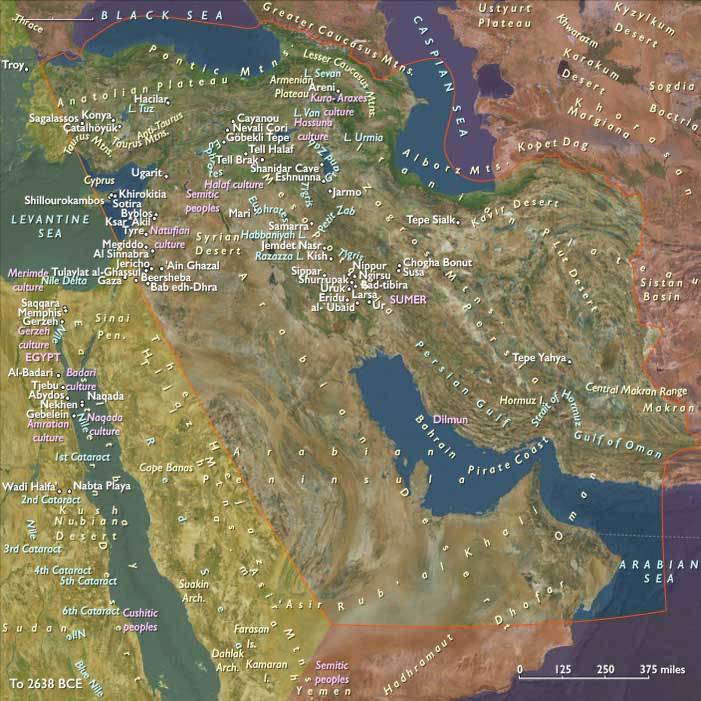
The Middle East includes Iraq, Iran, Syria, Armenia, Georgia, Azerbaijan, eastern Jordan, most of Turkey’s central/eastern uplands (including Cilicia), eastern Saudi Arabia, northern Oman, Qatar, Bahrain, the UAE, northeastern Cyprus, and all but the southernmost Lebanon.-
Anchors: the Tigris–Euphrates alluvium and marshes; the Zagros (Luristan, Fars), Alborz, Caucasus (Armenia–Georgia–Azerbaijan); northern Syrian plains and Cilicia; Khuzestan and Fars lowlands; the Arabian/Persian Gulf littoral (al-Ahsa–Qatar–Bahrain–UAE–northern Oman); northeastern Cyprus and the Lebanon coastal elbow (north).
Climate & Environment
-
Hypsithermal peak supported oasis–riverine farming in Upper Mesopotamia, Khuzestan, foothill Iran; forest patches persisted in Zagros/Caucasus.
Subsistence & Settlement
-
Neolithic villages spread: caprines and cattle herded; wheat/barley/pulses cultivated on fans/terraces; wetland fishing continued in Lower Mesopotamia.
-
Caucasus piedmont saw mixed farming–herding hamlets.
Technology & Material Culture
-
Pottery widespread; lime/gypsum plasters; mudbrick; sickle inserts; loom weights; early copper ornaments.
-
Small canal ditches in Khuzestan; garden irrigation along levees.
Corridors
-
Zagros–Khuzestan–Lower Euphrates grain/livestock streams; Caucasus–Kura–Araxes contact into Transcaucasia.
Symbolism
-
House shrines; figurines; ancestor veneration; feasting pits.
Adaptation
-
Irrigation + herding mobility managed rainfall risk; storage buffered droughts.
Transition
These villages evolve into Chalcolithic oases with more formal canals and metallurgy.
Groups
Topics
- Older Peron Transgression during the Neolithic Subpluvial
- Younger Peron Transgression during the Neolithic Subpluvial
- 5.9 kiloyear event during the Neolithic Subpluvial
- Subboreal Period during the Neolithic Subpluvial
- Early Bronze Age I (Near and Middle East)
- Piora Oscillation ending the Neolithic Subpluvial
- Early Bronze Age II (Near and Middle East)
Commodoties
- Weapons
- Hides and feathers
- Glass
- Domestic animals
- Grains and produce
- Textiles
- Ceramics
- Strategic metals
- Beer, wine, and spirits
Subjects
- Commerce
- Architecture
- Painting and Drawing
- Environment
- Decorative arts
- Faith
- Government
- Custom and Law
- Technology
- Metallurgy
- Astronomy
Regions
Subregions
Years: 6093BCE - 4366BCE
Groups
Topics
- Older Peron Transgression during the Neolithic Subpluvial
- Younger Peron Transgression during the Neolithic Subpluvial
- 5.9 kiloyear event during the Neolithic Subpluvial
- Subboreal Period during the Neolithic Subpluvial
- Early Bronze Age I (Near and Middle East)
- Piora Oscillation ending the Neolithic Subpluvial
- Early Bronze Age II (Near and Middle East)
Commodoties
- Weapons
- Hides and feathers
- Glass
- Domestic animals
- Grains and produce
- Textiles
- Ceramics
- Strategic metals
- Beer, wine, and spirits
Subjects
- Commerce
- Architecture
- Painting and Drawing
- Environment
- Decorative arts
- Faith
- Government
- Custom and Law
- Technology
- Metallurgy
- Astronomy
Regions
Subregions