
The Middle East: 237–226 BCE Consolidation …
Years: 237BCE - 226BCE
The Middle East: 237–226 BCE
Consolidation of the Parthian Kingdom
Seleucid-Parthian Conflict and Diplomacy
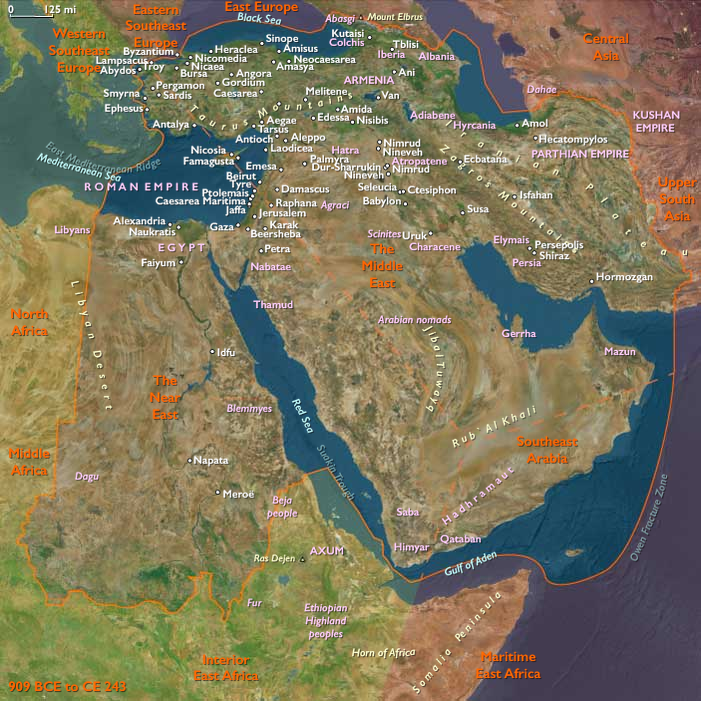
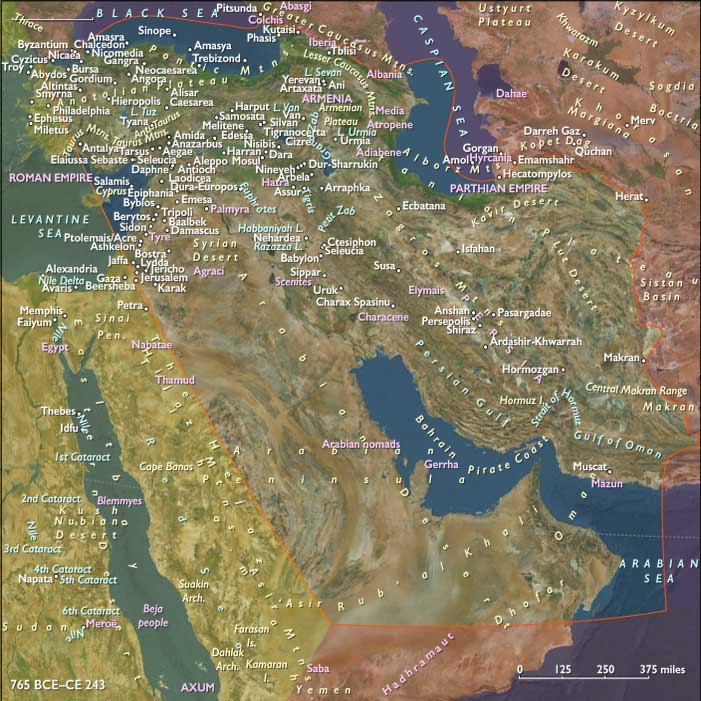
The emergence of two new kingdoms in Iran, Arsaces I’s Parthian Kingdom and the Greco-Bactrian kingdom of Diodotus, occurs nearly simultaneously, though notable differences distinguish them. The Parthian kingdom is closely tied to the tribal groups inhabiting northern Iran, combining settled populations with nomadic neighbors. Unlike in Bactria, the Greek cultural influence in Parthia remains comparatively modest, playing a less pivotal role in governance and society.
Around 232–231 BCE, Seleucid ruler Seleucus II launches a campaign to reassert control over the rebellious Parthians. Facing Seleucus’ superior forces, Arsaces, maintaining close alliances with northern nomads, strategically withdraws to the territory of the Apasiacae, or “Scythians of the Waters.” Seleucus attempts to pursue Arsaces across the Jaxartes River (present-day Syr Darya), but encounters stiff resistance from nomadic tribes, resulting in significant losses.
Arsaces’ State-Building and Legacy
Receiving alarming news of threats from the west, Seleucus chooses to retreat to Syria, opting instead for a diplomatic resolution. A peace agreement is reached, under which Arsaces recognizes Seleucid suzerainty, while effectively securing his kingdom's autonomy.
From this point forward, Arsaces significantly alters his approach, transitioning from nomadic leadership to that of a structured state ruler, emulating the organizational style of the Seleucids. He formally crowns himself king and establishes or fortifies cities such as Asaak and the impregnable fortress Dara, as well as founding the city of Nisa, which later serves as his burial place. These new settlements, frequently named in honor of the king or his dynasty, are designed to solidify his power and centralize governance.
While Arsaces maintains respect for the autonomy of Greek and Macedonian communities within his domain—likely a calculated effort to retain their support—he utilizes carefully managed propaganda to ensure their ongoing allegiance. Arsaces sets up his capital at Hecatompylos, strategically located southeast of the Caspian Sea along the Silk Road in western Khurasan. Although the exact site remains uncertain, it is believed to lie between modern-day Iranian cities Damghan and Shahrud.
The Arsacid dynasty begins the ambitious task of recovering territories that once belonged to the Persian Empire, organizing their realm into semi-autonomous states governed by a feudal nobility. This nobility, while acknowledging Arsacid supremacy, enjoys considerable regional autonomy, shaping the distinctive decentralized political structure of the Parthian Empire.
People
Groups
Topics
Subjects
Regions
Subregions
Years: 237BCE - 226BCE
People
Groups
Topics
Subjects
Regions
Subregions