
The Middle East: 2205–2062 BCE Transition, …
Years: 2205BCE - 2062BCE
The Middle East: 2205–2062 BCE
Transition, Collapse, and Cultural Resilience
Decline of Akkadian Dominance
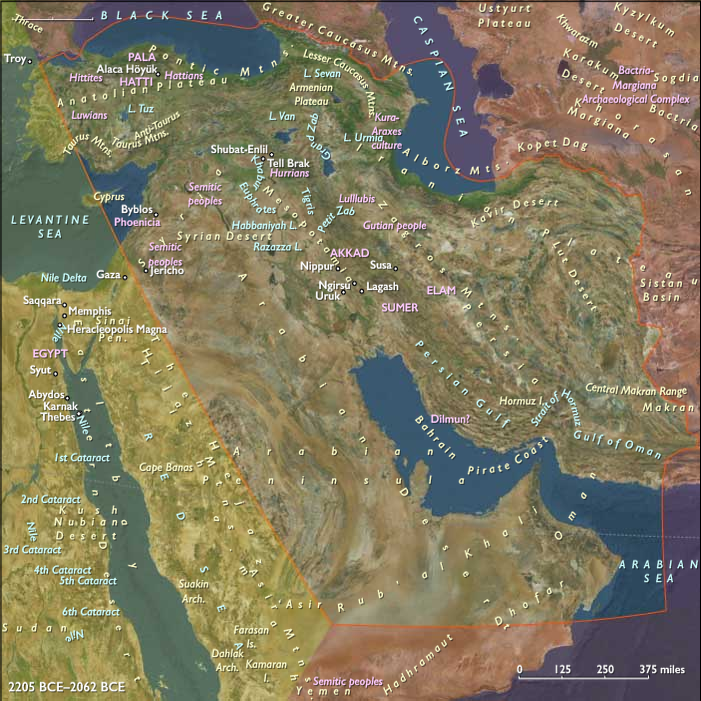
For the period 2205 to 2062 BCE, the Middle East experienced significant upheaval and cultural transformation. Akkadian dominance over southern Mesopotamia, despite their military might, proved short-lived, lasting approximately two centuries. By 2180 BCE, Akkadian rule was destabilized by an extended period of drought, accompanied by widespread abandonment of settlements in northern Mesopotamia. Archaeological evidence documents migrations and dramatic population shifts southward as northern agricultural plains became unsustainable.
Invasions and Defensive Measures
The fall of Akkadian authority coincided with invasions by the Gutians, mountain tribesmen from the eastern Zagros region, and the Amorites (Mar.tu), nomadic groups from the northwest. These incursions prompted the construction of a defensive barrier, known as the "Repeller of the Amorites," stretching approximately 180 kilometers across central Mesopotamia.
Gutian Rule and Agricultural Decline
Gutian rule was marked by administrative inefficiency and neglect of vital infrastructure such as irrigation canals, leading to agricultural decline and widespread famine. During this period, much of southern Mesopotamia fell into a "dark age" characterized by reduced prosperity and trade collapse, exemplified by dramatic shrinkage at sites like Tell Brak.
Elamite Revival and Subsequent Decline
In Elam, located in modern-day southwestern Iran, independence from Akkadian influence was restored under Kutik-Inshushinak around 2240 BCE. His reign saw a brief revival of cultural identity, including the adoption of the Linear Elamite script. Despite this resurgence, Elam soon succumbed to Gutian incursions, disrupting its autonomy once again.
Lagash and Cultural Flourishing
Meanwhile, the city-state of Lagash, under rulers such as Ur-Bau and Gudea, entered a period of relative independence and cultural flourishing. Gudea, renowned for his artistic patronage, commissioned significant temple-building projects, importing materials from regions as distant as Arabia and the Lebanon mountains. His statues, crafted in fine diorite, reflect a zenith in Sumerian neo-classical art.
Climatic Crisis and Urban Collapse
Severe climatic conditions around 2200 BCE, likely exacerbated by volcanic eruptions, led to widespread drought across the region, causing the abandonment of sites such as Tell Leilan and significant population movements. Cities across the Levant were similarly devastated, many destroyed by fire and earthquakes; notable among these was Byblos, destroyed around 2150 BCE yet retaining its historical significance as one of the oldest continually inhabited cities.
Ziggurats and Religious Authority
Ziggurats, emblematic Mesopotamian religious structures, began achieving new architectural complexity during this period. Constructed primarily as stepped pyramids topped by temples and dedicated to local deities, these structures symbolized the close relationship between religious authority and urban governance. Important cities such as Nippur continued as religious centers, conferring legitimacy to regional rulers.
Thus, despite facing significant ecological, military, and political challenges, this period of Mesopotamian history witnessed both cultural resilience and innovation, laying critical foundations for future civilizations.
People
Groups
- Polytheism (“paganism”)
- Eridu, City-state of
- Sumer
- Nippur, city-state of
- Mari, City-State of
- Susa, City-state of
- Ur, city-state of
- Uruk, city-state of
- Kish, City-state of
- Jemdet Nasr period
- Umma, city-state of
- Dilmun (Bahrain?)
- Lagash, 1st Dynasty of
- Elam, (Old) Kingdom of
- Canaanite culture, ancient
- Hattians
- Hurrians
- Amorites
- Assur, or Ashur, city-state of
- Ebla, Kingdom of
- Akkadian Empire
- Gutians
Topics
Commodoties
- Weapons
- Hides and feathers
- Glass
- Domestic animals
- Grains and produce
- Ceramics
- Strategic metals
- Beer, wine, and spirits
Subjects
- Commerce
- Writing
- Architecture
- Sculpture
- Painting and Drawing
- Environment
- Decorative arts
- Conflict
- Mayhem
- Faith
- Government
- Custom and Law
- Technology
- Metallurgy
Regions
Subregions
Years: 2205BCE - 2062BCE
People
Groups
- Polytheism (“paganism”)
- Eridu, City-state of
- Sumer
- Nippur, city-state of
- Mari, City-State of
- Susa, City-state of
- Ur, city-state of
- Uruk, city-state of
- Kish, City-state of
- Jemdet Nasr period
- Umma, city-state of
- Dilmun (Bahrain?)
- Lagash, 1st Dynasty of
- Elam, (Old) Kingdom of
- Canaanite culture, ancient
- Hattians
- Hurrians
- Amorites
- Assur, or Ashur, city-state of
- Ebla, Kingdom of
- Akkadian Empire
- Gutians
Topics
Commodoties
- Weapons
- Hides and feathers
- Glass
- Domestic animals
- Grains and produce
- Ceramics
- Strategic metals
- Beer, wine, and spirits
Subjects
- Commerce
- Writing
- Architecture
- Sculpture
- Painting and Drawing
- Environment
- Decorative arts
- Conflict
- Mayhem
- Faith
- Government
- Custom and Law
- Technology
- Metallurgy
Regions
Subregions