
The Middle East (2349–2206 BCE): Akkadian Ascendancy …
Years: 2349BCE - 2206BCE
The Middle East (2349–2206 BCE): Akkadian Ascendancy and the Expansion of Empires
Akkadian Political Dominance
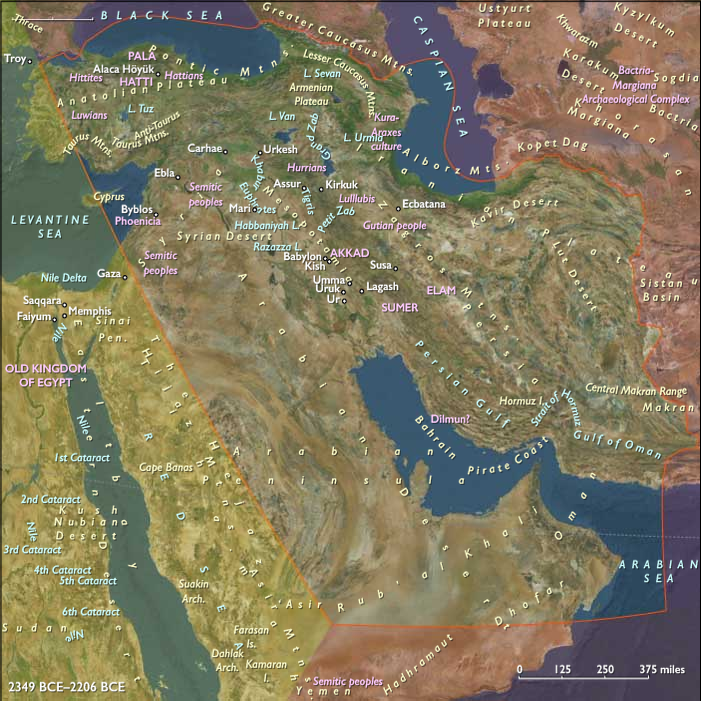
From 2349 to 2206 BCE, Mesopotamia witnessed the ascendancy of the Semitic-speaking Akkadians, who began exerting influence over central and northern Mesopotamia around 2400 BCE. This marked a critical power shift from the Sumerian city-states in the lower valley toward the Akkadians, whose political reach expanded rapidly westward into Syria and eastward as far as Susa in present-day Iran.
Under the leadership of Sargon of Akkad (r. approximately 2334–2279 BCE), the first great empire-builder in recorded history, Akkadian forces penetrated deep into Egypt and possibly Ethiopia. Sargon's reign saw a significant separation between religious and secular authority, with the establishment of a conscripted army, allowing him to mobilize large labor forces for ambitious irrigation and infrastructure projects. Akkadian military power was further enhanced by the introduction of the composite bow, a weapon superior to previous designs.
Ebla: Center of Commerce and Literacy
During this age, Ebla reached the peak of its economic and cultural influence. Located in northern Syria, Ebla thrived as a central hub in an extensive trade network spanning Anatolia, Mesopotamia, Egypt, Cyprus, and Persia. The discovery of approximately eighteen hundred clay tablets and numerous fragments in the palace archives at Ebla revealed intricate details of the city’s administration, commerce, and diplomatic activities. These tablets, written primarily in the Eblaite language using Sumerian cuneiform script, represent one of the most significant linguistic discoveries of the period. Eblaite was initially identified as proto-Canaanite but later recognized as a unique early Semitic language.
The Ebla tablets contain references to notable locations such as Canaan, Ugarit, and Lebanon, indicating the city's extensive interactions with other civilizations. Ebla maintained an intense commercial rivalry with Mari, leading to protracted conflicts that lasted nearly a century. Despite political turmoil, Ebla remained a vital educational center, pioneering important linguistic innovations that promoted literacy and administrative efficiency across the region.
Cultural and Artistic Achievements
Mesopotamian culture during the Akkadian period produced notable artistic and technological achievements. Scribes refined cuneiform writing, transitioning toward a more streamlined and efficient phonetic system. This era also saw the creation of important narrative reliefs and monumental stelae commemorating imperial triumphs. A prominent example includes the bronze bust from Nineveh, possibly depicting Sargon or his grandson Naram-Sin, who also significantly expanded Akkadian territory.
Regional Instability and Climatic Crisis
The early twenty-third century BCE was marked by geological and climatic disruptions, including severe earthquakes and volcanic activity. This period coincided with a prolonged drought lasting nearly three centuries, profoundly affecting regional stability and contributing to the weakening and eventual collapse of established city-states and empires, including Akkad and Ebla.
Rise of the Hurrians and Hattians
Amid this period of upheaval, non-Semitic Hurrians began migrating from the Caucasus region into northern Mesopotamia and the Zagros foothills, gradually establishing themselves around key sites such as Urkesh and Nuzi. Hurrian political entities allied with Akkadian rulers, notably Naram-Sin, gaining significant regional influence.
In Anatolia, the indigenous non-Indo-European speaking Hattians organized into feudal city-states and small theocratic kingdoms, forming alliances and conflicts with Mesopotamian rulers. The oldest reference to "Land of the Hatti" appears in Mesopotamian records of Sargon’s time, highlighting the region's emerging importance.
Emergence of Major Trade Centers
Commerce flourished across the Persian Gulf and Mediterranean regions. Cities like Dilmun (modern Bahrain) emerged as vital commercial entrepôts, facilitating trade between Mesopotamia and distant markets. Extensive archaeological finds in Dilmun, such as burial mounds dating to this period, underscore the significance of trade-based prosperity in these coastal communities.
Urban and Military Innovations
Significant urban fortifications appeared, exemplified by Gilgamesh's legendary city wall around Uruk, underscoring heightened concerns over security amid increasing regional conflicts. Military advancements, such as the disciplined infantry formations depicted on the Stele of the Vultures, provided further evidence of a rapidly evolving martial culture across Mesopotamia.
Babylon and New Settlements
The earliest known references to Babylon appeared during this era, attributed to Sargon, who purportedly founded or significantly developed the city near the Euphrates River. This development foreshadowed Babylon's future prominence as a political and cultural powerhouse.
Elamite Resurgence
In southwestern Iran, the city-state of Susa, temporarily under Akkadian administration, regained autonomy under governor Kutik-Inshushinak around 2240 BCE. His rebellion led to a revival of Elamite culture, turning Susa into an influential literary and administrative center once again.
The age 2349–2206 BCE thus represented a dynamic period characterized by the rise and consolidation of empires, significant cultural exchanges, extensive economic networks, and crucial innovations in military, urban, and linguistic practices, laying important foundations for subsequent historical developments.
People
Groups
- Polytheism (“paganism”)
- Eridu, City-state of
- Sumer
- Nippur, city-state of
- Mari, City-State of
- Susa, City-state of
- Ur, city-state of
- Uruk, city-state of
- Kish, City-state of
- Jemdet Nasr period
- Dilmun (Bahrain?)
- Umma, city-state of
- Lagash, 1st Dynasty of
- Elam, (Old) Kingdom of
- Canaanite culture, ancient
- Hattians
- Hurrians
- Assur, or Ashur, city-state of
- Ebla, Kingdom of
- Akkadian Empire
Topics
Commodoties
- Weapons
- Hides and feathers
- Glass
- Domestic animals
- Grains and produce
- Ceramics
- Strategic metals
- Beer, wine, and spirits
Subjects
- Commerce
- Writing
- Architecture
- Painting and Drawing
- Environment
- Decorative arts
- Conflict
- Mayhem
- Faith
- Government
- Custom and Law
- Technology
- Metallurgy
Regions
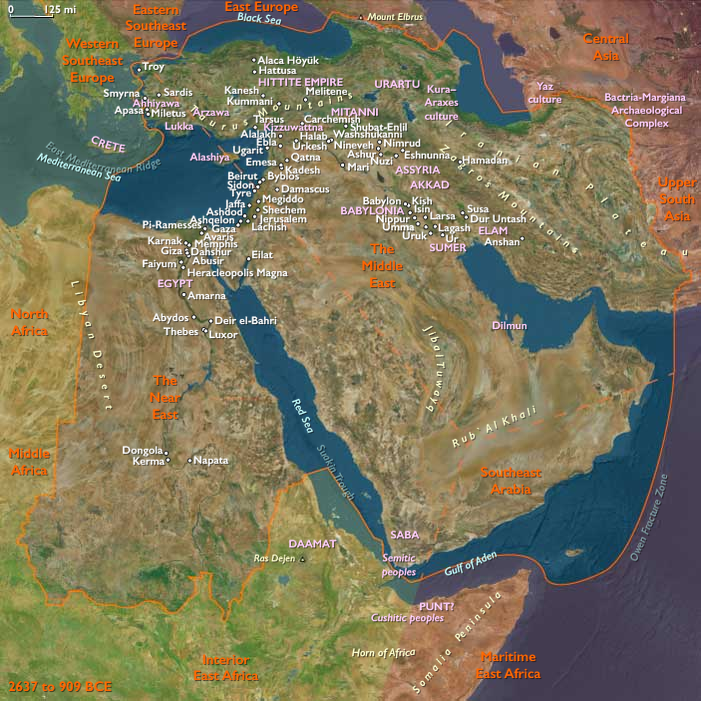
Subregions
Related Events
Showing 10 events out of 68204 total
Years: 2349BCE - 2206BCE
People
Groups
- Polytheism (“paganism”)
- Eridu, City-state of
- Sumer
- Nippur, city-state of
- Mari, City-State of
- Susa, City-state of
- Ur, city-state of
- Uruk, city-state of
- Kish, City-state of
- Jemdet Nasr period
- Dilmun (Bahrain?)
- Umma, city-state of
- Lagash, 1st Dynasty of
- Elam, (Old) Kingdom of
- Canaanite culture, ancient
- Hattians
- Hurrians
- Assur, or Ashur, city-state of
- Ebla, Kingdom of
- Akkadian Empire
Topics
Commodoties
- Weapons
- Hides and feathers
- Glass
- Domestic animals
- Grains and produce
- Ceramics
- Strategic metals
- Beer, wine, and spirits
Subjects
- Commerce
- Writing
- Architecture
- Painting and Drawing
- Environment
- Decorative arts
- Conflict
- Mayhem
- Faith
- Government
- Custom and Law
- Technology
- Metallurgy
Regions
Subregions