
The Middle East: 232–243 CE Roman–Sassanid …
Years: 232 - 243
The Middle East: 232–243 CE
Roman–Sassanid Conflicts and Jewish Legal Developments
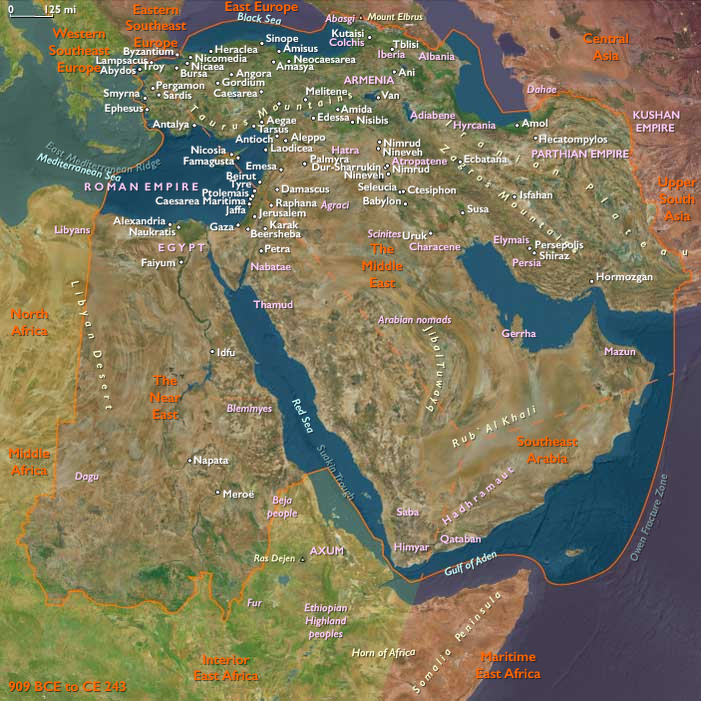
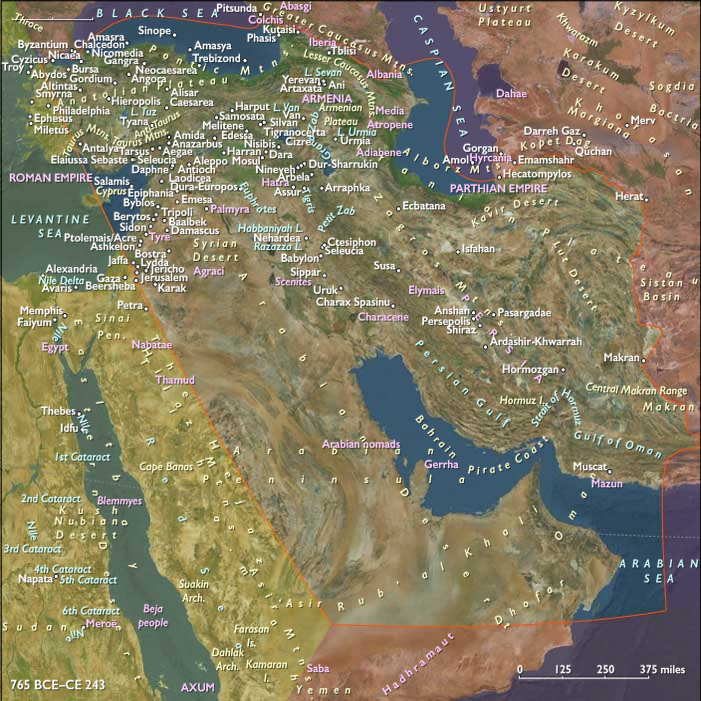
The era from 232 to 243 CE marks an intensified phase of conflict between the Roman Empire and the recently established Sassanid Persian Empire under Ardashir I and later his successor, Shapur I. Initially, in 230 CE, Ardashir launches raids into Roman-held Mesopotamia and Syria, boldly demanding Rome’s cession of all territories that once belonged to the Achaemenid Empire.
Roman Emperor Alexander Severus, after unsuccessful diplomatic attempts, responds militarily in 232, eventually repelling the Persian advances. Ardashir, determined and strategic, renews his assaults between 238 and 240, successfully capturing critical cities including Carrhae and Nisibis in Syria and Mesopotamia.
The conflict escalates further under Ardashir's ambitious heir, Shapur I, who initiates a large-scale invasion of Roman Mesopotamia. Shapur's forces, however, suffer a significant defeat in 243 CE near Resaena, allowing the Romans to reclaim Carrhae and Nisibis and temporarily stabilizing their eastern frontier.
Simultaneously, this era witnesses important developments among Babylonian Jews, who recognize Samuel bar Abba (Rav Samuel) as their principal temporal and judicial authority, especially in monetary and civil law. Rav Samuel’s influential rulings—known as responsa—guide dispersed Jewish communities, encouraging adherence to local laws while upholding Jewish traditions. His progressive ordinances notably include prohibitions on marriages without proper courtship and forbid fathers from betrothing daughters without their consent. These rulings significantly shape Jewish social and legal practices, equipping Babylonian Jews with flexible strategies for adapting to life within foreign environments.
People
Groups
Topics
Subjects
Regions
Subregions
Related Events
Showing 10 events out of 60585 total
Years: 232 - 243
People
Groups
Topics
Subjects
Regions
Subregions