
The Middle East: 45 BCE–CE 99 …
Years: 45BCE - 99
The Middle East: 45 BCE–CE 99
Roman-Parthian Rivalry and Cultural Transitions
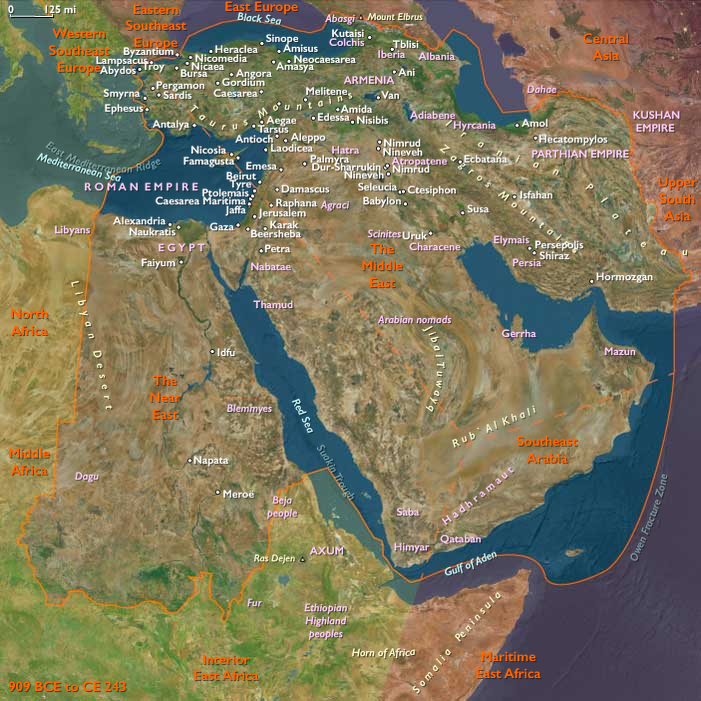
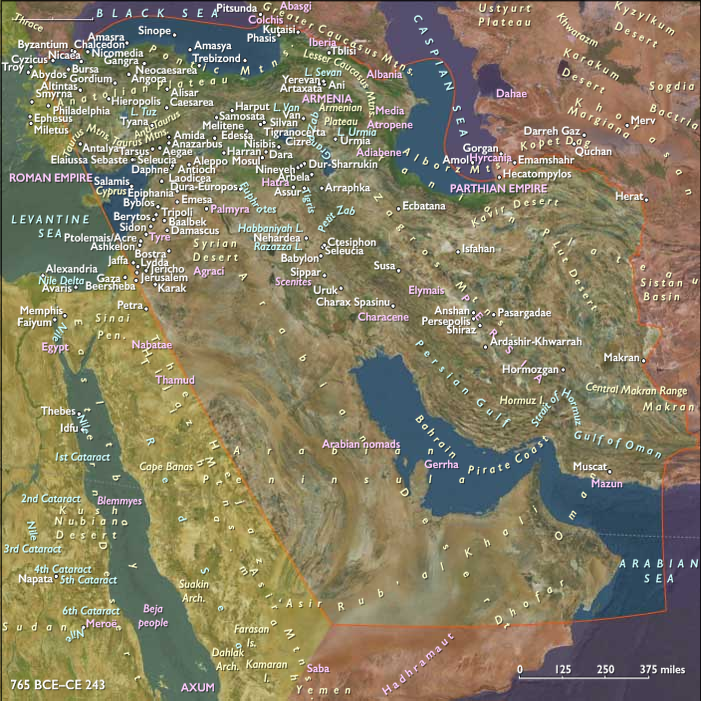
Following Julius Caesar's assassination in 44 BCE, his intended campaign against the Parthian Empire to avenge Rome’s earlier defeat at Carrhae is abandoned. In the ensuing power struggles of the Roman Republic, Parthia seizes the opportunity to attack Roman-controlled territories, capturing Syria and installing Antigonus as king and high priest in Judea. This shift intensifies the Roman-Parthian rivalry in the region. Roman response comes through generals like Publius Ventidius Bassus, who drives the Parthians out of Roman territory, and Mark Antony, whose subsequent campaigns in Atropatene (Iranian Azerbaijan) end disastrously due to logistical failures.
Despite these setbacks, Roman influence remains strong in the region. Under Augustus, a diplomatic settlement is reached with Parthia, stabilizing borders and setting the Euphrates River as a mutual frontier. This diplomatic equilibrium is periodically disrupted by internal Parthian conflicts, notably the civil war beginning around 32 BCE when Tiridates challenges Phraates IV.
In the first century CE, tensions over Armenia, a key strategic buffer state, dominate Roman-Parthian relations. Under Emperor Nero, Rome briefly loses control when the Parthians install Tiridates I on the Armenian throne in CE 53. After years of warfare, Rome concedes to a diplomatic compromise, allowing a Parthian prince on Armenia’s throne, subject to Roman approval—a lasting source of contention between the empires.
Culturally, this era sees the introduction and spread of Christianity in the region, particularly on the island of Cyprus, traditionally credited to the apostles Paul and native Barnabas in CE 45. Roman occupation, aimed primarily at economic exploitation, inadvertently stimulates economic growth and urban development, particularly after Emperor Augustus rebuilds the earthquake-devastated city of Salamis in 15 BCE.
Parthian rulers, notably Vologases I (51–78 CE), actively resist the Hellenization policies of previous eras, promoting indigenous Iranian traditions, religion, and languages. This revival includes founding new cities such as Vologesocerta and commissioning collections of ancient Zoroastrian texts. Simultaneously, the publication of significant works like Pedanius Dioscorides' De Materia Medica around 70 CE highlights the continued intellectual exchange within the broader Hellenistic and Roman-influenced world.
By the end of this period, the Parthian empire under Pacorus II (ruled 78–105 CE) reestablishes stability after intermittent civil conflicts. The continued diplomatic, cultural, and economic interactions between Rome and Parthia profoundly influence the Middle East’s historical trajectory, setting the stage for centuries of dynamic interchange, rivalry, and coexistence.
People
- Antigonus II Mattathias
- Augustus
- Barnabas
- Claudius
- Mark Antony
- Nero
- Pacorus II of Parthia
- Paul the Apostle
- Pedanius Dioscorides
- Phraates IV of Parthia
- Publius Ventidius Bassus
- Tiridates I of Armenia
- Vologases I of Parthia
Groups
- Zoroastrians
- Roman Republic
- Atropatene, (Media) Kingdom of
- Parthian Empire
- Armenia, Kingdom of Greater
- Cyprus, Roman
- Armenia, Empire of
- Armenia, Kingdom of Greater
- Cilicia et Cyprus (Roman province)
- Judea, Roman client kingdom of
- Roman Principate (Rome)
- Judea (Roman province)
- Roman Empire (Rome): Julio-Claudian dynasty
- Christians, Early
- Roman Empire (Rome): Flavian dynasty
- Roman Empire (Rome): Nerva-Antonine dynasty
Topics
Subjects
Regions
Subregions
Years: 45BCE - 99
People
- Antigonus II Mattathias
- Augustus
- Barnabas
- Claudius
- Mark Antony
- Nero
- Pacorus II of Parthia
- Paul the Apostle
- Pedanius Dioscorides
- Phraates IV of Parthia
- Publius Ventidius Bassus
- Tiridates I of Armenia
- Vologases I of Parthia
Groups
- Zoroastrians
- Roman Republic
- Atropatene, (Media) Kingdom of
- Parthian Empire
- Armenia, Kingdom of Greater
- Cyprus, Roman
- Armenia, Empire of
- Armenia, Kingdom of Greater
- Cilicia et Cyprus (Roman province)
- Judea, Roman client kingdom of
- Roman Principate (Rome)
- Judea (Roman province)
- Roman Empire (Rome): Julio-Claudian dynasty
- Christians, Early
- Roman Empire (Rome): Flavian dynasty
- Roman Empire (Rome): Nerva-Antonine dynasty
Topics
Subjects
Regions
Subregions