
The Middle East: 1864–1875 CE Consolidation …
Years: 1864 - 1875
The Middle East: 1864–1875 CE
Consolidation and International Influence in Lebanon
Between 1864 and 1875, Lebanon experiences stability under the new administrative structure known as the Mutasarrifate of Mount Lebanon, established after the sectarian violence of 1860. Governed by a non-Lebanese Christian mutasarrif appointed by the Ottoman sultan with approval from European powers, Lebanon benefits from a relatively peaceful era. This governance, characterized by an administrative council representing Lebanon's diverse religious communities, provides a temporary cessation of internal strife. Many Lebanese emigrants continue to support their homeland economically through remittances from abroad, notably from Egypt, Africa, the Americas, and East Asia.
Lebanon also emerges as an intellectual hub during this period. Foreign missionaries establish educational institutions throughout the country, notably the American University of Beirut in 1866 and the French St. Joseph's University in 1875. A revitalized Arabic literary movement develops, supported by a prolific press and numerous publications.
Despite general calm, tensions simmer beneath the surface, exacerbated by ongoing European interference, particularly French backing of Christians and British interests in Druze regions, which continues to define Lebanon's political landscape.
Al Saud Authority and Regional Dynamics
Faisal ibn Turki Al Saud maintains firm control over central Arabia, continuing his strategic diplomacy with both Ottoman and British powers. Faisal’s rule sees the strengthening of Wahhabi principles, consolidating loyalty across Najd. Nonetheless, internal and external challenges persist, notably after Faisal's death in 1865, when power struggles among his sons Abd Allah, Abd ar Rahman, and Saud, along with Saud’s own sons, intermittently destabilize Riyadh. Faisal’s earlier establishment of alliances, such as the strategic marriage between his son Talal and Nura, daughter of the powerful Abd Allah ibn Rashid, helps manage these conflicts, preserving some stability and reinforcing the Al Saud dynasty's authority.
Qajar Iran under Foreign Pressure
Under Naser ad-Din Shah, Persia (Iran) continues facing significant pressure from British and Russian geopolitical ambitions, severely limiting Persian sovereignty. Russia solidifies its control over Iranian northern territories, compelling Iran to renounce claims on Central Asian regions through treaties like the Treaty of Paris in 1857. Britain actively safeguards its interests in Afghanistan and the Persian Gulf. Internally, Naser ad-Din Shah attempts modest modernization efforts, encouraged by reform-minded officials like Malkam Khan and prime minister Mirza Hosain Khan Moshir od Dowleh. These reforms, however, largely fail due to entrenched opposition from the bureaucracy, religious leadership, and ongoing external interference, resulting in persistent internal vulnerabilities.
Prosperity and British Influence in Oman
Said bin Sultan al-Busaidi sustains Oman's maritime prosperity and strategic significance, particularly through commerce in Zanzibar and other East African territories. Following Said’s death in 1856, his territories are divided between his sons, with Thuwaini bin Said ruling Muscat and Oman, and Majid bin Said becoming Sultan of Zanzibar. Despite this division, British influence ensures continuity in commerce and stability within Oman itself. British-imposed maritime truces also remain effective, reducing piracy and fostering safer trade conditions along the Trucial Coast.
Stability and Growth in the Persian Gulf
The Al Thani family consolidates its authority in Qatar, bolstered by Wahhabi ideological alignment, strengthening independence from Bahraini influence. Simultaneously, the Al Nahyan in Abu Dhabi solidify control, benefiting from alliances with both Britain and Oman. The Persian Gulf emirates continue to prosper under British maritime protections, with distinct political and economic identities developing due to the region's improved stability.
Ottoman Reforms and Societal Changes in Iraq
Ottoman rule in Iraq experiences significant modernization under governor Midhat Pasha starting in 1869. His Tanzimat reforms reorganize administration, secularize education, and introduce new legal codes, helping create a more centralized and efficient governance structure. The TAPU land laws inadvertently transform tribal sheikhs into wealthy landowners, altering traditional tribal dynamics and fostering the growth of an urban-based Iraqi intelligentsia. The introduction of steamboats, telegraph lines, and the opening of the Suez Canal in 1869 further integrates Iraq economically into global markets.
Russian Consolidation and Rising Nationalism in the Caucasus
Russia continues to consolidate its authority throughout the Caucasus, profoundly influencing Armenian and Georgian societies. Armenians benefit from educational and economic reforms, fostering heightened national awareness and cultural identity. Conversely, Georgian society faces intensified Russification, spurring resistance and nationalist movements among intellectuals and emerging urban classes. These divergent experiences underscore the complexities and tensions inherent in Russian rule.
Legacy of the Era
The years 1864 to 1875 witness transformative developments across the Middle East. Lebanon experiences stability under international oversight and intellectual renaissance; the Al Saud navigate complex internal dynamics; Persia struggles under persistent foreign pressure despite attempts at modernization; Oman maintains maritime prosperity through strategic divisions; Gulf emirates grow under British protection; Iraq undergoes significant Ottoman-led modernization; and Russian influence continues to shape nationalism in the Caucasus. These events collectively define the region's enduring cultural, economic, and political trajectories.
People
- Abdul Rahman bin Faisal
- Abdullah bin Faisal Al Saud (1831–1889)
- Faisal bin Turki bin Abdullah Al Saud
- Majid bin Said of Zanzibar
- Midhat Pasha
- Mirza Hosein Khan Sepahsalar
- Mirza Melkum Khan
- Paul Julius Reuter
- Saud bin Faisal bin Turki
- Thuwaini bin Said al-Said
- Naser al-Din Shah Qajar
Groups
- Arab people
- Armenian people
- Christians, Maronite
- Syrian people
- Druze, or Druse, the
- Ottoman Empire
- Thani, House of
- Al Nahayan family
- Prussia, Kingdom of
- Russian Empire
- Saud, House of
- Persia, Qajarid Kingdom of
- Britain (United Kingdom of Great Britain and Ireland)
- Austrian Empire
- Nejd, Emirate of
- Armenia, Russian
- France, Second Republic of
- Mount Lebanon Mutasarrifate
- Muscat and Oman
Topics
Subjects
Regions
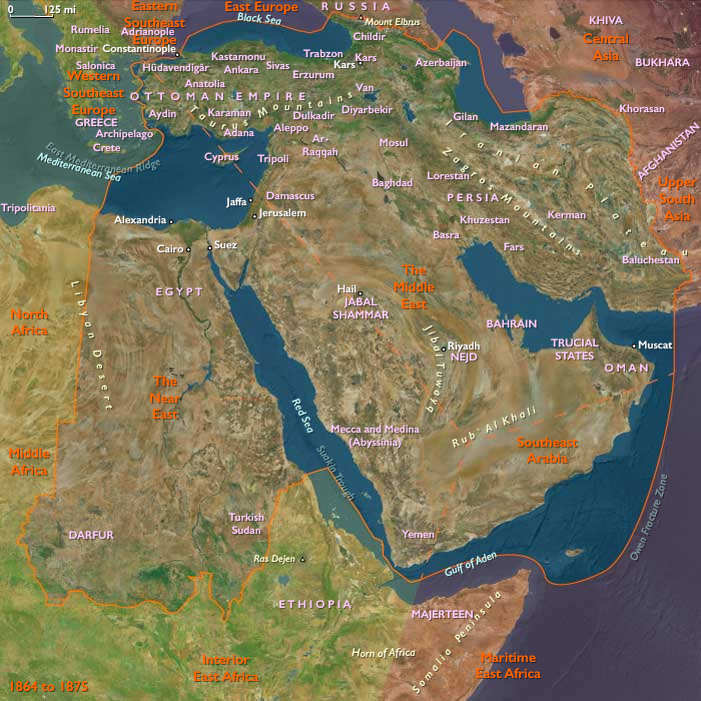
Subregions
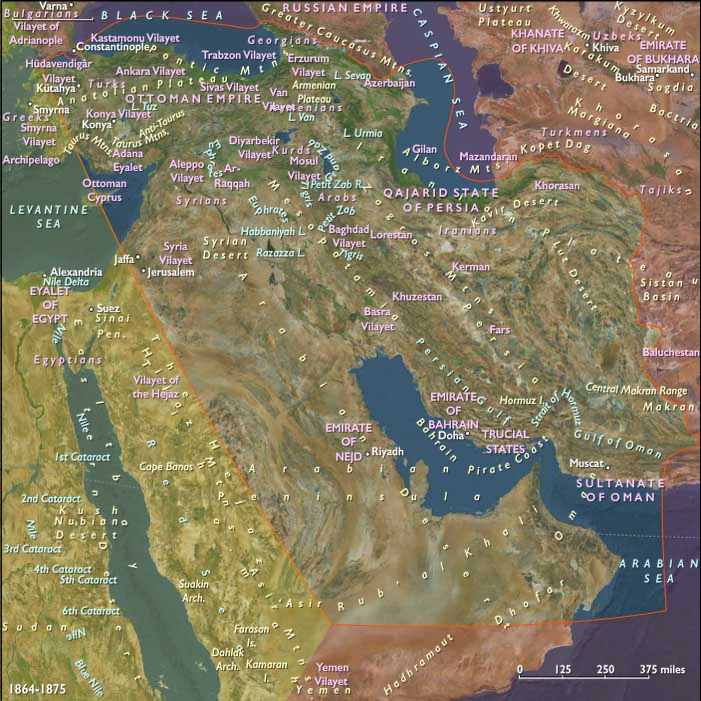
Years: 1864 - 1875
People
- Abdul Rahman bin Faisal
- Abdullah bin Faisal Al Saud (1831–1889)
- Faisal bin Turki bin Abdullah Al Saud
- Majid bin Said of Zanzibar
- Midhat Pasha
- Mirza Hosein Khan Sepahsalar
- Mirza Melkum Khan
- Paul Julius Reuter
- Saud bin Faisal bin Turki
- Thuwaini bin Said al-Said
- Naser al-Din Shah Qajar
Groups
- Arab people
- Armenian people
- Christians, Maronite
- Syrian people
- Druze, or Druse, the
- Ottoman Empire
- Thani, House of
- Al Nahayan family
- Prussia, Kingdom of
- Russian Empire
- Saud, House of
- Persia, Qajarid Kingdom of
- Britain (United Kingdom of Great Britain and Ireland)
- Austrian Empire
- Nejd, Emirate of
- Armenia, Russian
- France, Second Republic of
- Mount Lebanon Mutasarrifate
- Muscat and Oman
Topics
Subjects
Regions
Subregions