
The Middle East: 1672–1683 CE Ottoman …
Years: 1672 - 1683
The Middle East: 1672–1683 CE
Ottoman Military Setbacks
During this period, the Ottoman Empire, under Sultan Mehmed IV, experiences major military setbacks, most notably the failure of the siege of Vienna in 1683. The unsuccessful attempt to capture Vienna marks a significant turning point, prompting the formation of the Holy League, a coalition of European powers determined to roll back Ottoman gains in Central Europe. Internally, the empire faces continued administrative and economic challenges, exacerbated by military strains and widespread dissatisfaction among its provinces.
Omani Consolidation in East Africa
Under Imam Sultan bin Saif II al-Ya'aruba, Omani naval dominance and trade networks in the Persian Gulf and Indian Ocean are further strengthened. Omani control firmly established in key ports such as Zanzibar and Mombasa facilitates increased trade, notably in ivory and spices, enhancing Oman's economic prosperity and regional political influence. Omani authority consolidates through diplomatic relationships and strategic military fortifications.
Safavid Cultural and Economic Continuity
In Safavid Iran, Shah Suleiman I continues policies that maintain internal stability, though without significant territorial expansion or military confrontation. Isfahan remains a vibrant cultural and commercial hub, its markets bustling with traders from East and West. The Safavid administration supports arts and architecture, sustaining the empire’s cultural legacy despite gradual signs of administrative complacency and weakening central authority.
Aleppo as a Thriving Commercial Hub
Aleppo continues to flourish as a prominent commercial nexus during this period. Its markets attract diverse international merchants and maintain robust exchanges in textiles, spices, and luxury goods, solidifying its role as a key economic center. Despite broader geopolitical tensions, Aleppo's economic resilience and cultural vitality endure, facilitating cross-cultural exchanges between Europe, Persia, the Ottoman Empire, and the broader Arab world.
Legacy of the Era
The era 1672–1683 is defined by significant military shifts, notably the Ottoman failure at Vienna, marking a turning point that would redefine European-Ottoman relations. Oman solidifies its regional influence through strategic maritime control and economic growth, while Safavid Iran maintains its cultural prominence despite underlying administrative vulnerabilities. Aleppo's sustained economic prosperity underscores its crucial role as a crossroads of trade and culture, reflecting broader patterns of resilience and adaptation across the Middle East.
People
Groups
- Omanis
- Muslims, Sunni
- Muslims, Shi'a
- Muslims, Ibadi
- Venice, (Most Serene) Republic of
- Ottoman Empire
- Persia, Safavid Kingdom of
- Habsburg Monarchy, or Empire
- Oman, Second Imamate of
- Yaruba dynasty
Topics
Commodoties
Subjects
Regions
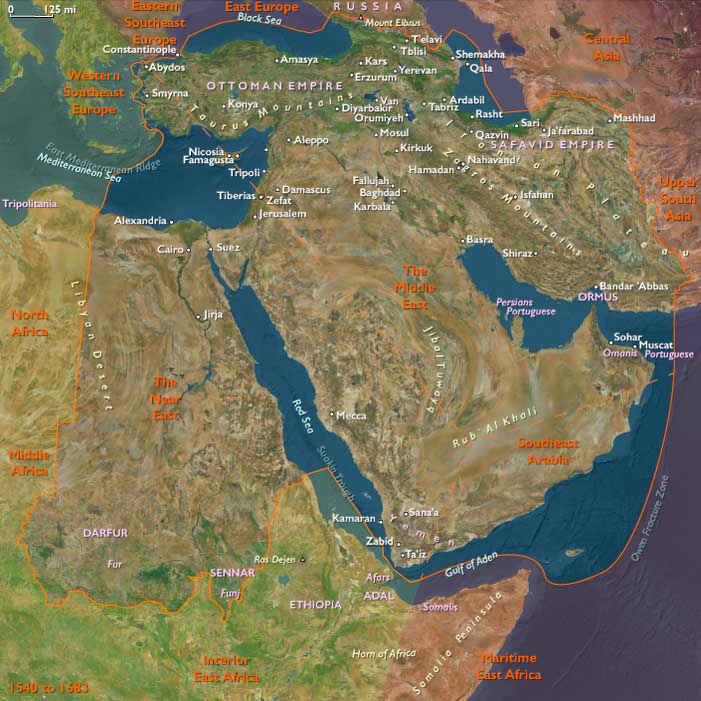
Subregions
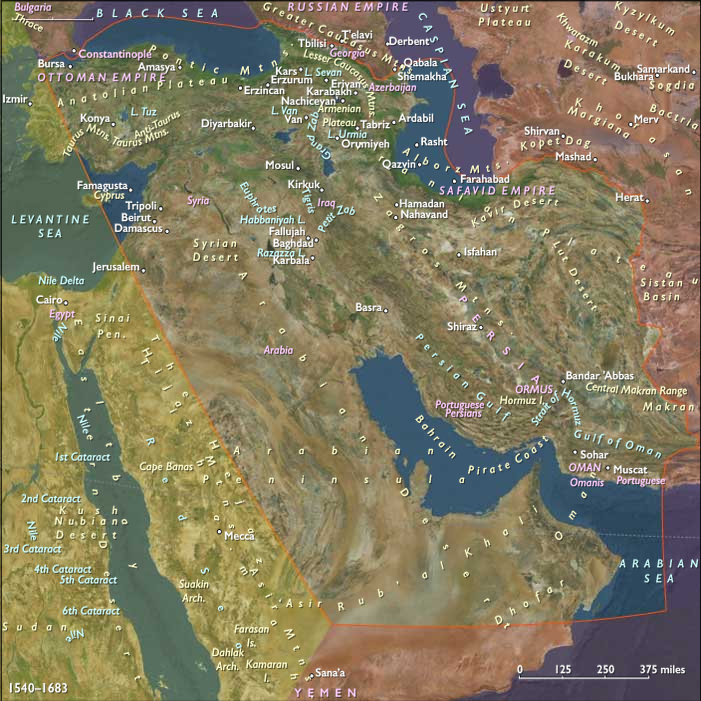
Years: 1672 - 1683
People
Groups
- Omanis
- Muslims, Sunni
- Muslims, Shi'a
- Muslims, Ibadi
- Venice, (Most Serene) Republic of
- Ottoman Empire
- Persia, Safavid Kingdom of
- Habsburg Monarchy, or Empire
- Oman, Second Imamate of
- Yaruba dynasty
Topics
Commodoties
Subjects
Regions
Subregions