
The Middle East: 1636–1647 CE Yarubid …
Years: 1636 - 1647
The Middle East: 1636–1647 CE
Yarubid Consolidation and Expulsion of the Portuguese
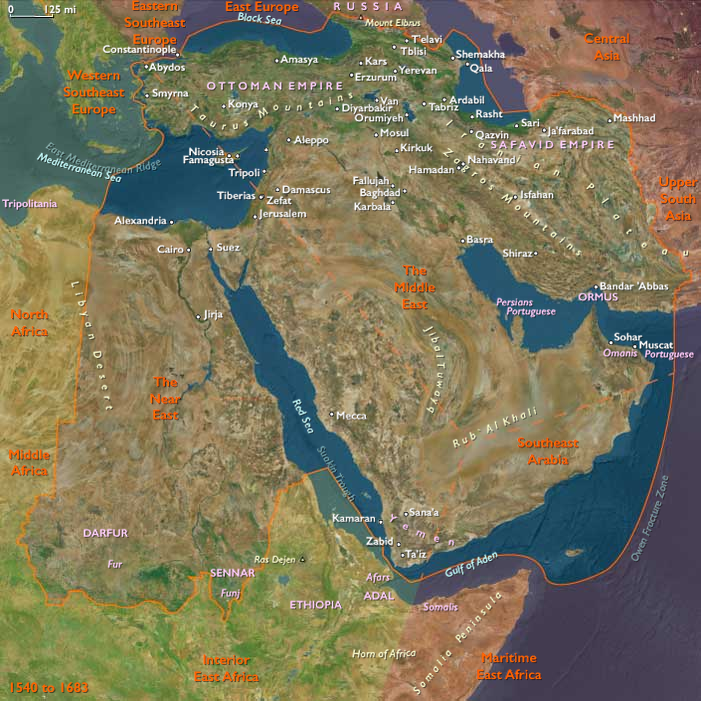
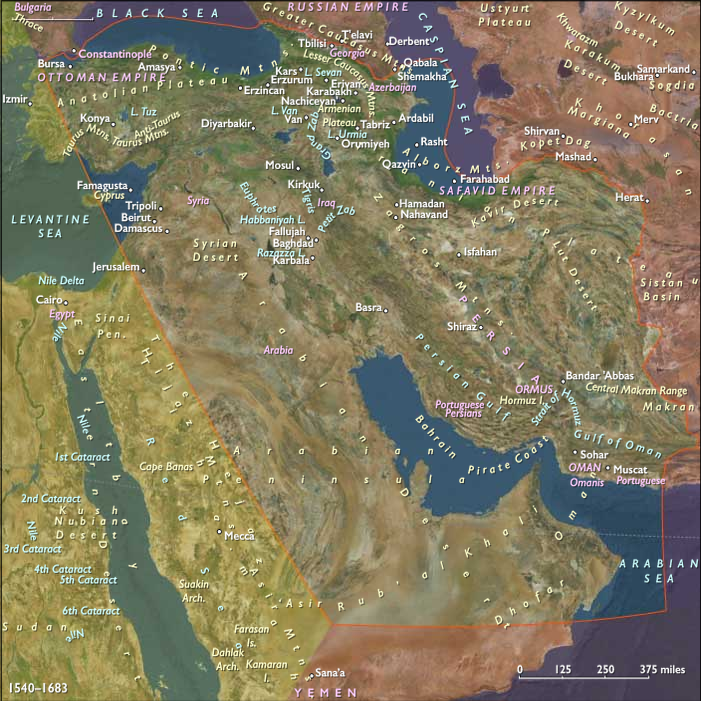
Under Imam Nasir bin Murshid al-Ya'aruba, the Yarubid dynasty further consolidates power and continues its mission to expel Portuguese colonial forces from Oman. In 1643, the Yarubid forces achieve a major victory by retaking the strategically vital fortress of Sohar. This victory significantly undermines Portuguese control along the Arabian coast, effectively ending their dominance in the region and solidifying Omani independence. Nasir’s efforts not only unify the tribes internally but also enhance Oman’s maritime capabilities and regional influence.
Fall of Fakhr al-Din II and Ottoman Reassertion in Lebanon
In Mount Lebanon, Emir Fakhr al-Din II ibn Maan faces intensified pressure from the Ottoman Empire. Despite his previous diplomatic successes and economic reforms, Fakhr al-Din's autonomy is perceived as intolerable by Sultan Murad IV. In 1636, Ottoman forces decisively defeat Fakhr al-Din, capturing and imprisoning him in Istanbul, where he is executed in 1635. His fall ends a notable period of relative autonomy and prosperity in Mount Lebanon, reasserting Ottoman dominance.
Ottoman–Safavid War and the Recapture of Baghdad
The Ottoman–Safavid conflict continues to rage, centered around control of the crucial city of Baghdad. In 1638, Sultan Murad IV leads a massive military campaign against Safavid forces. After a fierce siege lasting several months, Ottoman forces successfully recapture Baghdad, which has been under Persian control since 1623. This victory marks a significant triumph for the Ottomans, restoring Baghdad’s strategic and symbolic importance to their empire and delivering a major setback to Safavid ambitions.
Cultural Patronage and Urban Flourishing
Isfahan continues to be a major cultural and political center under the Safavid dynasty, despite their recent setbacks. Architectural and artistic patronage remains robust, and Isfahan's grandeur as a capital city persists.
Aleppo, meanwhile, maintains its position as an important economic hub connecting Europe and the Middle East, despite broader regional conflicts. Its markets continue to thrive, drawing merchants interested in textiles, spices, and luxury items, ensuring sustained economic growth and cultural exchange.
Legacy of the Era
The period 1636–1647 witnesses substantial geopolitical shifts: the Yarubid dynasty solidifies its rule in Oman and ends Portuguese dominance; the execution of Fakhr al-Din II reasserts Ottoman control in Lebanon; and the Ottoman recapture of Baghdad reestablishes their dominance over a crucial strategic location. Together, these events reshape the political landscape of the Middle East, establishing a foundation for future power dynamics in the region.
People
Groups
- Omanis
- Muslims, Sunni
- Muslims, Shi'a
- Muslims, Ibadi
- Ottoman Empire
- Portuguese Empire
- Qizilbash or Kizilbash, (Ottoman Turkish for "Crimson/Red Heads")
- Persia, Safavid Kingdom of
- Mount Lebanon Emirate
- Oman, Second Imamate of
- Yaruba dynasty
Topics
Commodoties
Subjects
Regions
Subregions
Related Events
Showing 10 events out of 32410 total
Years: 1636 - 1647
People
Groups
- Omanis
- Muslims, Sunni
- Muslims, Shi'a
- Muslims, Ibadi
- Ottoman Empire
- Portuguese Empire
- Qizilbash or Kizilbash, (Ottoman Turkish for "Crimson/Red Heads")
- Persia, Safavid Kingdom of
- Mount Lebanon Emirate
- Oman, Second Imamate of
- Yaruba dynasty
Topics
Commodoties
Subjects
Regions
Subregions