
The Middle East: 184–195 CE Continuing …
Years: 172 - 183
The Middle East: 184–195 CE
Continuing Religious Conflicts and Parthian Instability
From 184 to 195 CE, the Middle East experiences ongoing religious and political tensions, particularly highlighted by the lingering influence of the Montanist movement. Despite sustained opposition from Church authorities, Montanism continues to attract adherents, especially in Phrygia and other parts of Asia Minor. The movement’s persistent apocalyptic messaging and rigorous moral doctrines maintain its appeal among Christians disillusioned by the perceived moral laxity and hierarchical rigidity of the mainstream Church.
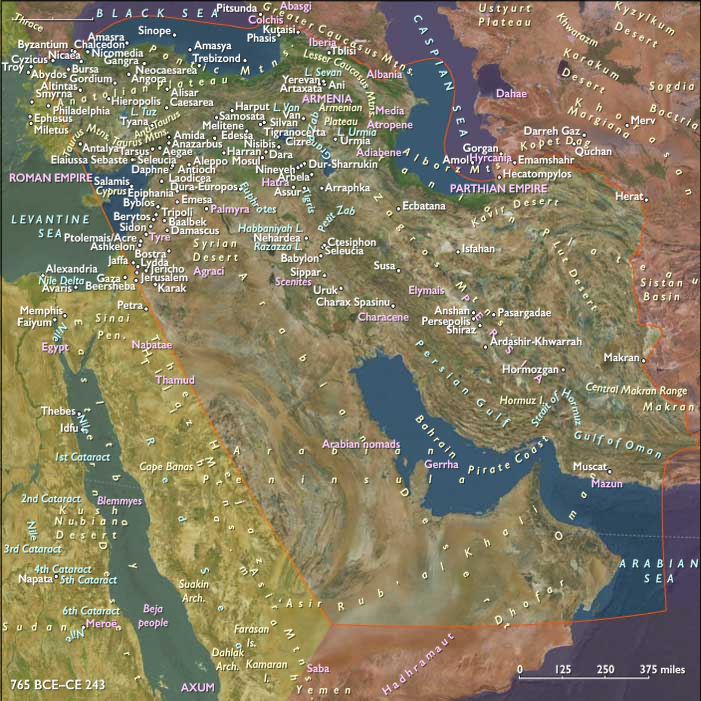
Simultaneously, political stability in the region deteriorates due to internal strife within the Parthian Empire. Succession disputes and factional rivalries weaken central authority, undermining Parthia's ability to effectively govern its vast territories. This internal instability is compounded by increased Roman interest in exploiting these divisions, as Emperor Septimius Severus, ascending to power in 193 CE, turns his ambitions toward securing Rome’s eastern borders and enhancing Roman influence in Armenia and Mesopotamia.
The interplay of religious fervor and geopolitical instability during this era underscores the complexities and shifting dynamics of power and belief in the Middle East at the close of the second century CE.
People
Groups
Subjects
Regions

Subregions
Years: 172 - 183
People
Groups
Subjects
Regions
Subregions