
The Middle East: 1552–1563 CE Military …
Years: 1552 - 1563
The Middle East: 1552–1563 CE
Military and Geopolitical Developments
Ottoman-Safavid Treaty of Amasya
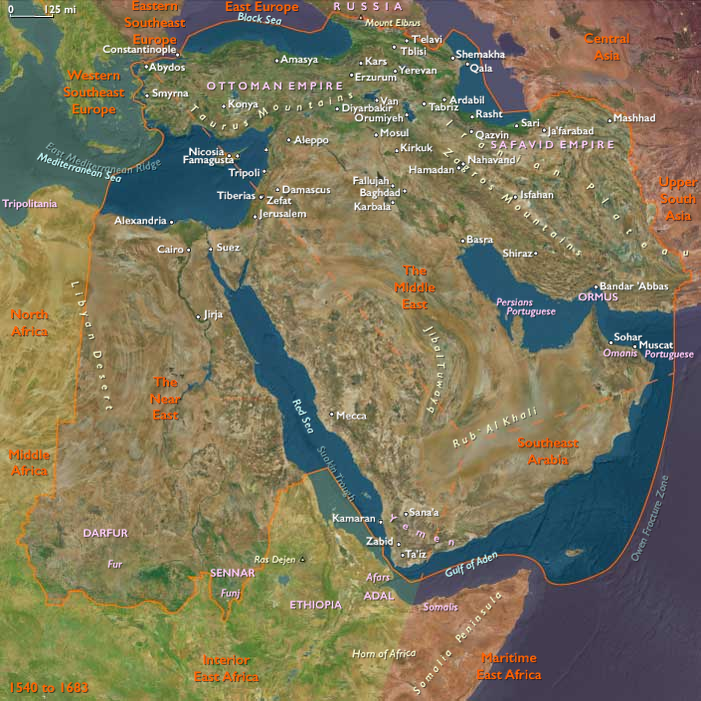
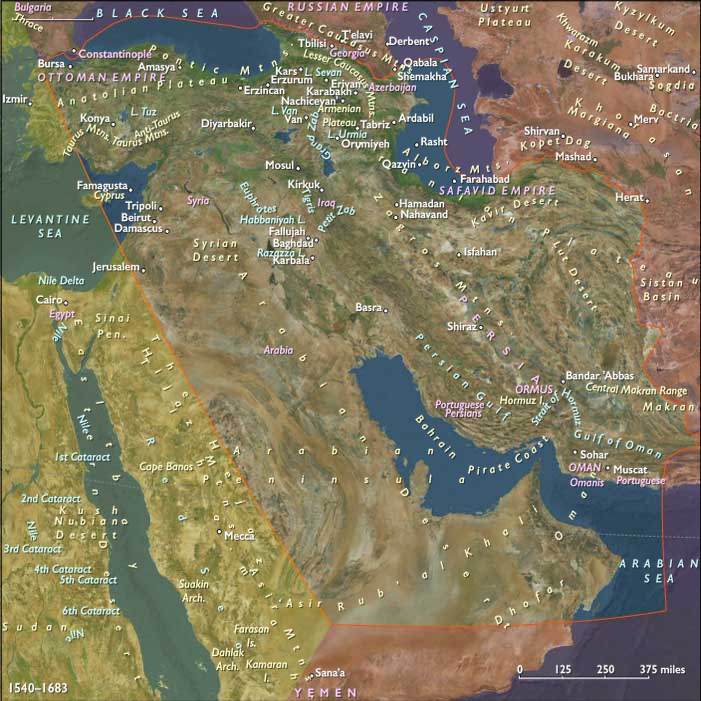
The protracted struggle between the Ottoman Empire and the Safavid Dynasty reaches a temporary settlement with the Treaty of Amasya in 1555. Signed by Sultan Suleiman the Magnificent and Shah Tahmasp I, this pivotal agreement sets relatively stable borders, giving eastern Anatolia, Baghdad, and Mesopotamia to the Ottomans, while granting Azerbaijan and most of the Caucasus to the Safavids. This treaty, though uneasy, will remain in effect for two decades, providing both empires a period of much-needed respite.
Ottoman Naval Campaigns
Under the command of the famed admiral Piyale Pasha, Ottoman naval forces extend their Mediterranean reach significantly, notably capturing the strategic island of Djerba near Tunisia in 1560. This victory reinforces Ottoman maritime dominance in the Mediterranean and shores up their defensive perimeter against increasing European naval incursions, particularly by Spain and its allies.
Economic and Administrative Progress
Trade Expansion and Economic Prosperity
The relative peace afforded by the Treaty of Amasya encourages renewed economic growth, particularly benefiting Ottoman commercial hubs such as Aleppo and Damascus. Aleppo solidifies its role as the region’s preeminent trade nexus, bridging Eastern markets with European merchants, particularly the Venetians and French. Enhanced trade routes stimulate urban prosperity despite ongoing rural economic stagnation.
Ottoman Administrative Refinements
The Ottomans, building upon earlier reforms, further standardize the Kanun laws and taxation systems under Suleiman's capable grand viziers, enhancing administrative efficiency throughout the provinces. Local governance structures benefit from clearer mandates, enabling improved agricultural productivity and trade security.
Religious and Cultural Consolidation
Shi'a Consolidation in Safavid Iran
Under Shah Tahmasp I, Shi'a Islam becomes deeply entrenched across Safavid Iran, reinforced through rigorous religious policies and educational reforms. The shah actively promotes religious schools and seminaries in Qazvin and other cities, cultivating an educated clergy whose influence permeates Persian society, solidifying Shi'ism's central role in Iranian identity.
Artistic Patronage and Cultural Exchange
Both the Ottoman and Safavid courts remain active centers of artistic patronage. In Istanbul, Suleiman’s architectural program continues with the further construction of monumental public works, overseen by chief architect Sinan. In Iran, Shah Tahmasp maintains a vibrant artistic court at Qazvin, fostering a significant tradition of illuminated manuscripts and Persian miniatures, exemplified by the celebrated Shahnameh of Shah Tahmasp.
Legacy of the Era
This era's key developments—most notably the Treaty of Amasya—temporarily stabilize the volatile Ottoman-Safavid frontier, permitting a brief economic and cultural flowering. Ottoman maritime dominance expands, and Safavid religious and cultural policies deeply embed Shi'ism in Iranian life, leaving lasting impressions that will shape Middle Eastern dynamics for generations to come.
People
Groups
Topics
Subjects
Regions
Subregions
Years: 1552 - 1563
People
Groups
Topics
Subjects
Regions
Subregions