
The Middle East: 1197–1054 BCE Post-Hittite …
Years: 1197BCE - 1054BCE
The Middle East: 1197–1054 BCE
Post-Hittite Collapse: Realignments and New Powers
The Collapse of the Hittite Empire
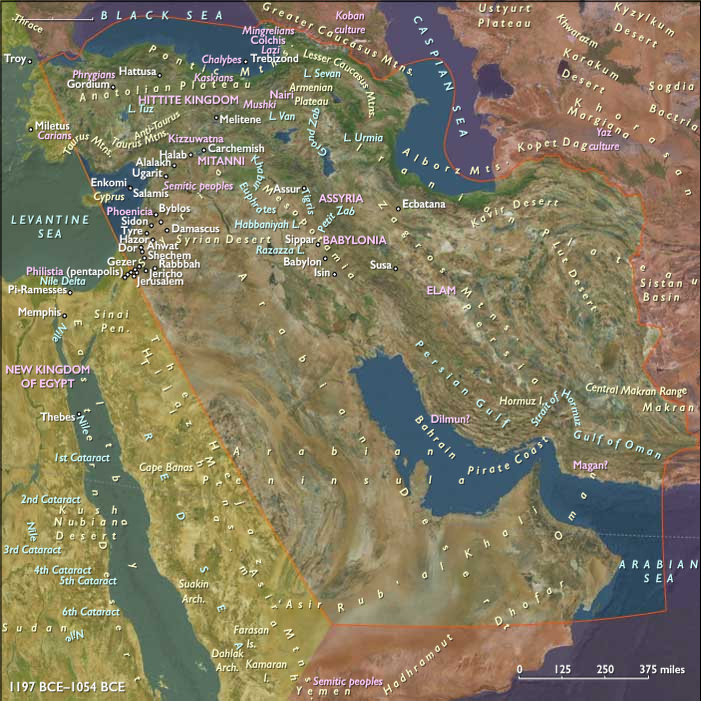
The period between 1197 and 1054 BCE witnesses the dramatic collapse and fragmentation of the once-powerful Hittite Empire, precipitated by invasions from the Sea Peoples, internal rebellions, and external pressures from neighboring tribes. Around 1180 BCE, Hattusa, the Hittite capital, is sacked and burned, resulting in a political vacuum throughout Anatolia. Post-collapse, the region splinters into smaller kingdoms ruled by former Hittite elites and newly arrived peoples such as the Mushki (possibly proto-Phrygians), who establish themselves notably in Cappadocia. Cities such as Carchemish emerge as independent Neo-Hittite states, preserving and adapting elements of Hittite culture.
Phoenician Maritime Ascendancy
With the retreat of Egyptian influence and the absence of a dominant regional power, Phoenician city-states including Sidon, Tyre, Byblos, and Arvad thrive through maritime commerce, significantly bolstered by their early adoption of alphabetic writing. By around 1100 BCE, Phoenician sailors dominate Mediterranean trade routes, trading luxury items such as cedar timber, glassware, purple dyes, and metals. The political stability and economic prosperity of these city-states allow them to maintain independence and become critical intermediaries in regional and long-distance trade.
Cyprus: Transition and Trade
The disruption caused by the Sea Peoples leads Cyprus (Alashiya) to shift its political and commercial alliances increasingly toward the Mycenaean Greeks and Levantine city-states. The establishment and growth of new ports like Salamis, traditionally associated with the legendary Greek archer Teucer, solidify Cyprus's role as a crucial maritime and metallurgical center, particularly for copper trade. The Cypriot syllabic script remains in use, reflecting ongoing cultural and economic interactions.
Rise of Assyria
In Mesopotamia, the Assyrian Empire rapidly expands into the power vacuum left by the Hittite collapse and Mitanni's earlier fall. Under vigorous rulers such as Tiglath-Pileser I (1115–1077 BCE), Assyria aggressively pushes its boundaries westward into Anatolia, decisively defeating invading tribes such as the Mushki and Kaska. Assyria fortifies cities like Nineveh and Kalhu (Nimrud), establishing administrative structures that enhance centralized royal authority and military strength. This period marks Assyria’s rise as a dominant political and military power in the Near East.
Elamite and Babylonian Turmoil
In Babylonia, Kassite rule ends abruptly in 1155 BCE due to Elamite invasions led by Shutruk-Nahhunte, who plunders key cultural treasures from Babylon. However, Elamite dominance in Babylonia proves short-lived, as Nebuchadnezzar I swiftly retaliates, sacking Susa around 1150 BCE and restoring Babylonian autonomy. This tumultuous era sees continued cultural resilience and architectural renewal, with temples rebuilt and traditional Mesopotamian cultural practices preserved.
Technological Shifts: Bronze to Iron
The era witnesses a significant technological transition from bronze to iron metallurgy, accelerated by the disruptions of traditional tin supplies due to regional instability. Hittite iron-working techniques spread rapidly, transforming economies and warfare. By 1100 BCE, iron tools and weapons become commonplace throughout Anatolia, Mesopotamia, and the Levant, laying a foundation for the full emergence of the Iron Age.
Aramaean Expansion and Cultural Transformation
Aramaean tribes significantly impact regional dynamics by the late twelfth century BCE, establishing influential city-states such as Damascus. Known for their nomadic pastoralism and subsequent urbanization, Aramaeans introduce sophisticated irrigation systems, transforming agriculture and settlement patterns. Their growing presence and political structures set the stage for profound cultural and linguistic shifts throughout Syria and Mesopotamia.
This period, marked by significant political upheavals, technological innovations, and new cultural formations, reshapes the Middle Eastern landscape, profoundly influencing the historical trajectory of the region for centuries to follow.
People
Groups
- Polytheism (“paganism”)
- Semites
- Larsa, city-state of
- Dilmun (Bahrain?)
- Cyprus, Archaic
- Canaanite culture, ancient
- Hurrians
- Isin, city-state of
- Amorites
- Ebla, Kingdom of
- Erbil (Arbil, Irbil), city-state of
- Nineveh, city-state of
- Ugarit, Kingdom of
- Alalakh, city-state of
- Kassites
- Yamhad, or Yamkhad, Kingdom of
- Hapiru, or Habiru
- Sealand, or Marsh, Kingdom
- Egypt (Ancient), Second Intermediate Period of
- Hyksos, Kingdom of
- Phoenicia
- Aramaeans
- Egypt (Ancient), New Kingdom of
- Mitanni (Hanigalbat), Kingdom of
- Elam, (Middle) Kingdom of
- Arzawa
- Ahhiyawa
- Tyre, Kingdom of (Phoenicia)
Topics
Commodoties
- Weapons
- Hides and feathers
- Glass
- Domestic animals
- Grains and produce
- Ceramics
- Strategic metals
- Beer, wine, and spirits
Subjects
- Commerce
- Writing
- Architecture
- Sculpture
- Painting and Drawing
- Environment
- Decorative arts
- Conflict
- Mayhem
- Faith
- Government
- Custom and Law
- Technology
- Metallurgy
Regions
Subregions
Years: 1197BCE - 1054BCE
People
Groups
- Polytheism (“paganism”)
- Semites
- Larsa, city-state of
- Dilmun (Bahrain?)
- Cyprus, Archaic
- Canaanite culture, ancient
- Hurrians
- Isin, city-state of
- Amorites
- Ebla, Kingdom of
- Erbil (Arbil, Irbil), city-state of
- Nineveh, city-state of
- Ugarit, Kingdom of
- Alalakh, city-state of
- Kassites
- Yamhad, or Yamkhad, Kingdom of
- Hapiru, or Habiru
- Sealand, or Marsh, Kingdom
- Egypt (Ancient), Second Intermediate Period of
- Hyksos, Kingdom of
- Phoenicia
- Aramaeans
- Egypt (Ancient), New Kingdom of
- Mitanni (Hanigalbat), Kingdom of
- Elam, (Middle) Kingdom of
- Arzawa
- Ahhiyawa
- Tyre, Kingdom of (Phoenicia)
Topics
Commodoties
- Weapons
- Hides and feathers
- Glass
- Domestic animals
- Grains and produce
- Ceramics
- Strategic metals
- Beer, wine, and spirits
Subjects
- Commerce
- Writing
- Architecture
- Sculpture
- Painting and Drawing
- Environment
- Decorative arts
- Conflict
- Mayhem
- Faith
- Government
- Custom and Law
- Technology
- Metallurgy
Regions
Subregions