The Middle East: 1456–1467 CE Shifts …
Years: 1456 - 1467
The Middle East: 1456–1467 CE
Shifts in Power and Intellectual Flourishing
Ottoman Consolidation and Expansion
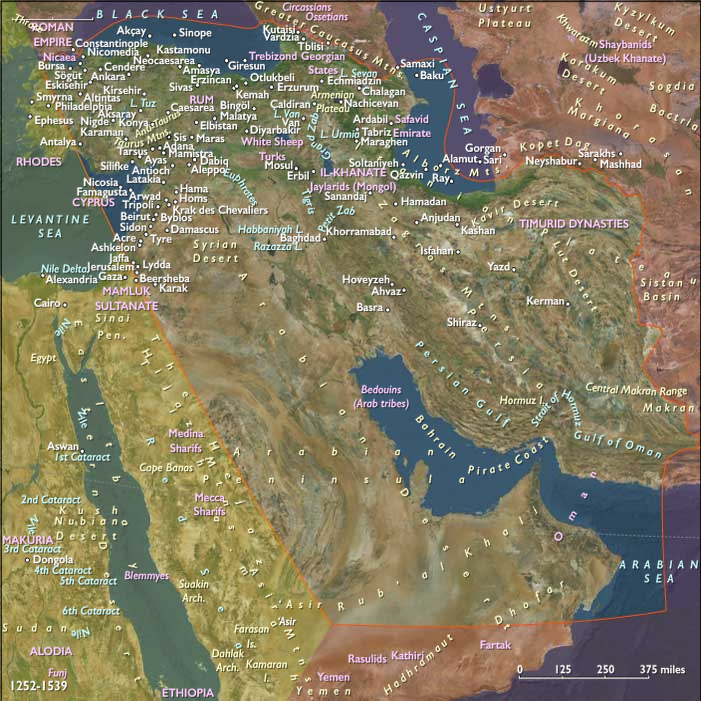
Following the decisive victory at Varna, Mehmed II, son of Murad II, consolidates Ottoman power and initiates a period of vigorous territorial expansion. In 1458, the Ottomans capture Athens, reinforcing their dominance in southeastern Europe. Mehmed's efforts significantly enhance the empire's military strength and administrative cohesion, preparing the stage for further conquests, including future ambitions towards Constantinople.
Kara Koyunlu and Aq Qoyunlu Rivalries
The stability of the Kara Koyunlu under Jahan Shah begins to show signs of strain due to emerging rivalries with the Aq Qoyunlu, another Turkmen confederation. These conflicts foreshadow significant shifts in regional power dynamics. Despite these challenges, Jahan Shah continues his patronage of Persian culture, ensuring Tabriz remains a vibrant cultural hub amid growing political tensions.
Georgian Cultural Continuity Amid Challenges
The Kingdom of Georgia faces mounting external pressures, yet maintains its cultural resilience. Although intermittent conflicts with neighboring Muslim states create instability, Georgian society continues to produce significant works of literature, religious art, and architecture, preserving its status as a crucial cultural nexus in the region.
Timurid Decline and Intellectual Achievement
In Samarkand, the intellectual legacy of Ulugh Beg endures even as political instability marks the decline of Timurid power. Astronomical and scholarly pursuits initiated during Ulugh Beg's reign continue to influence scientific thought across the Islamic world. Despite weakened central authority, the scholarly achievements fostered by Ulugh Beg persist, underscoring the lasting cultural impact of the Timurids.
Legacy of the Era
The era from 1456 to 1467 witnesses significant shifts in regional power, with Ottoman expansionism under Mehmed II, emerging rivalries among Turkmen dynasties, continued Georgian cultural vitality, and the intellectual legacy of Timurid scholarship. These developments collectively highlight the Middle East's dynamic political landscape and enduring intellectual resilience during a time of significant transformation
Years: 1456 - 1467
People
Groups
- Persian people
- Christians, Eastern Orthodox
- Georgia, (Bagratid) Kingdom of
- Timurid Empire
- Kara Koyunlu (Black Sheep Turks), (Turkmen) Emirate of the
- Timurid Emirates
- Ottoman Empire
- Ag Qoyunlu (White Sheep Turks), (Turkmen) Emirate of the
Topics
Subjects
Regions
Subregions