
The Middle East: 1432–1443 CE Strategic …
Years: 1432 - 1443
The Middle East: 1432–1443 CE
Strategic Consolidations and Cultural Flourishing
Kara Koyunlu Consolidation under Jahan Shah
By 1435, Jahan Shah emerges victorious over his brother and rival Qara Iskander, solidifying his control as the uncontested leader of the Kara Koyunlu. Under his rule, their dominance over Baghdad and western Persia is reinforced, initiating a period characterized by stability and cultural patronage, particularly evident in advancements in architecture and the arts.
Ottoman Expansion and Diplomacy
The Ottoman Empire, guided by the strategic leadership of Murad II, significantly expands its influence into the Balkans. Murad consolidates Ottoman authority through military success and adept diplomacy, setting the stage for future victories such as the decisive Battle of Varna in 1444. His policies effectively secure Ottoman dominance in the region, further entrenching the empire’s territorial ambitions.
Georgian Economic and Cultural Renaissance
The revitalized Kingdom of Georgia continues its trajectory of economic prosperity and cultural revival. Benefiting from sustained peace and enhanced trade networks, Georgia witnesses notable developments in literature, religious architecture, and fine arts. The kingdom reaffirms its status as a vital cultural intermediary between Eastern and Western traditions.
Timurid Cultural Zenith under Shah Rukh
Under the rule of Shah Rukh, the Timurid Empire experiences an unparalleled cultural zenith centered at the capital, Herat. Shah Rukh fosters a rich intellectual climate, promoting scientific inquiry, literary production, and artistic creativity. This cultural renaissance significantly enhances Persian culture, influencing subsequent artistic and intellectual traditions.
Legacy of the Era
The period from 1432 to 1443 marks a phase of strategic consolidation and vibrant cultural flourishing across the Middle East. Jahan Shah's establishment of stable rule over the Kara Koyunlu, the Ottoman Empire's notable territorial expansions under Murad II, the ongoing Georgian renaissance, and the Timurid cultural achievements under Shah Rukh collectively define a dynamic and pivotal era in Middle Eastern history.
People
Groups
- Persian people
- Georgia, (Bagratid) Kingdom of
- Timurid Empire
- Kara Koyunlu (Black Sheep Turks), (Turkmen) Emirate of the
- Timurid Emirates
- Ottoman Empire
Topics
Subjects
Regions
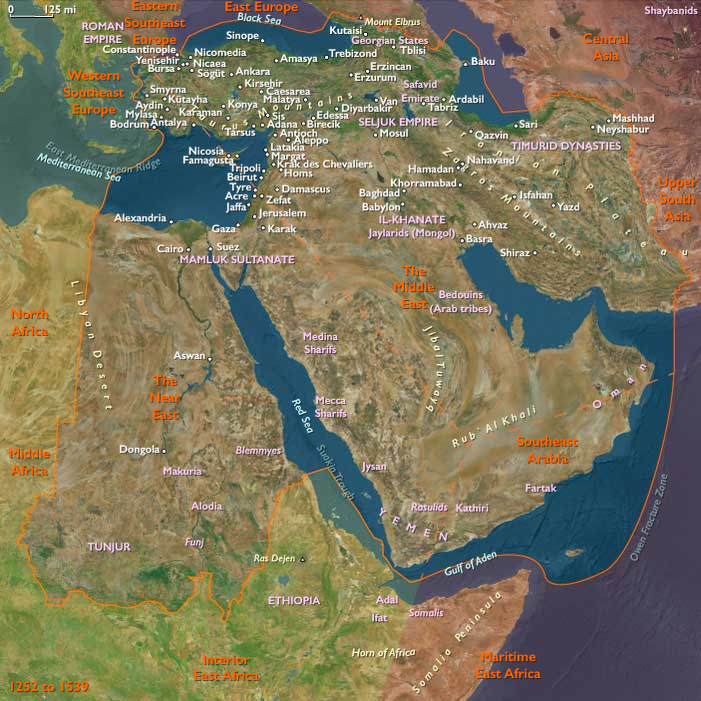
Subregions
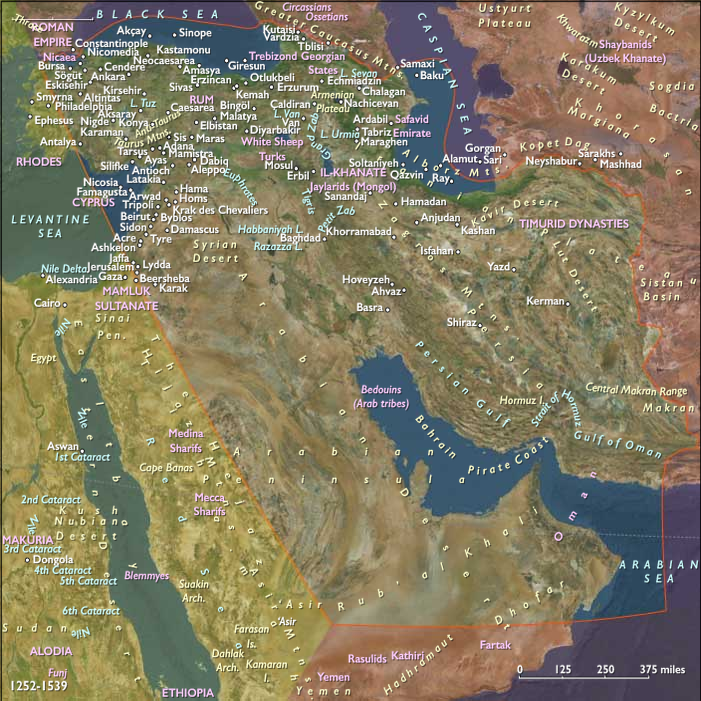
Years: 1432 - 1443
People
Groups
- Persian people
- Georgia, (Bagratid) Kingdom of
- Timurid Empire
- Kara Koyunlu (Black Sheep Turks), (Turkmen) Emirate of the
- Timurid Emirates
- Ottoman Empire
Topics
Subjects
Regions
Subregions