
The Middle East: 1540–1683 CE Ottoman …
Years: 1540 - 1683
The Middle East: 1540–1683 CE
Ottoman Expansion and Confrontation
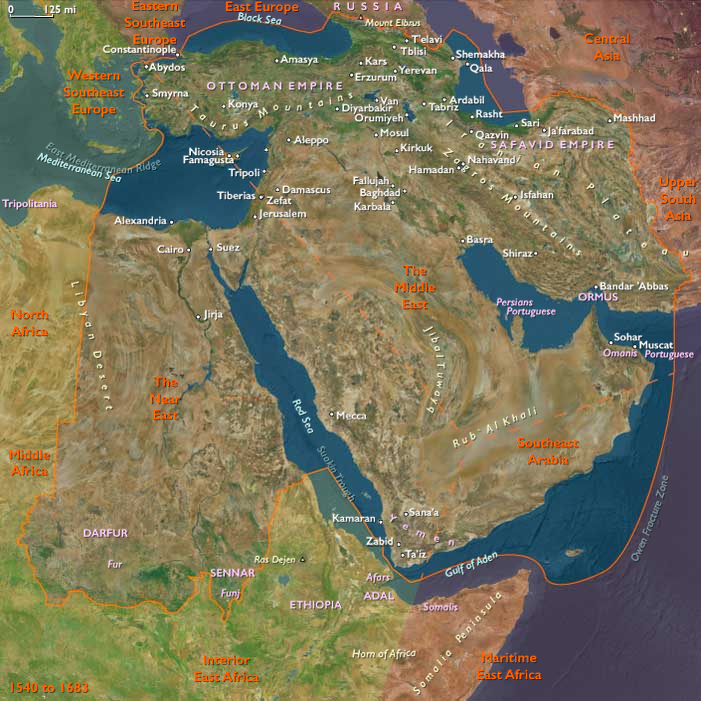
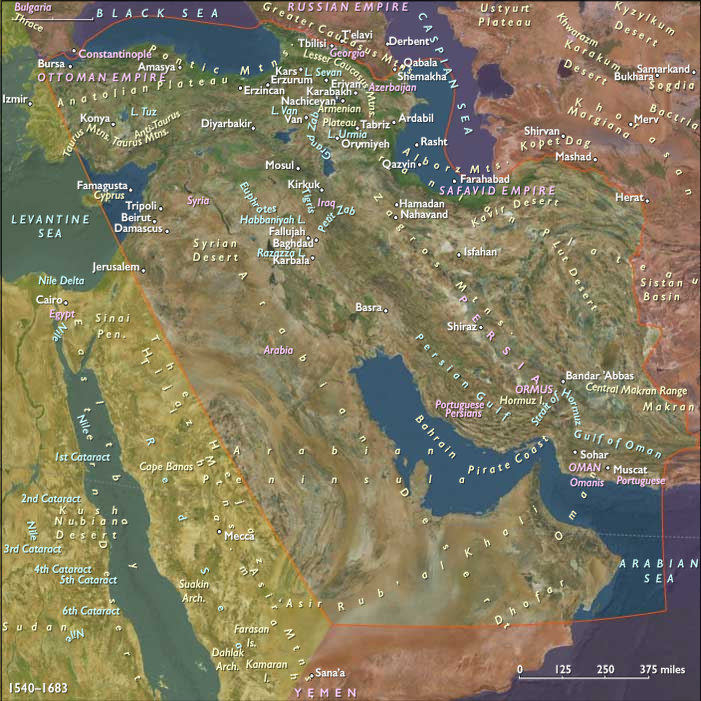
The Ottoman Empire, under powerful sultans such as Suleiman the Magnificent, achieves significant territorial expansion, controlling regions stretching from the Balkans through Anatolia and deep into the Middle East. In 1516, the Ottomans decisively defeat the Mamluks at Aleppo, integrating Syria into their vast empire. By 1535, Ottoman influence solidifies in Baghdad after defeating the Safavid Empire, ensuring Sunni dominance and preventing Shia Islam from extending into Anatolia. The conflict between the Ottomans and Safavids shapes the geopolitical landscape significantly, particularly through territorial disputes in Iraq and the Caucasus. Ottoman governance is organized into provinces (vilayets) administered by governors (pashas), granting significant regional autonomy provided they maintain loyalty to Constantinople.
The Safavid Empire and Shia Consolidation
The Safavid dynasty, rising in 1501 under Shah Ismail I, institutionalizes Shia Islam as the state religion of Iran, converting the majority population from Sunni Islam through proselytizing and state pressure. This religious shift deepens rivalries with the Sunni Ottomans. Despite a critical defeat at Chaldiran in 1514, the Safavid empire under subsequent rulers like Shah Abbas the Great revitalizes economically and culturally, fostering a golden age in cities like Isfahan, renowned for art, architecture, and commerce. Shah Abbas promotes internal trade, builds new infrastructure, and supports the arts. However, internal administrative complacency gradually weakens central authority, leading to the empire's eventual decline after his death in 1629.
Mamluk Influence and Ottoman Integration
The Mamluks, ruling Egypt and Syria until 1516, leave a lasting legacy. Their defeat by the Ottomans integrates the region into Ottoman governance. Syrian cities such as Aleppo flourish as key trade hubs, linking Europe, Persia, and the broader Arab world, fostering significant cultural and economic interactions. The Ottomans largely respect existing structures, allowing religious minorities considerable autonomy through the millet system. Despite periodic prosperity in cities like Aleppo and Beirut, wider economic decline occurs under Ottoman rule, evidenced by decreasing populations and abandoned settlements.
Maritime Rivalries and the Rise of Oman
The Portuguese, active in the Persian Gulf and Indian Ocean since Vasco da Gama's voyages, fortify cities such as Muscat from 1508. Omani resistance intensifies under Imam Nasir bin Murshid al-Ya'aruba starting in 1624, successfully challenging Portuguese authority by capturing strategic locations, including Sohar and Julfar. By 1650, the Yarubids unify Oman's coast and interior, expanding their maritime and commercial influence into East Africa, notably securing ports like Zanzibar and Mombasa. Omani dominance reshapes regional trade networks, significantly impacting maritime dynamics in the Indian Ocean.
Lebanese Autonomy and Economic Vibrancy
Under Emir Fakhr ad-Din ibn Maan (1591–1635), Lebanon experiences notable autonomy and economic development. Fakhr ad-Din promotes religious tolerance, attempts to unify feuding Maronite and Druze factions, and establishes diplomatic ties with European powers like Tuscany. His modernization initiatives include military enhancements, infrastructure projects, and fostering cultural exchanges with Europe. Despite achieving temporary successes, his aspirations for independence result in conflict with Ottoman authorities, ultimately leading to his execution in 1635. Beirut emerges as a prosperous commercial hub due to increasing European trade and cultural interactions.
Cultural Flourishing: The Arabian Nights
The literary collection known as The Arabian Nights (or The Thousand and One Nights), mainly composed between the fourteenth and sixteenth centuries, achieves its definitive form during this period. Reflecting extensive cross-cultural exchanges among Persian, Indian, and Arab traditions, it includes renowned tales like "Aladdin," "Sinbad the Sailor," and "Ali Baba and the Forty Thieves," leaving an enduring cultural and literary legacy that symbolizes the era's rich intercultural dialogues.
Timurids, Uzbeks, and Cultural Exchange
Timur’s invasions, despite their destructiveness, foster cultural blending among Persian, Mongol, and Central Asian traditions. The later fragmentation of Timurid power permits frequent Uzbek incursions into Khorasan, challenging Safavid rule and influencing the region's political evolution. Nonetheless, periods of Safavid stability, especially under Shah Abbas, nurture a significant cultural and economic revival highlighted by the artistic and commercial ascendancy of Isfahan, reinforcing Iran's role as a pivotal cultural nexus.
Legacy of the Era
The era from 1540–1683 CE marks significant shifts in political, religious, and cultural landscapes. The Ottoman-Safavid rivalry shapes regional dynamics profoundly, complemented by the maritime ascendency of Oman and the economic vibrancy of Lebanese cities. Cultural achievements, notably The Arabian Nights, underscore the period’s rich intercultural exchanges. Persistent geopolitical tensions, religious consolidation, and shifts in administrative practices define an era of profound interaction and transformation across the Middle East.
People
Groups
- Jews
- Christians, Armenian Apostolic Orthodox
- Christians, Maronite
- Muslims, Sunni
- Muslims, Shi'a
- Muslims, Ibadi
- Oman, First Imamate of
- Turkmen people
- Druze, or Druse, the
- Christians, Roman Catholic
- Christians, Eastern Orthodox
- Uzbeks
- Ottoman Empire
- Timurid Empire
- Egypt and Syria, Mamluk Burji Sultanate of
- Portugal, Avizan (Joannine) Kingdom of
- Timurid Emirates
- Ottoman Empire
- Portuguese Empire
- Ottoman Empire
- England, (Tudor) Kingdom of
- Cyprus, Venetian
- Persia, Safavid Kingdom of
- Bahrain, Portuguese
- Russia, Tsardom of
- Cyprus, Ottoman
- Portugal, Habsburg (Philippine) Kingdom of
- Levant Company, or Turkey Company (in full: Company of Merchants of England trading to the Seas of the Levant)
- France, (Bourbon) Kingdom of
- Bahrain, Safavid
- Oman, Second Imamate of
- Yaruba dynasty
- Portugal, Bragança Kingdom of
Topics
- Constantinople, Fall of
- Safavid conversion of Iran to Shia Islam
- Portuguese-Omani Wars in East Africa
Commodoties
Subjects
Regions
Subregions
Related Events
Showing 10 events out of 37475 total
Years: 1540 - 1683
People
Groups
- Jews
- Christians, Armenian Apostolic Orthodox
- Christians, Maronite
- Muslims, Sunni
- Muslims, Shi'a
- Muslims, Ibadi
- Oman, First Imamate of
- Turkmen people
- Druze, or Druse, the
- Christians, Roman Catholic
- Christians, Eastern Orthodox
- Uzbeks
- Ottoman Empire
- Timurid Empire
- Egypt and Syria, Mamluk Burji Sultanate of
- Portugal, Avizan (Joannine) Kingdom of
- Timurid Emirates
- Ottoman Empire
- Portuguese Empire
- Ottoman Empire
- England, (Tudor) Kingdom of
- Cyprus, Venetian
- Persia, Safavid Kingdom of
- Bahrain, Portuguese
- Russia, Tsardom of
- Cyprus, Ottoman
- Portugal, Habsburg (Philippine) Kingdom of
- Levant Company, or Turkey Company (in full: Company of Merchants of England trading to the Seas of the Levant)
- France, (Bourbon) Kingdom of
- Bahrain, Safavid
- Oman, Second Imamate of
- Yaruba dynasty
- Portugal, Bragança Kingdom of
Topics
- Constantinople, Fall of
- Safavid conversion of Iran to Shia Islam
- Portuguese-Omani Wars in East Africa
Commodoties
Subjects
Regions
Subregions