
The Middle East: 1312–1323 CE Consolidation …
Years: 1312 - 1323
The Middle East: 1312–1323 CE
Consolidation of Ottoman Rule under Orhan
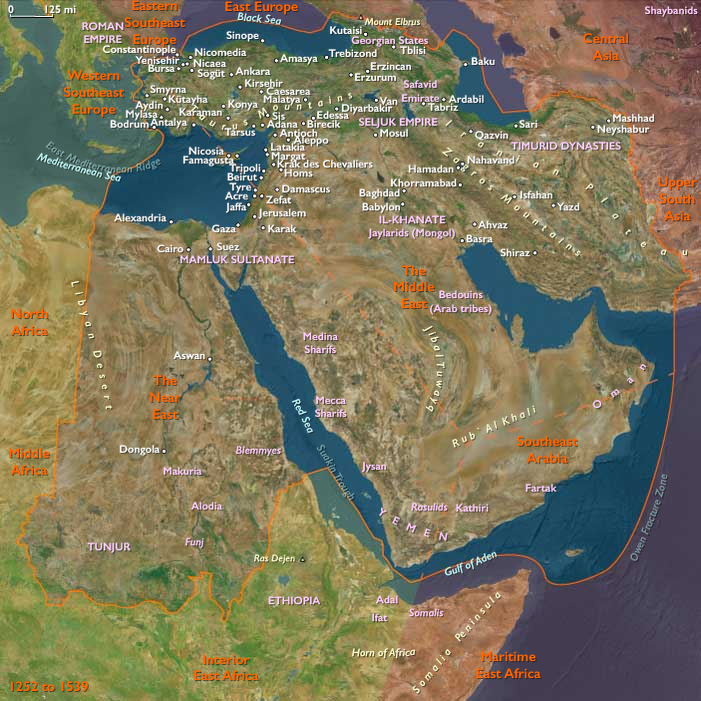
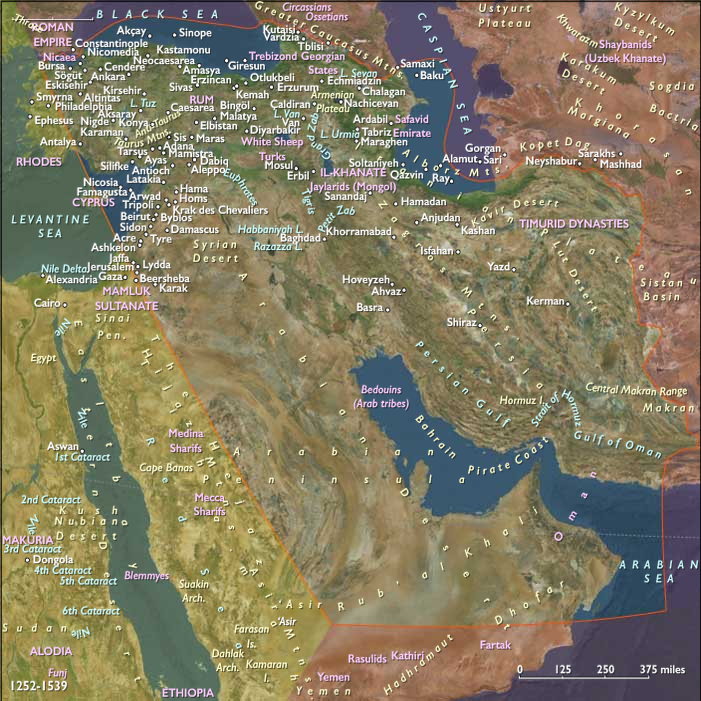
In Anatolia, the death of Osman I around 1323 marks a crucial turning point. Osman’s son and successor, Orhan, assumes leadership and continues the Ottoman expansion vigorously. In 1321, Orhan successfully captures Mudanya, solidifying Ottoman control over the coastal regions of northwest Anatolia. These coastal acquisitions lay foundations for future naval developments, crucial for Ottoman expansion into Europe.
The Ottomans strategically enhance administrative systems and institutions, transitioning from a frontier principality toward a more organized, centralized state. They increasingly draw on Byzantine administrative practices to govern conquered Christian populations.
Mamluk Stability and Cultural Flourishing
Under Sultan Al-Nasir Muhammad, the Mamluk Sultanate continues to prosper economically and culturally, firmly ruling over Egypt, Syria, and the Hijaz. Al-Nasir's third and final reign (1309–1341) is marked by relative political stability, effective administration, and significant patronage of the arts and architecture, notably in Cairo and Damascus.
Trade networks connecting the Indian Ocean, the Red Sea, and the Mediterranean remain robust under Mamluk oversight, reinforcing the Sultanate’s economic strength and fostering vibrant scholarly exchanges within its cities.
Continuing Fragmentation of the Il-Khanate
In Persia and Iraq, the Mongol Il-Khanate suffers intensified internal fragmentation following the death of its capable leader, Ghazan Khan, in 1304 and his successor Öljeitü in 1316. The subsequent ruler, Abu Sa'id Bahadur Khan (r. 1316–1335), struggles to maintain centralized power amidst persistent regional rebellions and financial strain. Nevertheless, Abu Sa'id oversees a flourishing cultural environment, exemplified by architectural projects and literary patronage, despite waning political control.
Kurdish and Turkmen Dynasties Rising in Mesopotamia
As Mongol authority recedes, new regional dynasties emerge. Kurdish dynasties, such as the Ayyubids (distinct from Saladin's earlier dynasty) and Turkmen groups, establish themselves more firmly in upper Mesopotamia, Syria, and adjacent territories. These local dynasties benefit from the declining central authority of the Il-Khanate, creating fragmented yet culturally dynamic regional polities.
Increased Pressure on Crusader Territories
Remaining Crusader strongholds face mounting pressure during this era. Although major fortresses like Krak des Chevaliers and coastal cities such as Acre and Tripoli had fallen earlier, surviving smaller outposts struggle to endure amidst local Muslim principalities and strengthened Ottoman influence. This period effectively represents the twilight of direct Crusader territorial power in the Levant.
Cultural and Intellectual Continuity
The cross-cultural scholarly exchange, fostered earlier by figures such as Gregory Bar Hebraeus, continues, albeit more modestly, within urban centers in Syria, Egypt, and eastern Anatolia. The era sees significant contributions to literature, theology, astronomy, and medicine, sustaining a rich intellectual heritage despite ongoing political upheavals.
This era notably emphasizes the consolidation of Ottoman power under Orhan, continued prosperity within the Mamluk domains, increasing fragmentation of Mongol authority in the Il-Khanate, and the definitive waning of Crusader influence in the region.
People
Groups
- Persian people
- Kurdish people
- Christians, Armenian Apostolic Orthodox
- Muslims, Sunni
- Turkmen people
- Christians, Eastern Orthodox
- Rûm, Sultanate of
- Jerusalem, Latin Kingdom of
- Italians (Latins)
- Tripoli, County of
- Teutonic Knights of Acre (House of the Hospitalers of Saint Mary of the Teutons in Jerusalem)
- Cyprus, Kingdom of
- Karamanids
- Egypt and Syria, Mamluk Bahri Sultanate of
- Il-khanate
- Roman Empire, Eastern: Palaiologan dynasty
- Ottoman Emirate
- Germiyan, Beylik of
Topics
Subjects
Regions
Subregions
Years: 1312 - 1323
People
Groups
- Persian people
- Kurdish people
- Christians, Armenian Apostolic Orthodox
- Muslims, Sunni
- Turkmen people
- Christians, Eastern Orthodox
- Rûm, Sultanate of
- Jerusalem, Latin Kingdom of
- Italians (Latins)
- Tripoli, County of
- Teutonic Knights of Acre (House of the Hospitalers of Saint Mary of the Teutons in Jerusalem)
- Cyprus, Kingdom of
- Karamanids
- Egypt and Syria, Mamluk Bahri Sultanate of
- Il-khanate
- Roman Empire, Eastern: Palaiologan dynasty
- Ottoman Emirate
- Germiyan, Beylik of
Topics
Subjects
Regions
Subregions