
The Middle East: 117–106 BCE Parthian …
Years: 117BCE - 106BCE
The Middle East: 117–106 BCE
Parthian Consolidation and the Rise of Ctesiphon
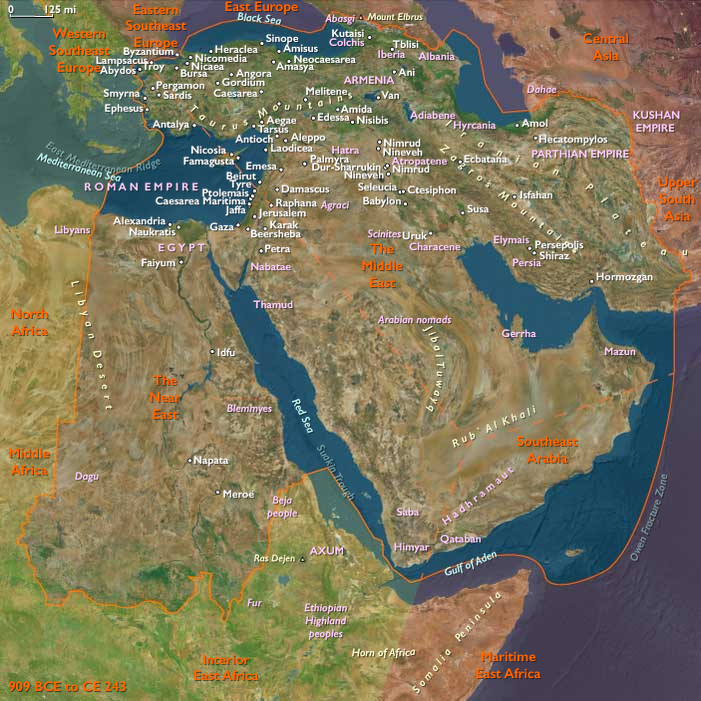
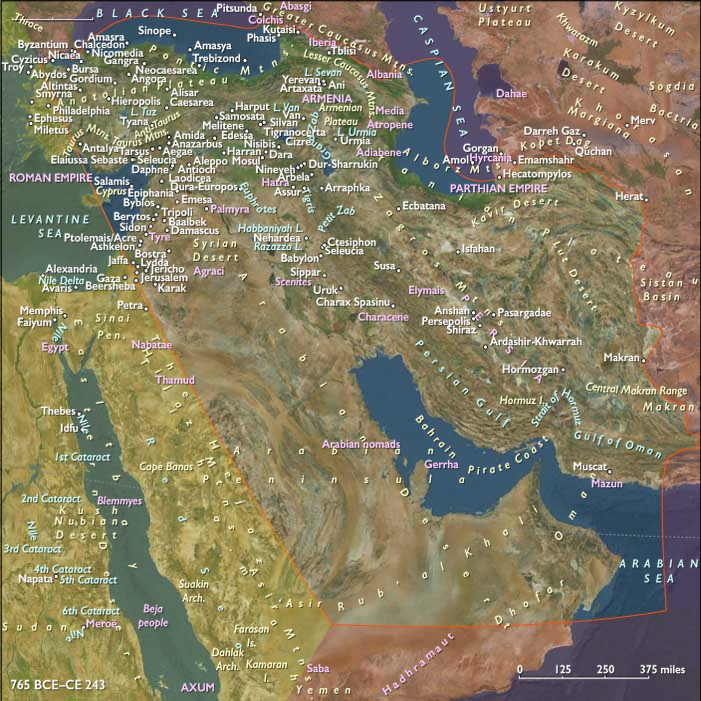
The period from 117 to 106 BCE marks a significant phase of Parthian consolidation in Mesopotamia, following their decisive victory over the Seleucid Empire. The Parthian arrival alters the political landscape minimally, as local dynasts throughout Mesopotamia had already asserted substantial autonomy by the mid-second century BCE.
Under Parthian control, Mesopotamian cities like Seleucia experience greater autonomy and better governance than during the previous Seleucid regime. The Parthians notably refrain from direct occupation of these cities, opting instead to establish a separate military presence in a nearby garrison site called Ctesiphon, located near Seleucia.
Initially established as a strategic military outpost, Ctesiphon gradually grows into an influential urban center. Over time, it will supplant Seleucia itself, becoming the new capital and administrative heart of the Parthian Empire. This development symbolizes the gradual yet significant shift of political and economic power from Hellenistic-dominated cities to distinctly Parthian centers.
This era thus illustrates a transition in governance marked by pragmatic administrative choices by the Parthians, reinforcing local autonomy while effectively consolidating their overarching control. The foundation and subsequent rise of Ctesiphon underscore the lasting impact of Parthian rule in reshaping the political and cultural landscape of Mesopotamia.
Groups
Topics
Subjects
Regions
Subregions
Related Events
Showing 10 events out of 62967 total
Years: 117BCE - 106BCE
Groups
Topics
Subjects
Regions
Subregions