
The Middle East: 1300–1311 CE Ottoman …
Years: 1300 - 1311
The Middle East: 1300–1311 CE
Ottoman Consolidation in Anatolia
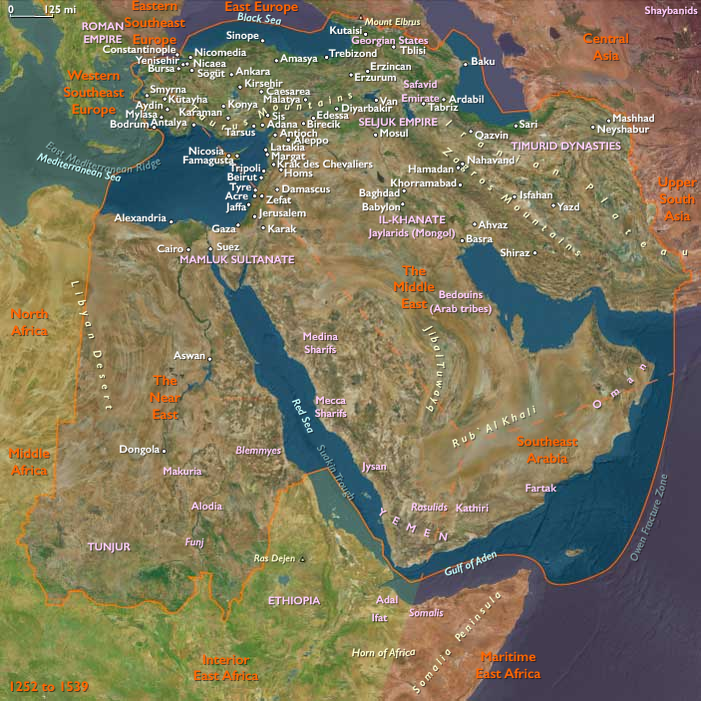
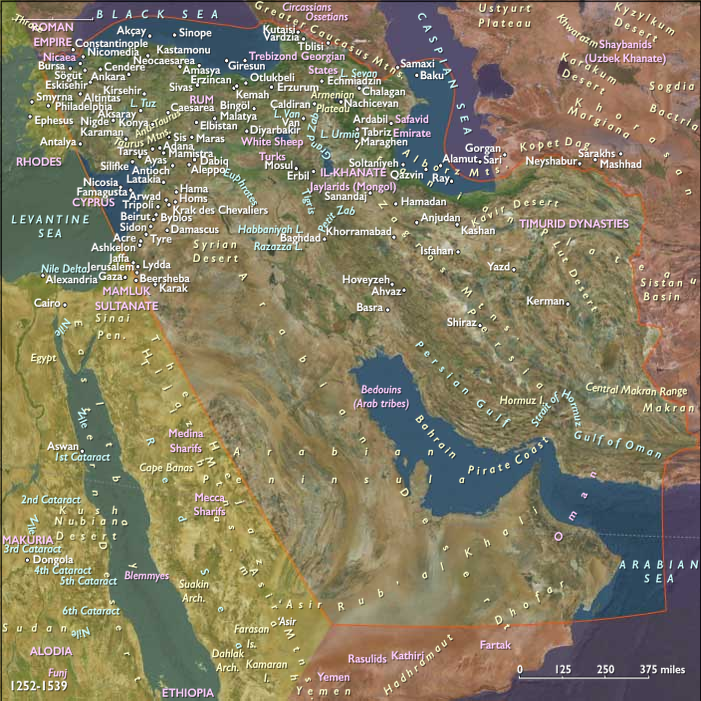
During 1300–1311 CE, the Ottoman principality under Osman I significantly strengthens its territorial and administrative foundations in northwestern Anatolia. Osman's forces successfully besiege and eventually capture Bursa, a strategically vital Byzantine city, though its surrender occurs shortly after this period. The city's siege, initiated during these years, symbolizes the Ottomans' emerging role as a dominant regional power.
This period sees Osman’s principality shift from a frontier warrior state into a structured territorial polity, characterized by the settlement and integration of diverse populations and the beginnings of stable governance.
Fragmentation and Mongol Decline
Throughout Anatolia and the broader Middle East, Mongol authority under the Il-Khanate continues to wane. Internal divisions, succession crises, and regional rebellions diminish Mongol control, further empowering local rulers and Turkmen beyliks like the Ottomans, Karamanids, and Germiyanids.
The decline of centralized Mongol power enables regional leaders to establish independent authority, setting the stage for enduring political fragmentation across the Middle East, including in regions of Iraq, Persia, and eastern Anatolia.
The Mamluk Dominance and Stability in Egypt and Syria
The Mamluk Sultanate of Egypt continues to provide relative political stability and military strength, maintaining control over Egypt, the Levant, and the Islamic holy cities of Mecca and Medina. Under Sultan Al-Nasir Muhammad (whose intermittent reign spans from 1293–1341, notably consolidating power around 1310), the Mamluks reinforce their position, administering efficient trade networks, protecting Islamic scholarship, and actively opposing Mongol incursions from the east.
Continued Cultural and Intellectual Flourishing
Cultural exchange and intellectual activity persist despite political turbulence. Cities such as Damascus, Aleppo, Baghdad, and Cairo serve as critical centers of Islamic learning. Prominent scholars and historians, continuing traditions exemplified by earlier figures like Gregory Bar Hebraeus, actively contribute to the scientific, theological, and philosophical discourses bridging Islamic and Christian communities.
Decline and Isolation of Crusader States
The Crusader territories remain under siege, increasingly isolated by the rising power of the Ottomans and strengthened Muslim sultanates. While some strongholds, such as Krak des Chevaliers, remain under Crusader control, their overall presence in the Levant continues to diminish dramatically, highlighting the near-complete decline of the crusading era and foreshadowing their eventual expulsion.
This era sets the stage for enduring shifts in the Middle Eastern power structure, characterized by the definitive decline of Mongol influence, the rise of Ottoman power, sustained Mamluk authority, and the final waning of Crusader influence.
People
Groups
- Persian people
- Christians, Armenian Apostolic Orthodox
- Muslims, Sunni
- Turkmen people
- Christians, Eastern Orthodox
- Rûm, Sultanate of
- Jerusalem, Latin Kingdom of
- Italians (Latins)
- Tripoli, County of
- Teutonic Knights of Acre (House of the Hospitalers of Saint Mary of the Teutons in Jerusalem)
- Cyprus, Kingdom of
- Karamanids
- Egypt and Syria, Mamluk Bahri Sultanate of
- Il-khanate
- Roman Empire, Eastern: Palaiologan dynasty
- Ottoman Emirate
- Germiyan, Beylik of
Topics
Subjects
Regions
Subregions
Years: 1300 - 1311
People
Groups
- Persian people
- Christians, Armenian Apostolic Orthodox
- Muslims, Sunni
- Turkmen people
- Christians, Eastern Orthodox
- Rûm, Sultanate of
- Jerusalem, Latin Kingdom of
- Italians (Latins)
- Tripoli, County of
- Teutonic Knights of Acre (House of the Hospitalers of Saint Mary of the Teutons in Jerusalem)
- Cyprus, Kingdom of
- Karamanids
- Egypt and Syria, Mamluk Bahri Sultanate of
- Il-khanate
- Roman Empire, Eastern: Palaiologan dynasty
- Ottoman Emirate
- Germiyan, Beylik of
Topics
Subjects
Regions
Subregions