
The Middle East: 1264–1275 CE Mongol …
Years: 1264 - 1275
The Middle East: 1264–1275 CE
Mongol Consolidation and the Il-Khanate
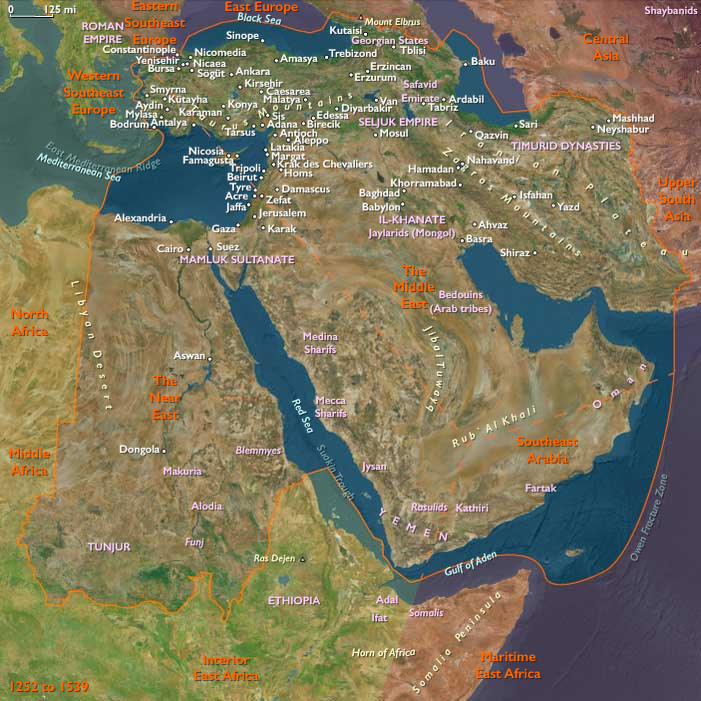
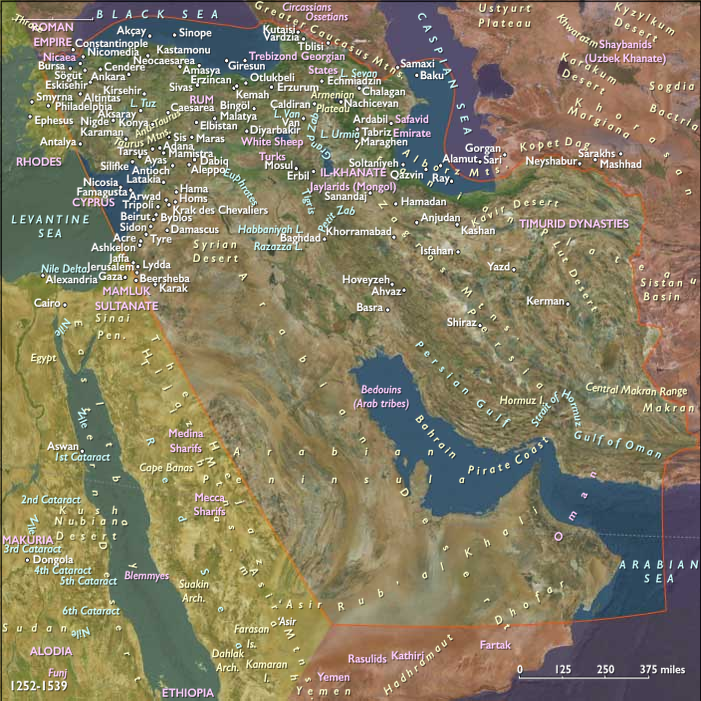
In the aftermath of the Mongol conquest of Baghdad, the Middle East from Iran through Mesopotamia continues to feel the heavy hand of Mongol rule. Hulagu Khan, who had established the Mongol Il-Khanate in Persia and Mesopotamia, dies in 1265, leading to a brief period of instability. His successor, Abaqa Khan (1265–1282), solidifies control over the vast territory stretching from eastern Anatolia to Afghanistan. Under his rule, the Il-Khanate remains closely aligned with Mongol interests in China and Central Asia, though it increasingly adopts Persian administrative traditions.
Fragmentation and Local Dynasties in Anatolia
In Anatolia, the weakened Seljuq Sultanate of Rûm, now effectively a vassal to the Il-Khanate, sees its territories further fragmented as local Turkish beyliks assert independence. Among these emerging states, the Karamanids, based in southern Anatolia, rise prominently. This fragmentation signals the decline of centralized authority and foreshadows the eventual emergence of Ottoman power later in the region.
The Mamluk Response in the Levant
Facing the ongoing Mongol threat, the Mamluk Sultanate in Egypt and Syria consolidates its power under the formidable leadership of Sultan Baibars I (1260–1277). Baibars skillfully fortifies his realm, restoring significant fortifications across Syria and Palestine and reorganizing the army. In 1268, he captures Antioch, extinguishing the crusader Principality of Antioch, significantly altering the balance of power in the Levant.
Cultural Flourishing Under Turmoil
Despite ongoing military and political turmoil, Persian culture continues its remarkable productivity. Rumi, the eminent Persian poet and mystic residing in Anatolia, dies in 1273 in Konya, leaving behind the extensive poetic collection known as the Masnavi, considered one of the greatest spiritual masterpieces of Islamic literature. His death marks a cultural high point, influencing Sufism profoundly across the Muslim world.
Crusader Decline and the Fall of Antioch
The Crusader states in the Levant, weakened by internal divisions and external threats, suffer critical setbacks. The fall of Antioch to Baybars marks a significant turning point, dramatically shrinking the territorial extent of the Crusader presence. The remaining strongholds, such as Acre and Tripoli, become increasingly isolated and vulnerable, with the Knights Hospitaller continuing a desperate defensive strategy from their fortified castles.
Byzantine Restoration of Constantinople
In a remarkable reversal of fortune in 1261, the exiled Byzantine Empire in Nicaea, under Michael VIII Palaiologos, recaptures Constantinople from the Latin Empire. This restoration revitalizes the East Roman (Byzantine) presence in the region, but the empire remains surrounded by hostile forces—the Turks in Anatolia and the Latins in the Mediterranean. Michael VIII, seeking stability, attempts diplomatic outreach to Western powers and initiates military reforms to secure his restored capital.
This era (1264–1275 CE) thus marks a significant transitional period in Middle Eastern history, characterized by Mongol consolidation, the strengthening of Mamluk power, the profound cultural influence of Persian mysticism, a dramatic decline of Crusader power, and a notable resurgence of Byzantine authority in Constantinople.
People
Groups
- Persian people
- Sufism
- Turkmen people
- Rûm, Sultanate of
- Antioch, Principality of
- Jerusalem, Latin Kingdom of
- Italians (Latins)
- Tripoli, County of
- Teutonic Knights of Acre (House of the Hospitalers of Saint Mary of the Teutons in Jerusalem)
- Cyprus, Kingdom of
- Il-khanate
- Roman Empire, Eastern: Palaiologan dynasty
Topics
Subjects
Regions
Subregions
Years: 1264 - 1275
People
Groups
- Persian people
- Sufism
- Turkmen people
- Rûm, Sultanate of
- Antioch, Principality of
- Jerusalem, Latin Kingdom of
- Italians (Latins)
- Tripoli, County of
- Teutonic Knights of Acre (House of the Hospitalers of Saint Mary of the Teutons in Jerusalem)
- Cyprus, Kingdom of
- Il-khanate
- Roman Empire, Eastern: Palaiologan dynasty
Topics
Subjects
Regions
Subregions