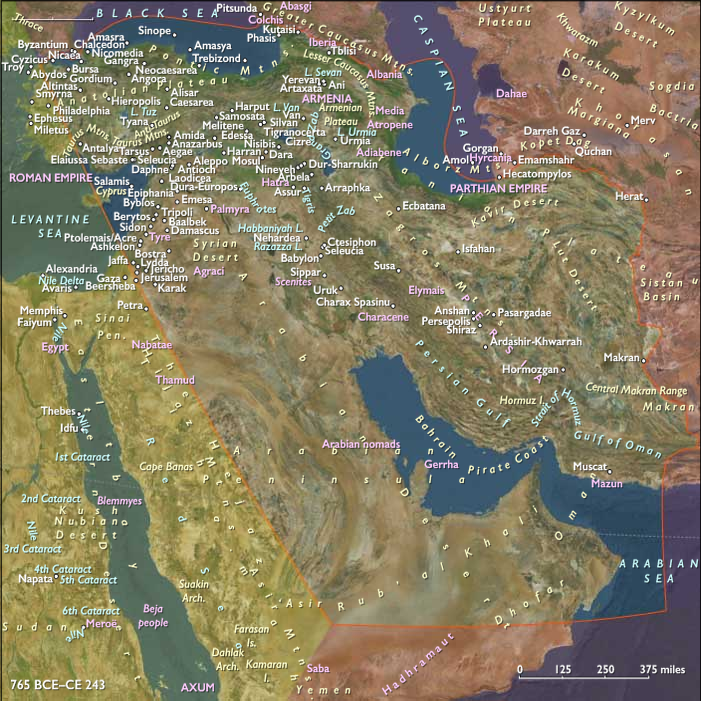
The Middle East: 136–147 CE Post-Revolt …
Years: 136 - 147
The Middle East: 136–147 CE
Post-Revolt Reconstruction and Stability under Antoninus Pius
Following the devastating suppression of the Bar Kokhba Revolt (132–135 CE), the period from 136 to 147 CE sees the Roman Empire under Emperor Antoninus Pius (r. 138–161 CE) embark on a period of cautious consolidation and reconstruction in the Middle East.
Antoninus Pius adopts a notably conciliatory and pragmatic approach, seeking stability rather than military expansion. In Judea, now renamed Syria Palaestina to erase Jewish national identity, the emperor promotes rebuilding efforts, although severe restrictions on Jewish religious practices and settlement remain. This period witnesses the reconstruction of urban centers, including the further establishment of Aelia Capitolina (formerly Jerusalem), which increasingly reflects Roman architectural styles and governance structures, gradually integrating the province more thoroughly into the Roman cultural sphere.
During these years, the Roman–Parthian frontier remains relatively calm, largely due to mutual interest in stabilizing trade routes and preventing costly conflicts. Antoninus focuses on diplomatic engagement rather than military confrontation, maintaining peace with Parthia through careful diplomacy. This approach enables trade along the Silk Road and regional commerce in cities such as Palmyra and Antioch to flourish, enriching the eastern provinces economically and culturally.
In the broader region, this era is characterized by urban renewal and growth in commercial prosperity. Cities like Antioch become vibrant cosmopolitan hubs, blending Greek, Roman, Syrian, and Persian cultural influences. Meanwhile, Christianity continues to spread steadily despite periodic localized persecution, increasingly shaping the cultural and social fabric of communities across the Middle East.
Thus, the period from 136 to 147 CE marks a phase of relative stability, careful governance, and economic recovery following significant turmoil, laying important foundations for continued Roman presence and cultural development in the Middle East.
Years: 136 - 147
People
Groups
- Persian people
- Jews
- Greeks, Hellenistic
- Parthian Empire
- Syria (Roman Province)
- Egypt (Roman province)
- Roman Empire (Rome): Nerva-Antonine dynasty
- Mesopotamia (Roman province)
- Syria Palæstina, Roman province of (Judea, Samaria, and Idumea)
Topics
Subjects
Regions
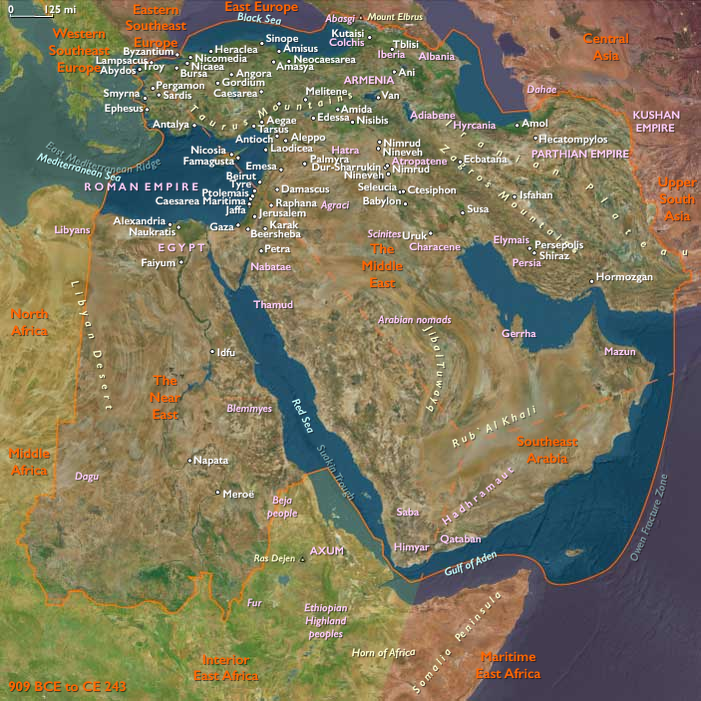
Subregions