
The Middle East: 105–94 BCE Dura-Europos …
Years: 105BCE - 94BCE
The Middle East: 105–94 BCE
Dura-Europos Under Parthian Rule
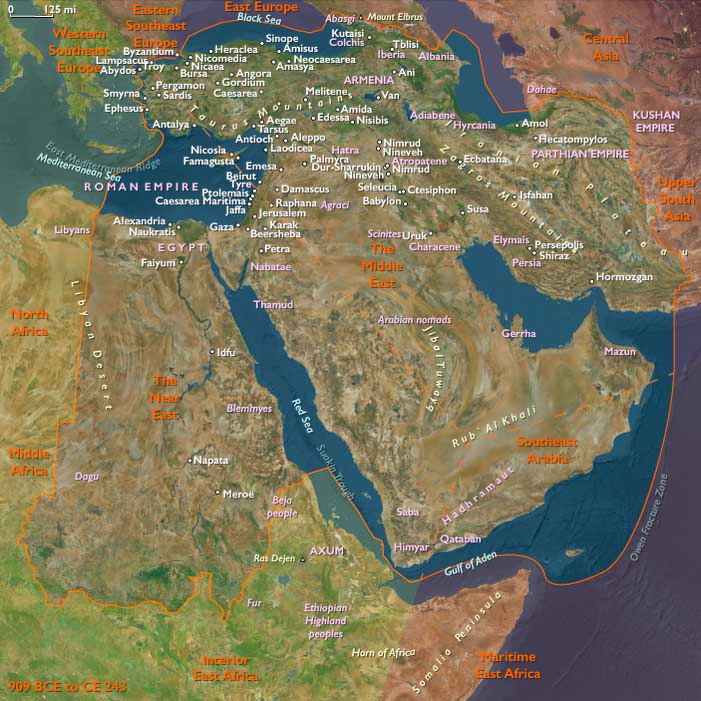
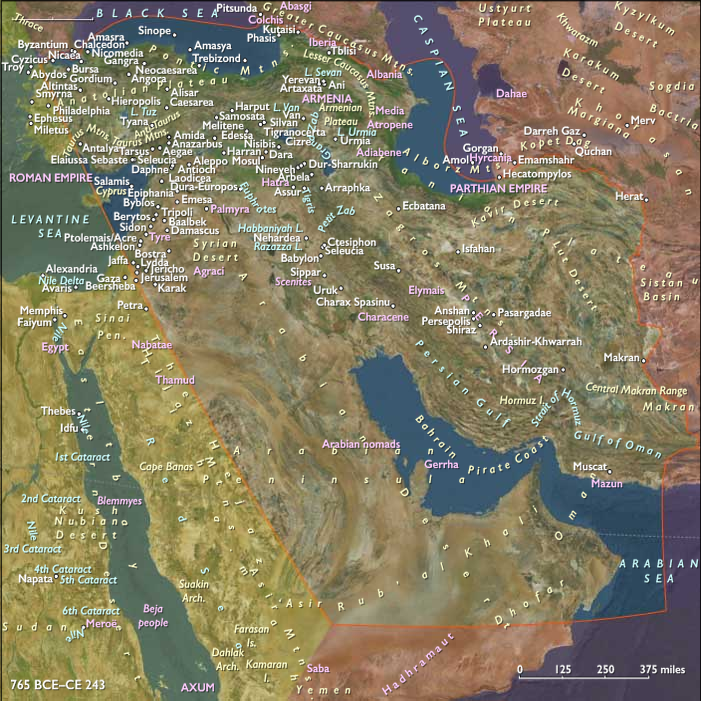
The period from 105 to 94 BCE sees significant developments under Parthian rule in Mesopotamia, particularly with their capture and renaming of the Seleucid city Europos, now called Dura. Originally founded by Seleucus I in 303 BCE, Europos occupied a strategic location at the crossroads of a vital east-west trade route and a north-south route along the Euphrates River. Initially designed according to the Hippodamian grid pattern, Europos had evolved by the second century BCE into a prominent urban center, featuring rectangular blocks systematically arranged around a central agora.
Under the Parthians, Dura-Europos thrives as an essential agricultural and trade hub, serving as a critical fortress on the Arsacid Empire’s frontier. The city’s strategic importance in controlling caravan routes fosters a cosmopolitan atmosphere, vividly demonstrated by multilingual inscriptions in languages including Greek, Latin, Aramaic, Hebrew, Syriac, Hatrian, Palmyrenean, Middle Persian, and Safaitic Pahlavi.
Thus, the era from 105 to 94 BCE marks the rise of Dura-Europos as a significant Parthian center, emblematic of cultural diversity and economic vitality, enhancing Mesopotamia's role in regional trade networks and consolidating Parthian authority in the region.
Groups
- Aramaeans
- Latins (Italic tribe)
- Arab people
- Persian people
- Roman Republic
- Jews
- Indian people
- Greeks, Hellenistic
- Parthian Empire
Topics
Subjects
Regions
Subregions
Related Events
Showing 8 events out of 8 total
Years: 105BCE - 94BCE
Groups
- Aramaeans
- Latins (Italic tribe)
- Arab people
- Persian people
- Roman Republic
- Jews
- Indian people
- Greeks, Hellenistic
- Parthian Empire
Topics
Subjects
Regions
Subregions