
The Middle East: 124–135 CE Hadrian’s …
Years: 124 - 135
The Middle East: 124–135 CE
Hadrian’s Eastern Policies and the Bar Kokhba Revolt
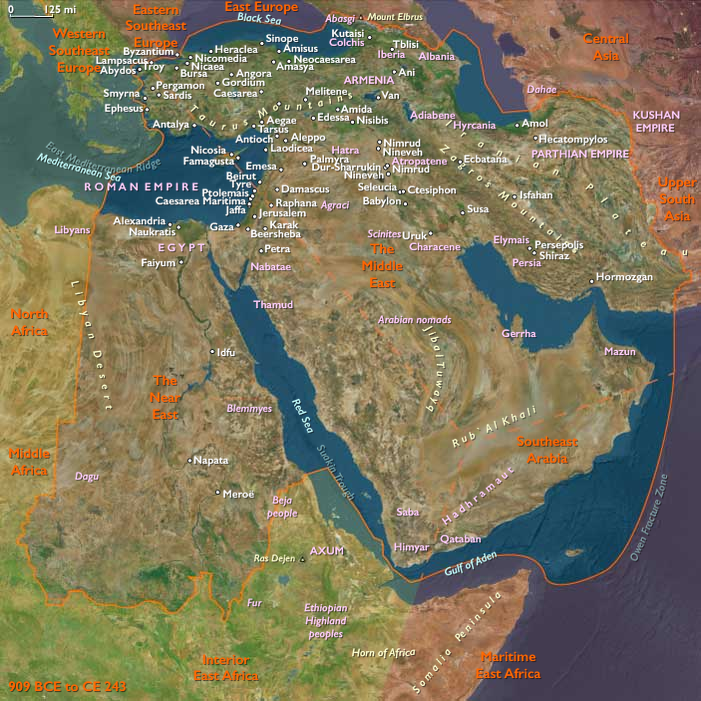
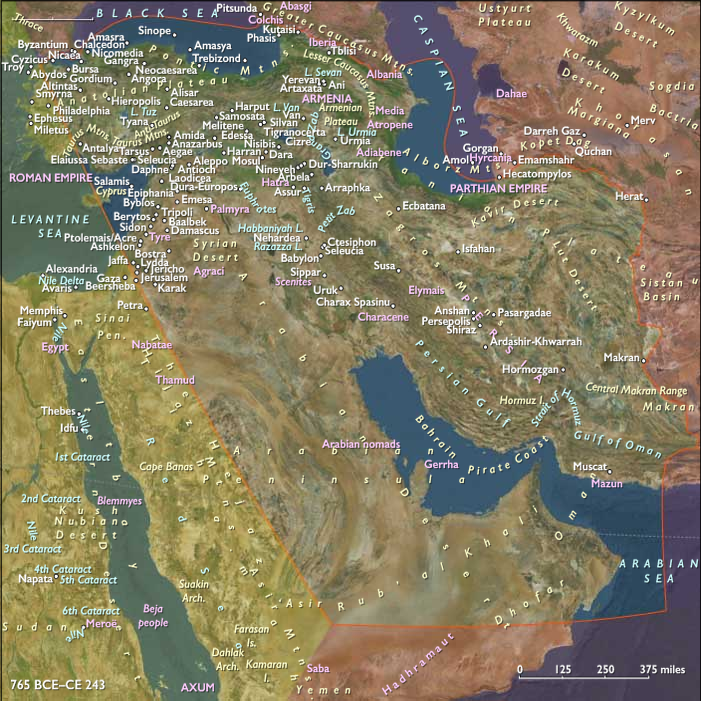
The period from 124 to 135 CE sees the continuation of Emperor Hadrian's efforts to stabilize and consolidate Rome’s eastern frontiers, moving away from aggressive territorial expansion toward strategic fortification and internal development. In the Middle East, Hadrian emphasizes administrative reform and cultural integration, reinforcing Roman influence while cautiously navigating tensions with the Parthian Empire.
In 130 CE, Hadrian tours the eastern provinces, including Syria, Judea, and Egypt, to personally oversee administrative and infrastructural projects. His policies aim at cultural assimilation, exemplified by his controversial decision to rebuild Jerusalem as the Roman colony Aelia Capitolina, complete with a temple dedicated to Jupiter on the site of the Jewish Temple. This provocative action intensifies simmering Jewish discontent.
The Jewish reaction culminates in the massive Bar Kokhba Revolt (132–135 CE), led by Simon bar Kokhba, who is proclaimed Messiah by prominent Rabbi Akiva. The revolt quickly gains momentum, temporarily establishing an independent Jewish state in Judea. Roman forces initially suffer severe losses; Emperor Hadrian, however, responds decisively, mobilizing substantial military resources to suppress the rebellion.
The brutal conflict concludes in 135 CE with a devastating Roman victory. Judean cities are razed, hundreds of thousands of Jews are killed or enslaved, and severe restrictions are imposed on Jewish religious practices and settlement, reshaping the demographic and cultural landscape of the region for generations.
Thus, the era from 124 to 135 CE highlights the tensions inherent in Roman imperial administration, demonstrating both the limitations of cultural integration policies and the enduring volatility of the Middle East under Roman governance. The aftermath of the Bar Kokhba Revolt significantly impacts Roman-Jewish relations, setting a harsh precedent for Roman responses to future uprisings.
People
Groups
- Jews
- Syria (Roman Province)
- Egypt (Roman province)
- Roman Empire (Rome): Nerva-Antonine dynasty
- Mesopotamia (Roman province)
- Syria Palæstina, Roman province of (Judea, Samaria, and Idumea)
Topics
Subjects
Regions
Subregions
Years: 124 - 135
People
Groups
- Jews
- Syria (Roman Province)
- Egypt (Roman province)
- Roman Empire (Rome): Nerva-Antonine dynasty
- Mesopotamia (Roman province)
- Syria Palæstina, Roman province of (Judea, Samaria, and Idumea)
Topics
Subjects
Regions
Subregions