
The Middle East: 244–387 CE Rise …
Years: 244 - 387
The Middle East: 244–387 CE
Rise of the Sassanid Empire and Persistent Roman Rivalries
The period from 244 to 387 CE in the Middle East is marked by the decline of the Parthian Empire and the rise of the Sassanid Empire, reshaping the political, cultural, and religious landscape. Ardashir I, son of the priest Papak and claiming descent from the legendary hero Sasan, overthrows the last Parthian king in 224 CE and establishes the Sassanid dynasty, which endures for four centuries. Ardashir and his successors reassert Iranian cultural traditions, deliberately distancing themselves from previous Greek influences by fostering a national Persian renaissance.
Under Sassanid rule, the empire approximates the frontiers of the ancient Achaemenid Empire, with its capital established at Ctesiphon. Sassanian rulers adopt the title shahanshah (king of kings), governing numerous local rulers (shahrdars). Persian society is rigidly structured into four primary classes: priests, warriors, secretaries, and commoners, with powerful priests (led by the mobadan mobad), military leaders (eran spahbod), and bureaucratic officials reinforcing this social stratification.
Military Confrontations with Rome
The Roman Empire remains Persia's principal western adversary, inheriting the rivalry from the Greeks. Emperor Shapur I (241–272) conducts successful military campaigns against Rome, culminating in the capture of Emperor Valerian in 260 CE at the Battle of Edessa, symbolizing a high point of Persian military achievement.
However, the fortunes of war fluctuate significantly over this period. Roman Emperor Carus sacks Ctesiphon in 283, temporarily weakening Persian dominance. Under Emperor Diocletian, Roman forces achieve a decisive victory in 298 at the Battle of Satala, reclaiming extensive territories and exerting renewed control over Armenia. Despite these setbacks, the Sassanians retain substantial power, sustaining intermittent hostilities with Rome, notably under Shapur II (309–379), who captures Armenia and repeatedly confronts Emperor Constantius II.
The drawn-out Roman–Sassanian confrontations, epitomized by engagements at Singara and multiple sieges of the fortress city of Nisibis, underscore the sustained strategic rivalry. A notable truce occurs in 387 CE with the Peace of Acilisene, partitioning Armenia into Roman and Persian spheres of influence, temporarily stabilizing the contested frontier.
Religious Transformations and Christianity’s Spread
Religious and cultural transformations are equally significant during this era. Armenia, influenced by early Christian centers like Antioch and Edessa, officially adopts Christianity as its state religion in approximately 306 CE under King Tiridates III, credited to the miracles performed by Saint Gregory the Illuminator. This conversion precedes Emperor Constantine’s legalization of Christianity within the Roman Empire. Similarly, Georgian King Mirian III converts in 330 CE, aligning Georgia culturally and politically with the Byzantine Empire.
Christianity also thrives in Cyprus, bolstered by the legacy of apostles like Paul and Barnabas. Roman rule brings economic prosperity and infrastructure advancements to the island, despite periodic devastation from earthquakes that continually diminish the grandeur of cities like Salamis.
Sassanian Cultural Influence and Economic Expansion
Sassanian Persia’s influence extends significantly across the Persian Gulf, reaching its apex during this period. Persian authorities establish agricultural colonies in Oman, employing local nomadic tribes as border guards against Roman incursions, promoting Persian agricultural practices, irrigation techniques, and Zoroastrian beliefs. Zoroastrianism, Persia's state religion, reinforces Sassanian rule, elevating the priestly class to a powerful political force.
Urban Prosperity and Cultural Exchange
The people of Greater Syria, notably in cities such as Damascus, Palmyra, and Busra ash Sham, maintain economic vitality, leveraging advanced irrigation, alphabetic writing, and astronomical knowledge predating Roman annexation. Emperor Constantine’s relocation of the Roman capital to Byzantium (Constantinople) in 324 reorients regional administrative structures, dividing Greater Syria into provinces Syria Prima and Syria Secunda, enhancing Roman administrative efficiency and economic integration.
Meanwhile, powerful Arab civilizations like the Nabataeans and the Palmyrenes exert economic influence, with Palmyra flourishing as a vital trade hub along caravan routes.
Thus, from 244 to 387 CE, the Middle East undergoes transformative geopolitical, cultural, and religious shifts. The ascendancy of the Sassanid Empire, sustained Roman–Persian confrontations, and the profound spread of Christianity collectively redefine regional dynamics, laying foundational patterns that endure into subsequent eras.
People
- Carus
- Constantine the Great
- Constantius II
- Diocletian
- Gregory the Illuminator
- Mirian III of Iberia
- Shapur I
- Shapur II
- Tiridates III of Armenia
- Valerian
Groups
- Iranian peoples
- Aramaeans
- Arab people
- Zoroastrians
- Iberia, Caucasian (Kartli, Kingdom of)
- Cyprus, Roman
- Armenia, Kingdom of Greater
- Persian Empire, Sassanid, or Sasanid
- Roman Empire (Rome): Non-dynastic
- Palmyrene Empire
- Roman Empire: Tetrarchy
- Roman Empire: Constantinian dynasty (Nicomedia)
- Christianity, Nicene
- Roman Empire: Constantinian dynasty (Constantinople)
- Roman Empire: Theodosian dynasty (Constantinople)
Topics
- Roman-Persian War of 241-44
- Roman-Persian War of 250-253
- Roman-Persian War of 257-61
- Edessa, Battle of
- Roman-Persian War of 282-83
- Roman-Persian War of 295-98
- Satala, Battle of
- Roman-Persian War of 337-63
- Singara, Battle of
Commodoties
Subjects
Regions
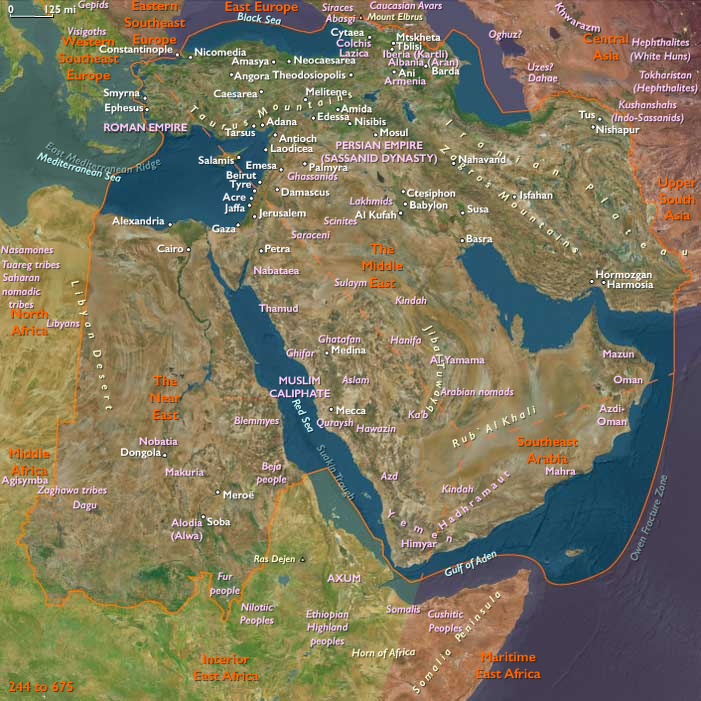
Subregions
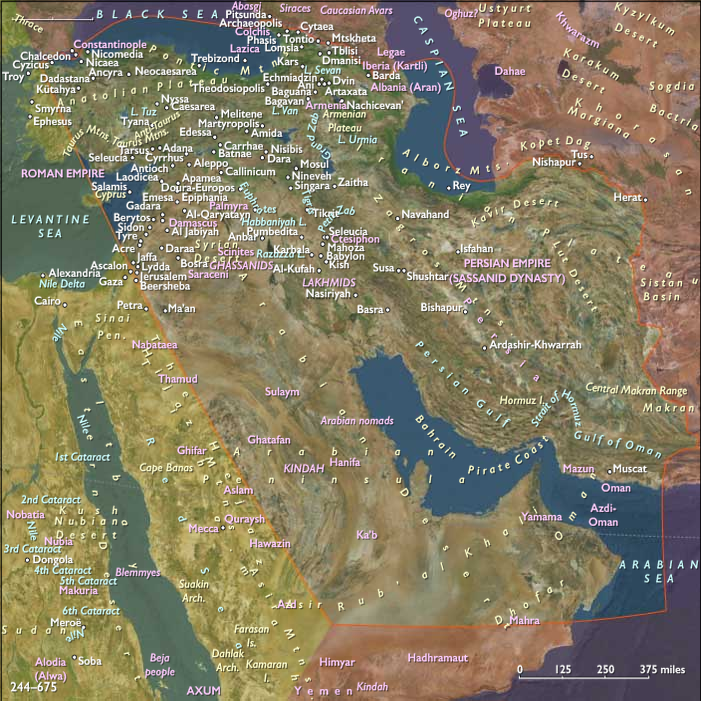
Related Events
Showing 10 events out of 60511 total
Years: 244 - 387
People
- Carus
- Constantine the Great
- Constantius II
- Diocletian
- Gregory the Illuminator
- Mirian III of Iberia
- Shapur I
- Shapur II
- Tiridates III of Armenia
- Valerian
Groups
- Iranian peoples
- Aramaeans
- Arab people
- Zoroastrians
- Iberia, Caucasian (Kartli, Kingdom of)
- Cyprus, Roman
- Armenia, Kingdom of Greater
- Persian Empire, Sassanid, or Sasanid
- Roman Empire (Rome): Non-dynastic
- Palmyrene Empire
- Roman Empire: Tetrarchy
- Roman Empire: Constantinian dynasty (Nicomedia)
- Christianity, Nicene
- Roman Empire: Constantinian dynasty (Constantinople)
- Roman Empire: Theodosian dynasty (Constantinople)
Topics
- Roman-Persian War of 241-44
- Roman-Persian War of 250-253
- Roman-Persian War of 257-61
- Edessa, Battle of
- Roman-Persian War of 282-83
- Roman-Persian War of 295-98
- Satala, Battle of
- Roman-Persian War of 337-63
- Singara, Battle of
Commodoties
Subjects
Regions
Subregions