
Atlantic Southwest Europe (1684–1827 CE): Port Cities, …
Years: 1684 - 1827
Atlantic Southwest Europe (1684–1827 CE): Port Cities, Iberian Shifts, and the Atlantic Grain–Wine Trade
Geography & Environmental Context
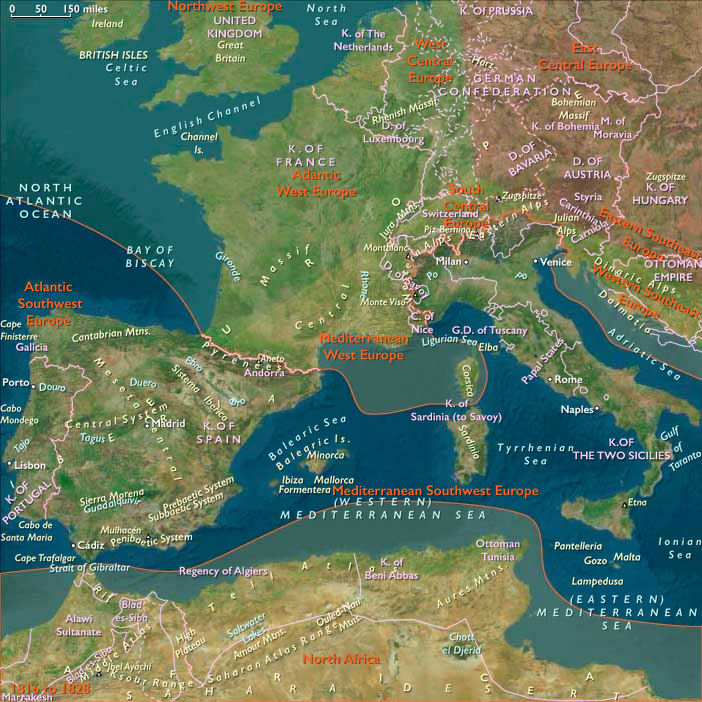
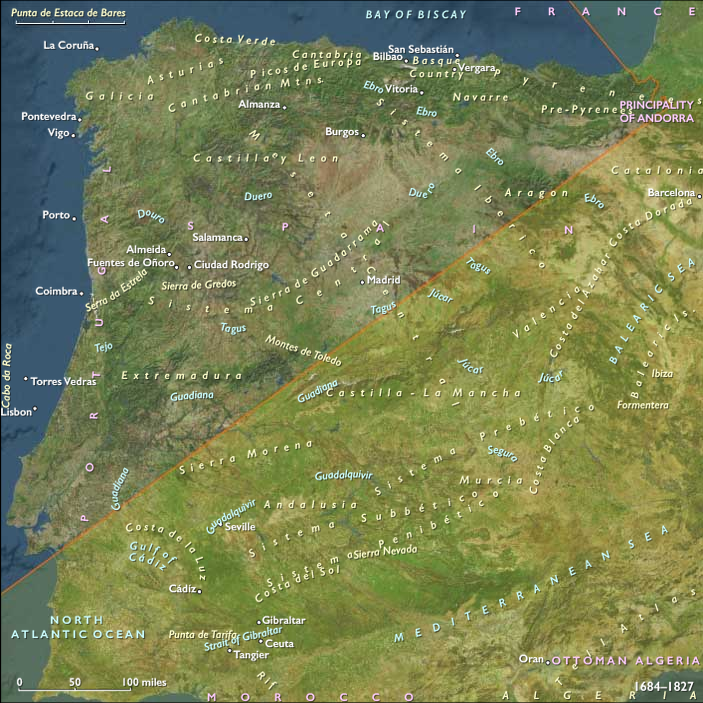
Atlantic Southwest Europe encompasses northern Spain (Galicia, Asturias, Cantabria, and León) and central to northern Portugal, including Lisbon. Anchors include the Galician Rías (Ría de Vigo, A Coruña), the Cantabrian Coast, the Minho and Douro valleys, the Tagus estuary at Lisbon, and the rugged mountains of León and northern Portugal. This is a region of Atlantic-facing coasts, fertile river basins, and upland pastures, with maritime corridors tying Iberia to the broader Atlantic world.
Climate & Environmental Shifts
The tail of the Little Ice Age brought heavy rains and cooler winters. Coastal Asturias and Galicia endured storm surges and erratic fishing seasons. In Portugal, alternating droughts and floods affected the Tagus and Douro, stressing vineyards and grain harvests. The Tambora eruption (1815) caused harvest failures and famines in 1816–1817, driving food shortages and migration. Despite shocks, the region remained buffered by mixed farming and Atlantic fisheries.
Subsistence & Settlement
-
Agriculture: Grain (rye, maize, wheat) dominated northern Spain’s uplands, while vineyards along the Douro Valley produced the famous port wines increasingly exported to Britain. Olive groves and orchards dotted Portugal’s hills.
-
Livestock: Cattle and sheep grazed in León and northern Portugal, supporting cheese and wool exports.
-
Fishing & maritime life: Cod and sardines sustained coasts; Galician fisheries supplied local markets.
-
Urban centers: Lisbon was the linchpin, linking Brazilian sugar, gold, and coffee to Europe; Porto thrived on the wine trade; A Coruña, Santander, Bilbao grew as shipping points for wool, timber, and iron. Rural hamlets persisted in Galicia’s valleys and Portuguese interior, producing subsistence crops and artisanal goods.
Technology & Material Culture
Stone terraces stabilized vineyards in the Douro; irrigation and watermills supported grain processing in León and Galicia. Shipyards along the Tagus and Douro built ocean-going vessels; Portuguese navigational expertise fed the empire. Urban Lisbon rebuilt in grand style after the 1755 earthquake, with wide boulevards and Pombaline architecture. Material culture blended maritime tools, peasant implements, and luxury imports—Brazilian gold funded churches, palaces, and decorative arts.
Movement & Interaction Corridors
-
Transatlantic links: Lisbon was Europe’s primary gateway to Brazil, channeling sugar, gold, diamonds, tobacco, and coffee. The Douro–Porto corridor tied hinterland vineyards to British buyers under the Methuen Treaty (1703), which gave Portuguese wines privileged access to English markets.
-
Spanish Atlantic ports: A Coruña, Bilbao, and Santander shipped wool and iron to northern Europe. Galicia supplied emigrants to the Americas.
-
Inland trade: Mules carried wine, wool, and grain over mountain passes to port cities.
-
War disruptions: During the Peninsular War (1807–1814), French invasions disrupted Portugal and northern Spain, but British naval supremacy kept Lisbon and Porto tied into Atlantic commerce.
Cultural & Symbolic Expressions
-
Religion: Catholicism framed life; pilgrimage routes to Santiago de Compostela remained vital. Monasteries in Galicia and León managed estates and provided poor relief.
-
Urban culture: Lisbon’s intellectual salons and Porto’s mercantile guilds reflected Enlightenment currents; Coimbra University fostered reformist thinkers.
-
Folk traditions: Galician bagpipe (gaita) music, Portuguese fado songs, and rural festivals preserved local identity.
-
Architecture: Baroque churches in Braga, Porto, and Santiago embodied both religious devotion and mercantile prosperity.
Environmental Adaptation & Resilience
-
Diversification: Maize introduction expanded caloric bases in Galicia and Portugal, reducing famine risk.
-
Vineyard specialization: The Douro’s terraced slopes maximized limited arable land, producing high-value exports.
-
Fisheries: Cod and sardine fisheries provided fallback protein during poor harvests.
-
Charitable networks: Monasteries, confraternities, and parish relief assisted during famines and war dislocation.
Transition
From 1684 to 1827, Atlantic Southwest Europe remained both peripheral and central—a rugged agrarian landscape tied to a global empire through Lisbon and Porto. Portuguese fortunes hinged on Brazil until independence (1822), while Porto’s wine trade locked northern Portugal into Britain’s orbit. Northern Spain’s ports grew modestly, sending wool and emigrants to the Atlantic world, while Galicia remained a land of subsistence peasants and pilgrims. Wars, earthquakes, and famines tested resilience, yet the region adapted through maize, wine, fisheries, and Atlantic trade, foreshadowing new realignments in the 19th century as Iberian empires fragmented and Atlantic economies shifted.
People
- Charles II of Spain
- Ferdinand VII of Spain
- John VI of Portugal
- José I of Portugal
- Napoleon
- Pedro I of Brazil
- Philip V of Spain
- Sebastião José de Carvalho e Melo, 1st Marquis of Pombal
Groups
- Brazil, Indigenous people in
- Portuguese people
- Basque people
- French people (Latins)
- Christians, Roman Catholic
- Aragón, Kingdom of
- Portuguese Empire
- Inquisition, Spanish
- Inquisition, Portuguese
- Jesuits, or Order of the Society of Jesus
- Brazil, Colonial
- Angola (Portuguese colony)
- Portuguese Guinea
- France, (Bourbon) Kingdom of
- Portugal, Bragança Kingdom of
- England, (Stewart, Restored) Kingdom of
- Britain, Kingdom of Great
- France, Kingdom of (constitutional monarchy)
- Britain (United Kingdom of Great Britain and Ireland)
- France, (first) Empire of
- France, constitutional monarchy of
Topics
- Colonization of the Americas, Portuguese
- Enlightenment, Age of
- Spanish Succession, War of the
- 1755 Lisbon earthquake
- Jesuits, Political Suppression of the
- American Revolution
- French Revolution
- Napoleonic Wars
- Peninsular War
- Western Architecture: Neoclassicism
- Trienio Liberal (Spanish Civil War of 1820-23)
- Liberal Revolution of 1820
Commodoties
Subjects
Regions
Subregions
Related Events
Showing 10 events out of 30218 total
Years: 1684 - 1827
People
- Charles II of Spain
- Ferdinand VII of Spain
- John VI of Portugal
- José I of Portugal
- Napoleon
- Pedro I of Brazil
- Philip V of Spain
- Sebastião José de Carvalho e Melo, 1st Marquis of Pombal
Groups
- Brazil, Indigenous people in
- Portuguese people
- Basque people
- French people (Latins)
- Christians, Roman Catholic
- Aragón, Kingdom of
- Portuguese Empire
- Inquisition, Spanish
- Inquisition, Portuguese
- Jesuits, or Order of the Society of Jesus
- Brazil, Colonial
- Angola (Portuguese colony)
- Portuguese Guinea
- France, (Bourbon) Kingdom of
- Portugal, Bragança Kingdom of
- England, (Stewart, Restored) Kingdom of
- Britain, Kingdom of Great
- France, Kingdom of (constitutional monarchy)
- Britain (United Kingdom of Great Britain and Ireland)
- France, (first) Empire of
- France, constitutional monarchy of
Topics
- Colonization of the Americas, Portuguese
- Enlightenment, Age of
- Spanish Succession, War of the
- 1755 Lisbon earthquake
- Jesuits, Political Suppression of the
- American Revolution
- French Revolution
- Napoleonic Wars
- Peninsular War
- Western Architecture: Neoclassicism
- Trienio Liberal (Spanish Civil War of 1820-23)
- Liberal Revolution of 1820
Commodoties
Subjects
Regions
Subregions