
The Israelis have been only partly successful …
Years: 1978 - 1978
July
The Israelis have been only partly successful in their aim of destroying Palestinian guerrillas and their bases south of the Litani River.
Several hundred Palestinian guerrillas have been killed, but most of them have escaped northward.
Estimates of civilian casualties range from one thousand to two thousand Palestinians and Lebanese, with two hundred and fifty thousand made refugees and many towns left in ruins.
This episode strengthens Israel's ties with the Phalange, who benefit from Israeli weapons and training.
Israel continues, however, to supply arms, money, and troops to the Christians in the south, while the Palestinians soon return to the same region.
The war leaves the Palestinians with perhaps twenty thousand killed and twice that number wounded.
The Syrians appear stronger than before, but, having got into Lebanon, they face the problem of extricating themselves.
Only Israel, among the states of the Middle East, appears to have "won."
The Palestinians lose their major bid, Syria fears Israeli intervention, and the Lebanese Christians are in Israel's debt.
More important, the horror of the war has caused Arabs everywhere to question, as never before, the very dream of pan-Arabism.
Locations
People
Groups
- Christians, Maronite
- United States of America (US, USA) (Washington DC)
- Arab nationalism
- Lebanon, Republic of
- United Nations, The (U.N.)
- Syria, or Syrian Arab Republic
- Israel
- Palestinians
- Fatah
- PLO (Palestine Liberation Organization)
Topics
Commodoties
Subjects
Regions
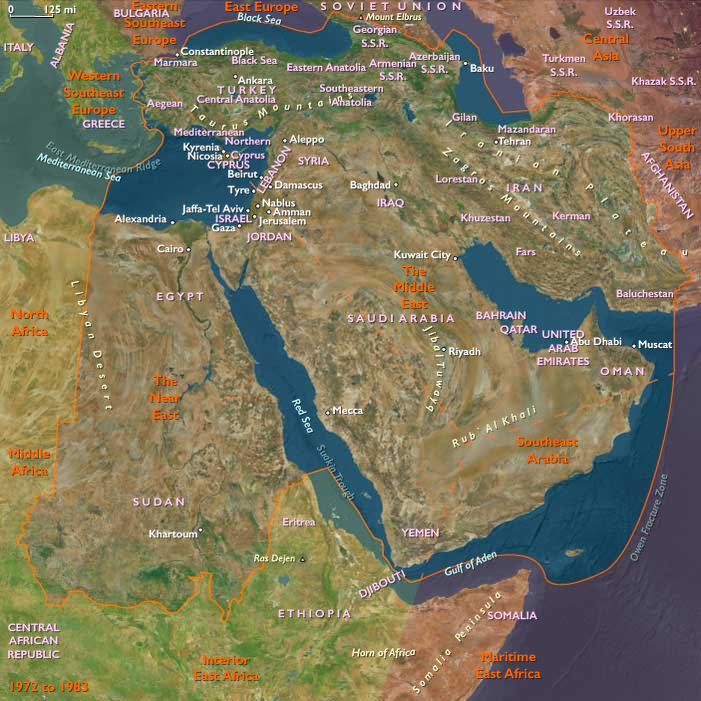
Subregions
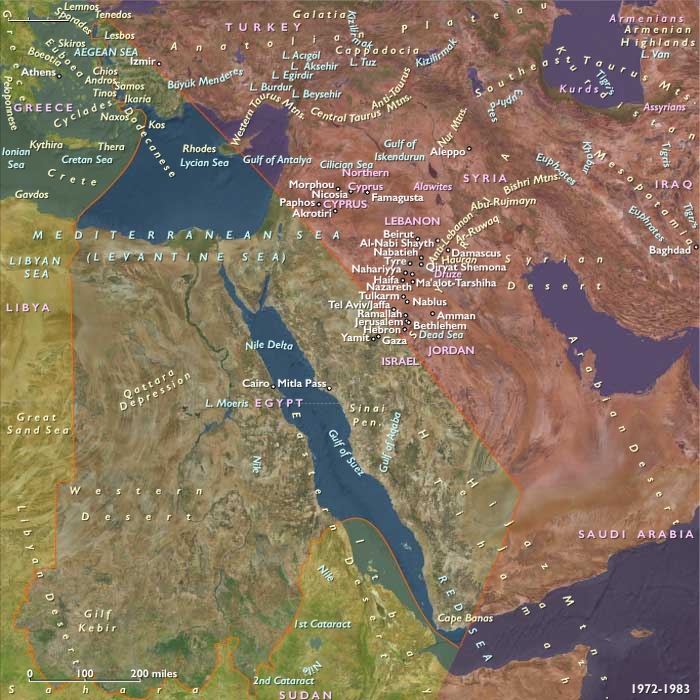
Related Events
Showing 10 events out of 1985 total
Years: 1978 - 1978
July
Locations
People
Groups
- Christians, Maronite
- United States of America (US, USA) (Washington DC)
- Arab nationalism
- Lebanon, Republic of
- United Nations, The (U.N.)
- Syria, or Syrian Arab Republic
- Israel
- Palestinians
- Fatah
- PLO (Palestine Liberation Organization)
Topics
Commodoties
Subjects
Regions
Subregions