
The marshes and moraines near Bremen, a …
Years: 787 - 787
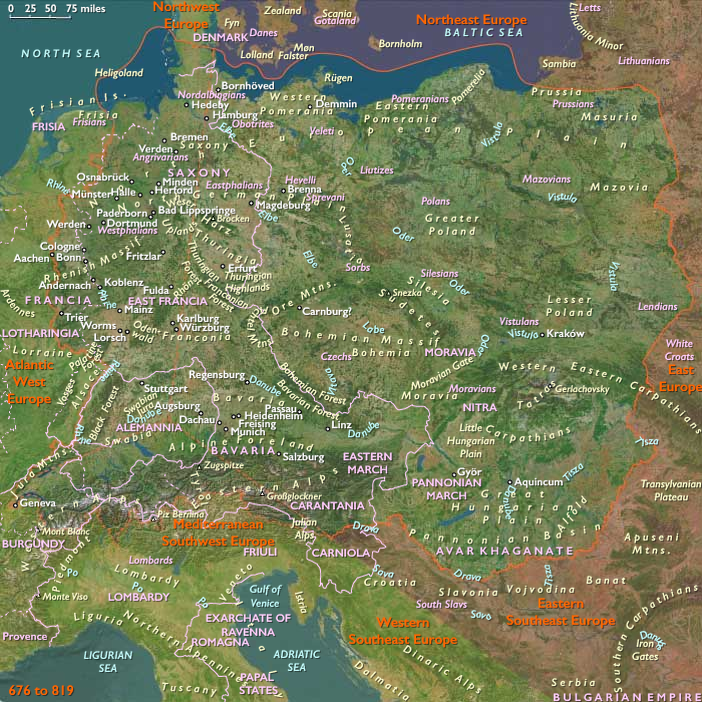
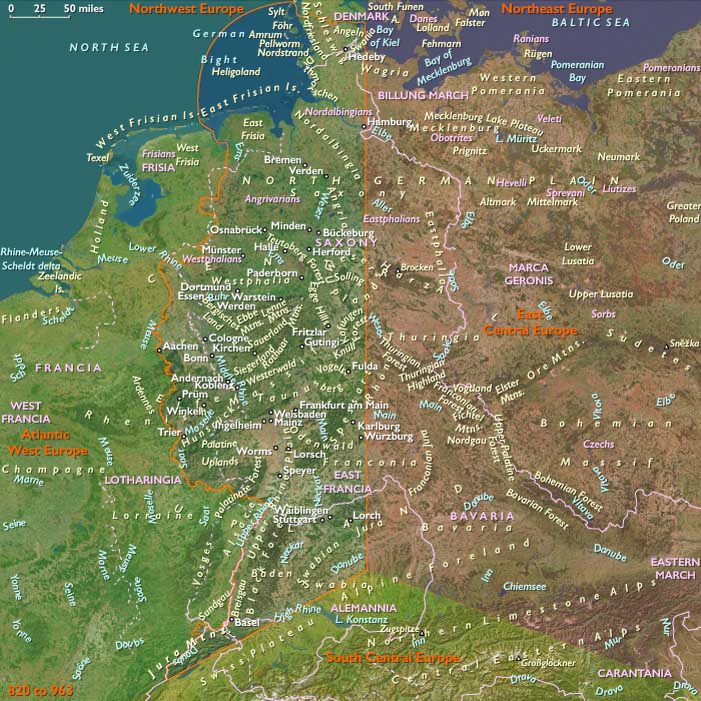
The marshes and moraines near Bremen, a port in northwestern Germany on the banks of the Weser River about forty-three miles (seventy kilometers) from the North Sea, have been settled since about 12,000 BCE.
Burial places and settlements in Bremen-Mahndorf and Bremen-Osterholz date back to the seventh century CE.
Since the age of Renaissance, some scientists have believed that the entry Fabiranum or Phabiranon in Ptolemy's Fourth Map of Europe, written in CE 150, refers to Bremen, but Ptolemy gives geographic coordinates, and by these dates Phabiranon is situated northeast of the mouth of river Visurgis (Weser).
At that time the Chauci lived in the area now called northwestern Germany or Lower Saxony.
By the end of the third century, they had merged with the Saxons.
During the Saxon Wars (772–804) the Saxons, led by Widukind, fight against the West Germanic Franks, the founders of the Carolingian Empire, and lose the war.
Charlemagne, the King of the Franks, makes a new law, the Lex Saxonum, which states that Saxons are not allowed to worship Odin (the god of the Saxons), but rather that they had to convert to Christianity on pain of death.
This period is called the Christianization.
Willehad of Bremen becomes, in 787, the first Bishop of Bremen.
Locations
People
Groups
Topics
Commodoties
Subjects
Regions
Subregions
Related Events
Showing 10 events out of 54996 total
Years: 787 - 787
Locations
People
Groups
Topics
Commodoties
Subjects
Regions
Subregions